Wednesday, December 11, 2013

Agenda for the U.S. National Commission for UNESCO Meeting 12/16/13

9:00 -9:30 am – Registration & Coffee

9:30 am- Welcome

9:35 - 9:45 am – Acting Assistant Secretary Pittman

9:45 -10:00 am – Deputy Assistant Secretary Nerissa Cook - US and UNESCO

10:05-10:30 am – UNESCO and the US Mission

Break

10:45 - 12:00 pm – Remarks and Discussion: US and UNESCO

12:00 -1:00 pm – Lunch in the exhibit hall

1:00 – 2:00 pm – Commissioner Involvement Panel

2:00 - 3:00 pm – Breakout by Sector

3:15 - 4:00 pm – Readout of Sector and Additional Business

Tuesday, November 19, 2013

Meeting of U.S. National Commission for UNESCO

Annual Meeting of the U.S. National Commission for UNESCO is scheduled for Monday, December 16.  The meeting is scheduled to begin at 9:30 a.m. at the U.S. Department of State, George Marshall Conference Center. The meeting is open to the public.

If you are not a member of the National Commission and plan to attend, you must inform the National Commission staff well in advance:

phone: 202-663-0026
fax: 202-663-0035
email: dcunesco@state.gov

Registration at the State Department will begin at 9:00 a.m.  Because this meeting is being held in the State Department, staff will require your Birthday, Social Security and either Passport Number or Drivers License Number.

You will need to enter through security at the 21st Street entrance of the main State Department building.  (320 21st St NW, Washington, DC)

This should be a productive and interesting meeting and I hope you will be able to attend.


Saturday, August 03, 2013

UNESCO and Indicators of GDP in intellectual-property products

The world is moving to define "intellectual-property products" and to include these products in measures of GDP. 
UNESCO should be involved in defining appropriate indicators and collecting appropriate data.
In the 1930s governments greatly improved the system of national economic accounts. One aspect of that improvement was the introduction of a measure of Gross Domestic Product (GDP). GDP has become so common a term in the interim that we may have forgotten that economists made a number of decisions as to what products would be included and which would be excluded. For example, the product of household services such as cleaning and cooking might not be included if they were produced by family members, but might be included if provided by salaried servants.

In another example, the term "domestic" was not simple. Thus the product of a foreigner working on a foreign owned fishing boat functioning in a country's national waters might not be counted, while that of a citizen in a fishing boat registered in a country might be included in GDP even if the fishing was done in international waters or in the national waters of another country.

Developed countries are now changing the boundaries of what is to be included in the GDP. According to The Economist:
A new investment class called “intellectual-property products” has been created by America’s Bureau of Economic Analysis (BEA). Ideally, the value of private firms’ R&D would be based on the future income it generates, discounted to today’s values. But since future products, and their related prices, are unobservable, those calculations are tricky. So the BEA is measuring R&D investment using firms’ innovation-related costs. Government R&D, mainly spending on health, defence and aerospace, is now measured in the same way. 
The BEA faces an even fiddlier task with original artwork, a category that includes films, books, music and TV shows. (Newspaper articles have no lasting value, according to the BEA, but what do they know?) The problem is that there is scant information on investment costs. Moreover, the asset—the right to the music, manuscript or TV format—is rarely sold. Rather it is used to create a future stream of products, like books and TV shows. So the BEA must estimate likely future royalty fees, and translate them into today’s money to value the investment. Since artistic assets can last a long time (“The Simpsons” has been running since 1989) that is a tough task. 
In the short term America’s new GDP measure makes international comparisons more difficult. The BEA is not the first mover: Australia made the change in 2009, leapfrogging Canada in the OECD’s country rankings of GDP per person. Canada switched in 2012, making back some of the ground. For the moment, America, Australia and Canada are the only G20 countries on the new system. By 2014 many other countries, including those in the EU, will have joined them.
In the United States it has been estimated that there are between 700, thousand and 2 million children being home schooled, and it seems that home schooling is increasing. Moreover, there is probably an increasing amount of adult home study intended to improve the learner's earning potential. With the rapid expansion of online courses and elaboration of new models providing online courses, many available to the learner gratis, there is likely to be an increasing amount of human capital created by self study online. Should educational products produced through home schooling and continuing education be part of GDP?

The Internet is changing other kinds of products. Journalists are providing online content without working for traditional news agencies. Authors are self-publishing e-books. Musicians are uploading their music without going through traditional music publishers. People are uploading videos without going through traditional movie or television companies. Indeed, there are millions of personal computers providing scientific computation through informal networks such as the search for extraterrestrial intelligence. Crowd financing is being used to accumulate capital online for all sorts to new enterprises and projects.

UNESCO, of course, is the agency within the UN family that leads in education, in science, and in culture. It has also had a role since its creation in copyright and related intellectual property concerns. The UNESCO Institute for Statistics plays an international role not only in the collection of statistics related to education, science and culture, but also in advising countries on the indicators to be used for date in these fields.

Thus it would seem that UNESCO should be deeply involved in the international discussions of these intellectual-property products. If GDP data is to be comparable among countries, then countries should use common definitions for the indicators used. Moreover, the intellectual communities involved in the creation and exploitation of intellectual property should be involved; the effort should not be left only to economists and statisticians.

UNESCO and Indicators of GDP in intellectual-property products

The world is moving to define "intellectual-property products" and to include these products in measures of GDP. UNESCO should be involved in defining appropriate indicators and collecting appropriate data.
In the 1930s governments greatly improved the system of national economic accounts. One aspect of that improvement was the introduction of a measure of Gross Domestic Product (GDP). GDP has become so common a term in the interim that we may have forgotten that economists made a number of decisions as to what products would be included and which would be excluded. For example, the product of household services such as cleaning and cooking might not be included if they were produced by family members, but might be included if provided by salaried servants.

In another example, the term "domestic" was not simple. Thus the product of a foreigner working on a foreign owned fishing boat functioning in a country's national waters might not be counted, while that of a citizen in a fishing boat registered in a country might be included in GDP even if the fishing was done in international waters or in the national waters of another country.

Developed countries are now changing the boundaries of what is to be included in the GDP. According to The Economist:
A new investment class called “intellectual-property products” has been created by America’s Bureau of Economic Analysis (BEA). Ideally, the value of private firms’ R&D would be based on the future income it generates, discounted to today’s values. But since future products, and their related prices, are unobservable, those calculations are tricky. So the BEA is measuring R&D investment using firms’ innovation-related costs. Government R&D, mainly spending on health, defence and aerospace, is now measured in the same way. 
The BEA faces an even fiddlier task with original artwork, a category that includes films, books, music and TV shows. (Newspaper articles have no lasting value, according to the BEA, but what do they know?) The problem is that there is scant information on investment costs. Moreover, the asset—the right to the music, manuscript or TV format—is rarely sold. Rather it is used to create a future stream of products, like books and TV shows. So the BEA must estimate likely future royalty fees, and translate them into today’s money to value the investment. Since artistic assets can last a long time (“The Simpsons” has been running since 1989) that is a tough task. 
In the short term America’s new GDP measure makes international comparisons more difficult. The BEA is not the first mover: Australia made the change in 2009, leapfrogging Canada in the OECD’s country rankings of GDP per person. Canada switched in 2012, making back some of the ground. For the moment, America, Australia and Canada are the only G20 countries on the new system. By 2014 many other countries, including those in the EU, will have joined them.
In the United States it has been estimated that there are between 700, thousand and 2 million children being home schooled, and it seems that home schooling is increasing. Moreover, there is probably an increasing amount of adult home study intended to improve the learner's earning potential. With the rapid expansion of online courses and elaboration of new models providing online courses, many available to the learner gratis, there is likely to be an increasing amount of human capital created by self study online. Should educational products produced through home schooling and continuing education be part of GDP?

The Internet is changing other kinds of products. Journalists are providing online content without working for traditional news agencies. Authors are self-publishing e-books. Musicians are uploading their music without going through traditional music publishers. People are uploading videos without going through traditional movie or television companies. Indeed, there are millions of personal computers providing scientific computation through informal networks such as the search for extraterrestrial intelligence. Crowd financing is being used to accumulate capital online for all sorts to new enterprises and projects.

UNESCO, of course, is the agency within the UN family that leads in education, in science, and in culture. It has also had a role since its creation in copyright and related intellectual property concerns. The UNESCO Institute for Statistics plays an international role not only in the collection of statistics related to education, science and culture, but also in advising countries on the indicators to be used for date in these fields.

Thus it would seem that UNESCO should be deeply involved in the international discussions of these intellectual-property products. If GDP data is to be comparable among countries, then countries should use common definitions for the indicators used. Moreover, the intellectual communities involved in the creation and exploitation of intellectual property should be involved; the effort should not be left only to economists and statisticians.

Tuesday, July 23, 2013

Your Response to an attack on UNESCO is requested.

The UNESCO Memory of the World Program was established to encourage the protection of archives of important materials. The preparation of General Guidelines for the Program was initiated through a contract with IFLA (International Federation of Library Associations), together with the compilation, by IFLA and ICA (International Council on Archives), of lists of irreparably damaged library collections and archive holdings. Through its National Commissions, UNESCO prepared a list of endangered library and archive holdings and a world list of national cinematic heritage. 

The Memory of the World Register comprises nearly 300 documents and collections from five continents. Che Guevara’s works are among 54 new additions this year. (Click here for an account of the addition.)  A number of collections have been added from the United States, including the papers of Eleanor Roosevelt.

Check out the latest from Representative Ros-Lehtinen attacking UNESCO on the Che inscription. 


I suggest that you reply to her tweet with a link to the Holocaust inscriptions that were also made this year to the Memory of the World Register?  The following is just a suggestion.  
@RosLehtinen Memory of the World about creating historical reference. Holocaust docs inscribed this year.  http://ow.ly/ndMVR
Here is the full url:

Saturday, July 13, 2013

Crystal Nix-Hines nominated as U.S. Ambassador to UNESCO


Crystal Nix-Hines, has been nominated to be the permanent representative of the United States to the United Nations Educational, Scientific and Cultural Organization, or UNESCO. The post, which must be confirmed by the Senate, carries to rank of ambassador.


I quote from Wikipedia:
Crystal Nix-Hines is Of Counsel at Quinn Emanuel Urquhart & Sullivan in Los Angeles.  Previously, she served as Of Counsel at Fairbank & Vincent from 2006 to 2007, Special Counsel in the Litigation Department of O’Melveny & Myers, LLP from 1997 to 2000, and Assistant to the General Counsel/Senior Vice President of Capital Cities/ABC, Inc. from 1992 to 1993.  From 1993 to 1997, she held several positions at the State Department, including Counselor to the Assistant Secretary for Democracy, Human Rights and Labor, Member of the Department’s Policy Planning Staff, and Special Assistant to the Legal Adviser.  From 1991 to 1992, she clerked on the U.S. Supreme Court for Justice Thurgood Marshall and Justice Sandra Day O’Connor.  She also clerked for Justice William A. Norris on the U.S. Court of Appeals, Ninth Circuit from 1990 to 1991.  During her career, Ms. Nix-Hines has also been a writer and producer on several network television shows such as Commander-in-Chief, Alias, and The Practice.  She began her career as a reporter for New York Times. 
Her law practice currently focuses on several areas, including  Entertainment and Media Litigation, Intellectual Property Litigation, Structured Finance and Derivatives Litigation and Transnational Litigation.

According to Variety:
Nix-Hines was a bundler for President Obama in the most recent election cycle, raising between $200,000 and $500,000. She was a classmate of Michelle Obama’s at Princeton and graduated from Harvard Law School in 1990, a year before Barack Obama.
This appears to be an exceptional appointment. Nix-Hines' career path indicates that she is exceptionally talented, energetic and innovative. She has appropriate, high-level experience in the State Department. Her legal work in structured finance should be invaluable in dealing with UNESCO's budget issues. Her television background givers her professional standing with respect to UNESCO's culture program. Her legal work in intellectual property law gives her professional standing with regard to UNESCO's copyright conventions and their implementation. As a former New York Times reporter she brings special understanding to UNESCO's defense of reporters and press freedom. And last, but not least, she has personal standing that means her voice can be heard in the halls of the State Department and the White House.

Wednesday, July 03, 2013

US Permanent Delegation to UNESCO


UNESCO lists the permanent delegation of the United States to the Organization as follows:

Permanent Delegation of the United States of America to UNESCO
U.S. Mission to UNESCO
American Embassy
12, avenue Raphaël
75016 PARIS
Telephone :01.43.12.74.56
Fax :01.43.12.74.58
E-mail :ParisUNESCO@state.gov
Web site :http://unesco.usmission.gov/
The Permanent Delegation requests that all correspondence be addressed to :
U.S. Mission to UNESCO
Miollis House - Room 4.45
75015 PARIS
H. E. Mr David Killion
Ambassador
Permanent Delegate
 (27/08/2009)
Mrs Kristin Eager Killion
Telephone :01 43 12 74 16
E-mail :ParisUNESCO@state.gov
Ms Kathleen A. Kavalec
Deputy Permanent Delegate, 
Telephone :01 43 12 74 85
E-mail :k.kavalec.us@unesco-delegations.org
M. Scott Turner
First Secretary (Political Affairs)
Telephone :01 43 12 74 82
E-mail :s.turner.us@unesco-delegations.org
Mrs Megan Larson-Kone
First Secretary (Communications/Culture)
Telephone :01 43 12 74 46
E-mail :m.larson-kone.us@unesco-delegations.org
Mr James Ryan Grizzle
Second Secretary (Education)
Telephone :01 43 12 74 81
E-mail :r.grizzle.us@unesco-delegations.org
Mrs Janel Heird
Second Secretary, Science Officer
Telephone :01 43 12 74 99
E-mail :j.heird.us@unesco-delegations.org
Mrs Daniela Morich
Program Specialist
Telephone :01 43 12 74 53
E-mail :d.morich.us@unesco-delegations.org

Monday, July 01, 2013

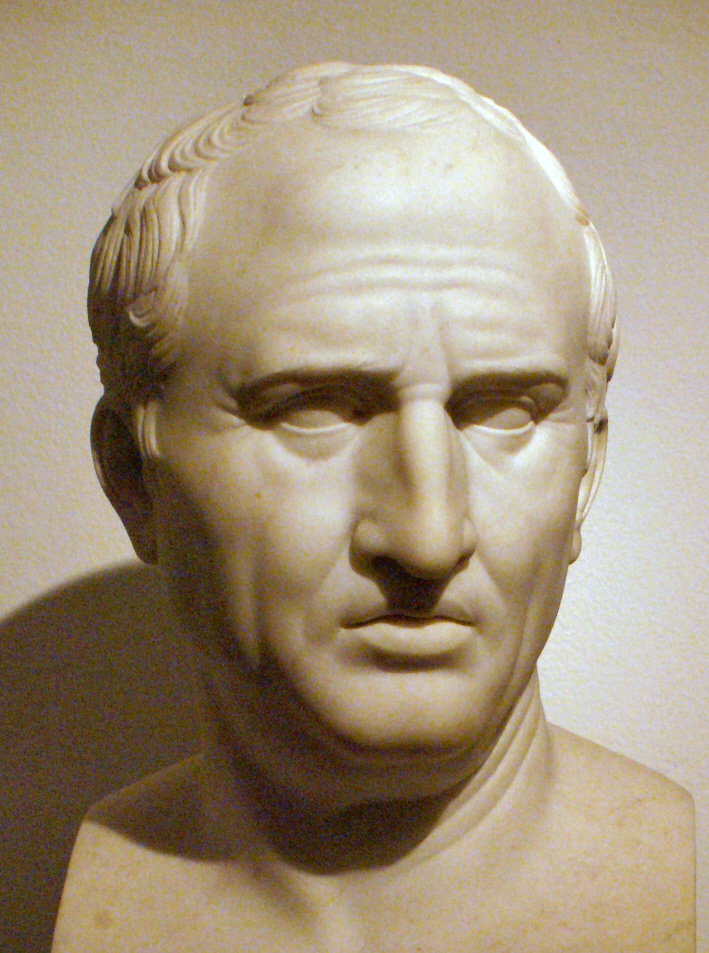
Quotation


“Times are bad. Children no longer obey their parents, and everyone is writing a book.”
― Marcus Tullius Cicero

Sunday, June 30, 2013

Facts and figures on UNESCO’s reform


UNESCO defines a budget covering two years of operation. The budget in the above graph are in millions of US dollars. The budget defined in the 30th General Conference (2000-2001) was $544 million. The following budgets showed increases until the 36th General Conference (2012-2013) which reached $653 million. Following the most recent reforms, the budget for 2014-2015 is $465 million. In addition to the regular budget financed by assessed contributions, UNESCO also receives voluntary contributions for additional programs and activities.

The international professional staff is composed of persons in the following career steps:

  • Junior professionals (grade P-1/P-2) 

The principal goal of employees at these levels is to demonstrate your expertise by participating in the execution of programs and projects, moving in the course of your apprenticeship to higher levels of responsibility. 

  • Middle-ranking professionals (grade P-3/P-4) 

Staff at these levels serve as a project leaders in charge of small teams; They launch and develop particular facets of the UNESCO program and gain further professional experience. 

  • Management professionals (grade P-5 and D) 

Responsibilities as head of a section, director of a division or director of a UNESCO field office will include direct participation in the preparation and execution of the Organization’s strategy. At this level, staff members will manage budgets and assume leadership roles. 
As the graph shows, the numbers of junior and middle-ranking professionals have increased since 2000, while the numbers of management professionals have decreased.

Click here for the original source of these data. 

UNESCO to make its publications available free of charge as part of a new Open Access policy


UNESCO will make its digital publications available to millions of people around the world free-of-charge with an open license. Following a decision by the Organization’s Executive Board in April, UNESCO has become the first member of the United Nations to adopt such an Open Access policy for its publications. The new policy means that anyone will be able to download, translate, adapt, distribute and re-share UNESCO publications and data without paying.

Read more!

Sunday, June 16, 2013

A New Video on UNESCO's History and Programs


Published on Jun 14, 2013

An overview of the principal events that helped create UNESCO.

 In 1945, UNESCO was created in order to respond to the firm belief of nations, forged by two world wars in less than a generation, that political & economic agreements are not enough to build a lasting peace. It is in the minds of men and women that the defenses of peace & the conditions for sustainable development must be built.

Monday, June 10, 2013

Eleanor Roosevelt & Human Rights


When Eleanor Roosevelt was chairing the United Nations Committee that was writing the Universal Declaration on Human Rights, UNESCO was asked to obtain information on whether there were indeed human rights recognized by all cultures. This book was the result of the work of UNESCO drawing upon the foremost thinkers in the world on the topic.

A recent broadcast on American History TV (on CSpan) was devoted to the three volume biography of Eleanor Roosevelt. At the end of the video a member of the audience brings up the fact that the United States is withholding its contributions to UNESCO, and that it will lose voting rights by the time of the next UNESCO General Conference unless it restores that funding.

Sunday, June 02, 2013

From the U.S. National Committee for the Geological Sciences


Facilitating International Cooperation: The IGCP Provides Grants to Scientists
IGCP logoThe USNC for Geological Sciences functions as the U.S. focal point for the International Geoscience Program (IGCP), a cooperative enterprise of UNESCO and the International Union of Geological Sciences (IUGS). 
The IGCP is and has been stimulating comparative studies in the Earth Sciences since 1972 and facilitates international cooperation by providing small grants to scientists from developing countries, allowing them to work with colleagues from the United States and other, developed nations.
For more information, consult background materials on the IGCP homepage on the UNESCO Website or send an e-mail to IGCP@usgs.gov.  Download and review Proposal Form Guidelines (79 KB PDF).  The deadline for submission and receipt of new project proposals is now closed. 

Thursday, May 30, 2013

The CRS has made a report on UNESCO for the U.S. Congress.

Luisa Blanchfield and Marjorie Ann Browne of the Congressional Research Service have produced a report on UNESCO for the U.S. Congress. The report was published on March 18, 2013.

Here are my comments on the report:
The report may leave the impression that the member states of UNESCO granted membership in the organization to the PLO. They granted membership to Palestine. 
In considering whether Palestine has "the internationally recognized attributes of statehood" you might mention that 107 member states of UNESCO elected Palestine to be a fellow member state. 138 members states of the United Nations have also elected Palestine to the status of "non-member observer state", not "observer organization". According to Wikipedia, as of April of this year 132 of the 193 member states of the United Nations have recognized the State of Palestine. 
You might also have noted that -- in spite of the provisions of the law -- the United States has continued to fund a number of UN agencies that include as member states entities that do not have "the internationally recognized attributes of states".  
The United States did not make a "decision to withdraw from the UNESCO between 1984 and 2003." It made a decision to withdraw from UNESCO in 1984. 
The United States made a separate decision to rejoin UNESCO in 2003. It was explicitly stated at that time that the effectiveness of UNESCO justified membership. UNESCO effectiveness had been further improved after 2003, although it has been damaged since 2011 by the United States withholding funds. 
You address several issues being considered with respect to the U.S. withholding funds from UNESCO. One that you might consider is the effect on U.S. foreign policy. I believe many UNESCO member states feel that the United States is acting inappropriately by refusing to accept the vote of the majority of member states. That and the soon to occur loss of the U.S. vote will compromise the Department of State's ability to achieve foreign policy aims in and through UNESCO. 
In discussing the budget of UNESCO, you do not mention the voluntary contributions which have been comparable in magnitude to the assessed contributions. The U.S. contribution of 22% of the regular budget influences the total program of UNESCO, and should be seen as roughly 11% of that total. 
Thank you for your attention. 
Here is a more complete set of comments on the study by Ray Wanner.

Monday, May 13, 2013

Just published: 2012-2013 map of the World Network of Biosphere Reserves


The new 2012-2013 map of the World Network of Biosphere Reserves shows the worldwide distribution of the 610 biosphere reserves located in 117 countries, including 12 transboundary/transcontinental sites. The map is available in English, French and Spanish, and also includes an overview of the objectives, tasks and structures of these areas.

The world map was prepared by the UNESCO's Man and the Biosphere Program with the support of the Spanish Government.