
The UNESCO Venice Newsletter is a quarterly newsletter published in English by the UNESCO Office in Venice. This issue of the UNESCO VENICE Newsletter features articles about Science and Culture, UN initiatives and joint programming in the region.

Photo by Travis Pratt
Michal Pavuk, head of the political section for the Embassy of Slovakia, center, speaks Thursday morning with Guy Djoken, executive director of UNESCO Center for Peace, at the Bernard Brown Community Center in Frederick.
Guy Djoken, executive director of the UNESCO center, said he invited Pavuk, along with several other foreign ambassadors, as a way to brin
 Rita Colwell, a Professor working with the University of Maryland and Johns Hopkins University’s Bloomberg School of Public Health, has won the Stockholm Water Prize worth $150,000, for conducting a research on finding techniques to prevent Cholera and other waterborne illnesses.
 The Museum of Biodiversity is to be opened in Panama this year, in a spectacular building designed by Architect Frank Gehry. The Museum will be an affiliate of the Smithsonian Institution. This year is also:
Learning and development has advanced tremendously in UNESCO since 2004 when the learning and development policy was developed. In the space of five years, UNESCO has thus moved from very minimal attention on learning and development to implementing a suite of training programmes made possible through a dedicated learning and development funding envelope each biennium.The evaluation found that the learning and development policy is generally consistent with recognized good practice; however, its actual implementation needs further attention. The authors of the report noted that the budget for implementation of the learning and development policy was reduced from the 2006-7 biennium to the 2008-9 biennium, and further reduced for the current 2010-11 biennium. It recommended that the College of Associate Directors General review the policy and its implementation.
 2010 has been named as the International Year of Biodiversity, and UNESCO is commemorating the year with a number of activities. Edward O. Wilson was the Key Note Speaker for the inaugural event. The Harvard scientist was an excellent choice for the honor because of his decades of leadership in scientific and public efforts to increase understanding of the crisis in biodiversity and the need to take action to halt the extinction of species. Having won two Pulitzer Prizes, Professor Wilson is also eloquent in his passion for the subject.
Q. Is it already too late to avert disaster?
A. It is not too late to stem and then halt the extinction of species and the ecosystems they compose. We are certainly too late to save some of them, but global action now can keep the final loss to a minimum. Science and technology will be a crucial part of the solution. Although vertebrates, corals, plants are reasonably well known, and form the basis of current conservation practice, the great majority of insect and other invertebrates remain unknown to science, as well as almost all bacteria and other microorganisms. These latter "Little things that run the world" are crucial to the survival of the larger creatures, including ourselves. We need a major initiative to explore the little known planet on which we live, in order to preserve its life. We also need to know far more about the life cycles and ecological relationships of both the known and unknown species. The science to achieve this should be fed directly into innovations in conservation as well as to advance technology in many fields.
 The UNESCO Executive Board is expected to approve, at its next meeting in early April, the proposal to create a Category 2 Center Regional Research and Documentation for Women, Gender and Peace Building in the Great Lakes Region of Africa. The Democratic Republic of the Congo reaffirmed its willingness to host the center.
“After all, we educators have a special responsibility in this postwar era not only because we have this vast and valuable human raw material with which to work and not only because the world is more and more turning away from wars and the weapons of wars as a means of procuring proper human behavior in international affairs. Basically, we have a special responsibility to meet the great new challenge which is now ours in helping the world learn how to control the terrible new force unloosed in its midst because, I the final analysis, the atomic bomb was conceived by scientists whom our profession had educated.”
“It is not the noble pronouncements of princes and potentates which preserve the peace – it is the attitude which men have in their hearts and express in private conversations which actually count. It is to be hoped that eventually a code of international good behavior can be conceived through the operation of UNESCO so that boys and girls throughout the world may be taught the basic concepts of tolerance, justice, order, and peace-preserving international behavior. Greater by far than the dissimilarities of race, color, creed economic, governmental, and political concepts as well as geographical differences are the similarities which exist among human beings everywhere. UNESCO will strive to harness these similarities together into a great invincible phalanx which will hold at bay the future dogs of war.”(15)
“In establishing the University of Virginia, the great Thomas Jefferson selected as a motto for the institution, ‘Ye shall know the truth and the truth shall make you free’ UNESCO is designed to help people throughout the world to learn the truth. In the final analysis the truth – better than any other single factor – can help free this world from war forever.”
The U.N. practice of hiring political appointees has ensured American, French, and British dominance of key U.N. jobs in management, peacekeeping and political affairs. But it has chipped away at the U.N. ideal of the impartial international civil servant, loyal to the founding principles of the U.N., and not beholden to the state that helped get them the job.He cites the United States Government as one among several nations pressuring the United Nations to employ politically-connected citizens:
Earlier this month, Susan E. Rice, the U.S. ambassador to the United Nations, circulated a letter nominating a single candidate, Tony Lake, to lead the U.N. Children's Fund, an organization that receives most of its funds from the United States, when President Bush's candidate, Ann Veneman, steps down in April. It remains unlikely that Ban, who is ostensibly responsible for hiring the UNICEF chief, will challenge Rice.UNESCO's Secretariat should consist of international civil servants chosen for their ability to carry out UNESCO's mission. It is especially important that its senior staff -- Assistant Directors General and Director Grade officers -- not only leaders with unchallenged expertise, but officials whose devotion to the organisation is above suspicion. Moreover, UNESCO's important functions depend on the large numbers of educators, scientists and cultural leaders who provide advice and council through UNESCO's committees and boards without pay. They too must be chosen according to the needs for expert advice and not due to the political pressure applied by UNESCO member states.
 Every year in March, UNESCO celebrates International Women’s Day (March 8) by hosting a flagship program, consisting of round-tables, conferences, exhibitions and cultural events that highlight issues relating to the empowerment of women and the promotion of gender equality.
Click here for a description of all the events organised by the Division for Gender Equality of the Bureau of Strategic Planning.A debate on “Gender Equality, Education and Training”, which took place over four weeks between 457 women and men from all corners of the globe, proved so successful, it is to be prolonged. the debate will continue until the High-level Event held by the United Nations General Assembly on the Millennium Declaration and the Millennium Development Goals in September 2010.

Dr. Fuchs received her B.S. in chemistry from the University of Illinois, Urbana-Champaign, in 1972 and her Ph.D. in biochemistry in 1977 from Princeton University. She was a postdoc at the Massachusetts Institute of Technology from 1977 to 1980. Dr. Fuchs was the Amgen Professor of Basic Sciences at The University of Chicago before coming to Rockefeller in 2002. She was named the Rebecca C. Lancefield Professor the same year. She has been a Howard Hughes Medical Institute investigator since 1988.
Dr. Fuchs has received a number of honors and awards, including the Bering Award and the Federation of American Societies for Experimental Biology Award for Scientific Excellence in 2006, the Dickson Prize in Medicine in 2004, the Novartis/Drew Award in Biomedical Research in 2003, the Cartwright Award from Columbia University in 2002 and the Women in Cell Biology Senior Women’s Career Achievement Award in 1997. In 1994 Dr. Fuchs was elected to the Institute of Medicine of the National Academy of Sciences and the American Academy of Arts and Sciences. She was elected to the American Philosophical Society in 2005 and the NAS in 1995. She was named one of the Nation’s Outstanding Scientists by the White House in 1985 and holds honorary doctorates from the University of Illinois and the Mount Sinai and New York University Medical Schools.

"Americans told the United Nations in Gallup Poll results released on Feb.19 that the UN must do better. Only 31 percent of the respondents thought that the international body is “doing a good job,” up from 26 percent the previous year, marking the highest approval rating since 2005, when George W. Bush was president."

The Symposium, which is part of a cycle of conferences on the history of UNESCO, will address a number of issues, such as the influence of the Cold War on UNESCO, and the role the Organization was able to play in easing tensions between the two opposing blocs.

 The UNESCO Multimedia Archives provide viewers with a number of videos produced by UNESCO in support of its mission in the promotion of education, science, culture and communications in the pursuit of peace.

Specifically, the MoU provides for cooperation between the two institutions on the following aspects:
a) The assessment, formulation, and development of climate change projects in wetlands.
b) The development of tools and methodologies to assess the magnitude of carbon sinks in mangroves.
c) The assessment of biomass density in wetlands.
d) The development of the wetlands typology and protocol for assessing net carbon storage or CO2 emissions under different conditions.
e) The formulation of “carbon sink assets” in wetlands.
f) Joint reporting in the technical scientific literature of the results of the cooperation; and
g) Exchange of scientific and technical support for the purposes of the points referred above

"We must promote the idea of impactful science and technology initiatives that lead to entrepreneurship and to wealth creation."Dr. Elias Zerhouni is on a ten-day trip to France, Qatar, Saudi Arabia, and Kuwait in his role as Presidential Science Envoy. Dr. Zdfhouni is a distinguished radiologist who has published extensively on medical imaging. He served as Director of the U.S. National Institutes of Health from 2002 to 2008, after which service he returned to Johns Hopkins University, his long time academic home.
 The Washington Scene recently published a profile of Esther Coopersmith, the longtime chair of the Advisory Committee of Americans for UNESCO. She was honored as a UNESCO Goodwill Ambassador for Intercultural Dialog last September. In conferring this honor, UNESCO's Director General paid
special tribute to Esther Coopersmith, whose energy and devotion to UNESCO’s ideals was a driving force in both the U.S. return and subsequent strong re-engagement. Over the past decade, she has been an outspoken advocate for UNESCO within the US, helping to make our work better known among the American public and forge new ties and friendships.The UNESCO Goodwill Ambassadors are celebrity advocates who use their talent and fame to spread the ideals of UNESCO by attracting the public’s attention to its activities. They include South African Nobel Peace Prize winner Nelson Mandela, French philanthropist Marc Ladreit de Lacharrière, Italian actress Claudia Cardinale, Princess Lalla Meryem of Morocco, and Guatemalan Nobel Peace Prize Laureate Rigoberta Menchú Tum.
Irina Bokova, Director-General of UNESCO, signed an agreement on 3 February with Tibor Tóth, Executive Secretary of the Preparatory Commission for the Comprehensive Nuclear-Test-Ban Treaty Organization (CTBTO), to enhance cooperation between the two organizations, notably for the benefit of tsunami early warning systems and capacity-building in developing countries.
The verification regime of the Comprehensive Nuclear-Test-Ban Treaty (CTBT) uses cutting-edge technologies and scientific methods to monitor the planet for nuclear explosions. The resulting data offer a wide range of civil and scientific applications. The CTBTO also organizes workshops, seminars and other training activities around the world.
Water was one of the most urgent priorities. UNESCO’s Regional Bureau for Science in Latin America, situated in Montevideo, has been in touch with the National Committees of UNESCO’s International Hydrological Programme (IHP) in countries across Latin America, which are eager to backstop projects by the National Committee in Haiti to improve water management. IHP committees are helping to put together an action plan for integrated water resources management with the participation of institutions linked to the IHP National Committee in Haiti. On 29 January, the co-ordinators of the regional IHP programmes in Latin America and the Caribbean met with staff from the UNESCO offices in Montevideo, Havana, Mexico City, Quito, Brazil and San Jose, to put together a proposal. Moreover, within UNESCO’s Groundwater for Emergency Situations programme, there are plans to liaise with other competent UN bodies to identify groundwater resources in Haiti which could provide a safe water supply.
UNESCO will contribute to mapping Port-au-Prince for multi-hazards and risks. It will also help to rehabilitate the heavily damaged Centre national de l’information géospatial (CNIGS) in Haiti. Bernard Hadjadj, UNESCO Director General Irina Bokova’s Special Envoy to Haiti, had paid a visit to the centre and was able to speak to one of the surviving experts. UNESCO will also be providing Haiti with advice on basic building codes and practices to help ensure that reconstructed buildings are able to withstand any future disaster far better than during the 12 January earthquake. For the longer term, UNESCO has prepared a proposal for the establishment of the Haitian Institute of Science, Engineering and Disaster Risk Reduction to assess risks from natural hazards, design and implement plans at both the national and local levels to mitigate the effect of natural disasters and provide education and training while boosting public awareness.
UNESCO has also obtained satellite images to elaborate detailed risk assessment cartography for cultural heritage in Haiti . This is being done within the framework of the joint European Space Agency–UNESCO Open Initiative on the Use of Space Technologies to support World Heritage.
Prior to the earthquake, there were plans to create the first biosphere reserve in Haiti. Transborder co-operation holds great potential, as the Dominican Republic would be able to help Haiti identify ways to increase agricultural productivity along the border.
Meanwhile, experts from UNESCO’s Intergovernmental Oceanographic Commission (IOC) have launched a full performance assessment of the Caribbean Tsunami Warning System. Preliminary results should be available by mid-February. Some IOC experts are travelling to the Dominican Republic in the first week of February to provide technical assistance for the island’s coastal hazards and warning systems, which include tsunamis, in agreement with the IOC’s Haitian partners. A field survey to capture essential scientific data is also under preparation.
UNESCO will be advocating reconstruction that fully takes into account the need to make Haïti safer than before from natural hazards.
Related links:
:: See the interview of Badaoui Rouhban (More)
:: UNESCO Natural Disaster Reduction Programme (More)
:: Mobilizing for Haiti (More)
:: UNESCO Director-General appeals for emergency aid for Haiti (More)


Social and Cultural Rights (ARADESC)
Rabat, UNESCO Office in Rabat, 2009. 9 p. (brochure)
MA/2009/SS/PI/1
Available in English [PDF, 489 KB], Arabic [PDF, 625 KB] and French [PDF, 290 KB]
Just published in Arabic [PDF, 16 MB]
Already published in English [PDF, 14 MB] and French [PDF, 15 MB]
 The University of Queensland in Brisbane Australia has launched the official 2010 World Press Freedom Day global conference website at www.wpfd2010.org.


I also want to acknowledge Ambassador Killion’s work with the new UNESCO Director-General Bokova, whom I met with last week. I was proud to offer our support for the organization’s comprehensive agenda, not only encouraging freedom of expression and promoting advances in science and engineering, but concentrating on women and girls around the world, particularly their education, something which is key to America’s efforts to stabilize countries, to resolve conflicts, to raise the aspirations and incomes of societies. And I look forward to working with David.
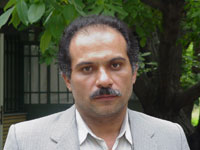 Source: "Killing of Professor Sparks Fight Over His Science and His Politics," Yudhijit Bhattacharjee, Science 22 January 2010: Vol. 327. no. 5964, p. 401, DOI: 10.1126/science.327.5964.401-a
Last week, Alimohammadi was assassinated by a remote-controlled motorcycle bomb outside of his apartment. And the country's guardians clutched him even tighter to their bosom. Iranian authorities characterized the killing as an attempt by U.S. and Israeli intelligence agencies to rein in Iran's nuclear program.
SESAME is of course a UNESCO backed initiative.


 I was fortunate enough yesterday to attend a reception to honor UNESCO Director General Irina Bokova hosted by the United Nations Foundation. The reception was held in the Rayburn Office Building of the U.S. House of Representatives. Representative Russ Carnahan, who had met with Bokova earlier in the day, welcomed the many guests to the reception. Ambassador David Killion, the U.S. Permanent Delegate to UNESCO, introduced Director General Bokova, who made a few gracious remarks, underlying the importance of UNESCO and her intention of making it a still more effective and important organization. I remain awed by her command of languages. I can testify personally that she speaks flawless English and French, and have been told by a friend who is a native speaker of Russian that her Russian is perfect. A Bulgarian, I hear she also speaks Spanish, bring her to a total of five languages.
 Source: Richard Black, BBC News, 18 January 2010.
Ingredients of a new deal on protecting global biodiversity are likely to be decided this week at a London meeting.UNESCO is celebrating 2010, the United Nations Year of Biodiversity, and has an important program on People, Biodiversity and Ecology. Notable within this program is the world network of 553 bioreserves which has developed under UNESCO encouragement. The network provides a global mechanism for research and the development of the understanding needed to preserve biodiversity.
About 55 nations are sending delegates to the meeting, which will be chaired by UK and Brazilian ministers.
A key aim is to agree what sort of targets should be set at October's UN biodiversity summit for curbing the loss of species and ecosystems.
Within the framework of UNESCO’s mandate and its strategic objectives, the Deputy Director-General provides strategic direction and oversight to the Director-General on the general management of the Organization, its response to Member States’ priorities and Executive Board and General Conference decisions.
The incumbent supports the Director-General in ensuring coherence of activities and programmes, at Headquarters and in the Field, that cross functional sectors.
The incumbent will specifically:
- Provide strategic direction and advice to the Director-General on programmes and operations.
- Undertake initiatives of high priority at the request of the Director-General.
- Assist the Director-General to heighten public awareness of UNESCO’s priority activities.
- Represent the Director-General and chair various meetings and task forces.
- Act on behalf of the Director-General during her absence and when required.
- Carry out and hold additional responsibilities as delegated by the Director-General.
UNESCO and the office in the occupied Palestinian territories and Gaza strip is expressing deep concern about the detention of the Chief English Editor of the Ma'an News Agency, Mr. Jared Malsin, a U.S. citizen, by the Israeli authorities at the Ben Gurion International airport on 12 January, 2010 and the plans to deport him.
Ma'an is editorially independent and pluralistic Palestinian news agency, based in Bethlehem. During the past five years, UNESCO has worked together with Ma'an to supported several initiatives and projects in cooperation with Ma'an that promote freedom of expression, access to information and development of the Palestinian society.

