Read the new highlight from the Americans for UNESCO website on the U.S. National Commission for UNESCO.
The National Commission is a unique institution, created by Congress so that sixty non-governmental organizations, chosen by the Commission itself, would each appoint a member. Thus 60 percent of the body are not named by the government, but by civil society.
This was once a star studded body, with representatives not only of educational, scientific and cultural organizations, but also members named by the American Federation of Labor/Congress of Industrial Organizations, the national Chamber of Commerce and the National Association of Manufacturers. Meetings were attended by many hundreds of organizations when the National Commission was headed by Milton Eisenhower, and included luminaries such as Pulitzer Prise winning poet and playwright Archibald MacLeish and soon to be Senator William Benton.
Today's National Commission is, I fear, only a pale reflection of that early body. Still, it plays an important role, and may with time regain its strength and status!
Tuesday, May 01, 2007


Towards Democracy in Iraq
 In the field of human rights and promotion of freedom of expression, UNESCO has three major aims:
# to increase awareness;The United Nations Assistance Mission in Iraq (UNAMI) and the Office of the UN High Commissioner for Human Rights (OHCHR) have jointly created a Human Rights Strategy for Iraq, in which UNESCO is declared lead agency for media.
# to act as a catalyst for reinforcing regional, national and international policies on human rights and press freedom;
# to foster cooperation with all actors and networks.
Read a UNESCO article about "Support for fair, safe and professional media election coverage" in Iraq.
Read about UNESCO's program of Media Development in Iraq.
In memorium
Thursa Bakey Sanders, 90, who was once personal secretary to Pulitzer Prize-winning poet and playwright Archibald MacLeish, died April 11 at her home in McLean. She had Alzheimer's disease. In 1945, while working closely with MacLeish (who was then assistant secretary of state for cultural and public affairs) and Adlai Stevenson (then a special assistant to the secretary of state), Mrs. Sanders assisted in the creation of the United Nations charter in San Francisco and the United Nations Educational, Scientific and Cultural Organization in London.
Monday, April 30, 2007
Tell me about the Slave Trade
 Tell me about the Slave Trade
Text by Jean-Michel Deveau. Foreword by Koïchiro Matsuura, Director-General of UNESCO
Discovering the World series
UNESCO Publishing, 2007.
This book is on sale for 8,00 €.
View table of contents
This book aims to help its young readers become more aware of the racism behind the tragedy of the slave trade. It also describes how the slave trade brought with it profound cultural interactions that changed the knowledge and belief systems informing the world’s civilizations. An appreciation of the abiding influence of African cultures on other civilizations will help readers to defeat the prejudices that fuel racism.
The Discovering the World series is a collection of compact guides aimed at making subjects accessible for a young readers (from 10 years old onwards). They are intended for students of school or college age who need to prepare a text or presentation.
Sunday, April 29, 2007
Next Meeting of the National Commission?
I have heard that the next meeting of the U.S. National Commission for UNESCO is to take place on May 21 and 22, 2007. There is, as yet, no announcement of this on the National Commission website. National Commission meetings are open to the public.
Saturday, April 28, 2007
UNESCO 'must rethink science strategies'
Read the full article by Maryke Steffens in SciDev.Net, 27 April 2007.
The article begins:
An independent review has called for a rethink of UNESCO's approach to science and what its core activities should be.In his comments on the report, UNESCO Director-General Koïchiro Matsuura supported the call to strengthen the agency's work in science policy and capacity building, as well as prioritising science education. But he did not concur that there is overlap of work nor an imbalance of funding with regard to water-related activities.
The recommendations, released this month (5 April), were put together by a review committee made up of scientists from UNESCO (The UN Educational, Scientific and Cultural Organization) and experts from a number of countries, with the aim of informing the organisation's strategy and planning for scientific programmes from 2008.
UNESCO's general conference called for the review in 2006, following criticism from several member states of the agency's support for science.
The evaluation panel recommended:
* Policy advice towards capacity building needs strengtheningComment: Ms. Steffens might have given more emphasis to the evaluation committee's perception that UNESCO plays an important role in international science. Their effort and report are indications that they wish to make that role even stronger. JAD
* Programs must address new scientific paradigms and "cutting edge" research
* Interdisciplinary and intersectoral activities need major strengthening;
* Science education should be a high priority
* The Intergovernmental/International Scientific Programs need better coordination and synergy
* Outreach and partnerships need improvement
* Rigorous and transparent selection, assessment and evaluation of programs and projects are required
* UNESCO's leadership must be enhanced through new global initiatives
* A science advisory committee is required
Related materials:
Report by the Director-General on conclusions and recommendations of the expert team on the overall review of Major Programmes II and IIIUnesco should plan members' strategies and set holistic goals for science
UNESCO Overall Review of its Science Programs
Friday, April 27, 2007
Freedom of Expression -- Press Freedom
 Check out the Website of UNESCO's Program Promoting Freedom of Expression, Press Freedom, Independence and Pluralism of the Media, Democraty, Peace and Tolerance.
World Press Freedom Day 2007
May 2, 2007
Tuesday, April 24, 2007
Climate change threatens UNESCO World Heritage sites
 The Great Barrier Reef in Australia, A World Heritage Site
Climate change, one of the major challenges of the 21st century, will endanger natural and cultural World Heritage sites around the globe, according to the new UNESCO publication, "Case Studies on Climate Change and World Heritage.” The report, supported by the United Nations Foundation and the Department for Culture, Media and Sport of the United Kingdom, features 26 case studies - including the Tower of London, Kilimanjaro National Park and the Great Barrier Reef - that represent the dangers faced by the 830 sites inscribed on the World Heritage List.
Check out the Friends of World Heritage webpage devoted to the impact of climate change on World Heritage sites!
U.S. Groups Petition to Protect Panama World Heritage Site
A mixed group of US and Panama organizations petitioned the World Heritage Committee to list La Amistad International Park as a site In Danger. The scheduled construction of four hydroelectric dams pose threat to the Park. The dams will have the capacity to alter 600 miles of stream and put tribal lands under flood.

Monday, April 23, 2007
Building Science, Technology, and Innovation Capacity
 The videos are now online from the UNESCO-World Bank sponsored Global Forum: Building Science, Technology, and Innovation Capacity for Sustainable Growth and Poverty Reduction. The presentations continue online, where they have been available for some time. So too is the Development Outreach magazine special issue preparing for the conference.
Saturday, April 21, 2007
Innovation for Development
Innovation for Development
2007 Annual Conference, 3-4 May 2007, Paris
Organised in collaboration with UNESCO
2007 Annual Conference, 3-4 May 2007, Paris
Organised in collaboration with UNESCO
This year’s TII (Technology Innovation Information) annual conference, which is being organized in collaboration with the United Nations Educational, Scientific and Cultural Organization (UNESCO), will put the spotlight on how innovation, science and new technology is being harnessed through a whole range of international, national, corporate and private programs, schemes and initiatives for the benefit of the world’s developing countries and populations.
Innovation, the successful exploitation of new ideas, is widely recognized as a major driver of economic growth. The same goes for globalization. However, three-quarters of the world’s population is denied access to the benefits of these two phenomena.
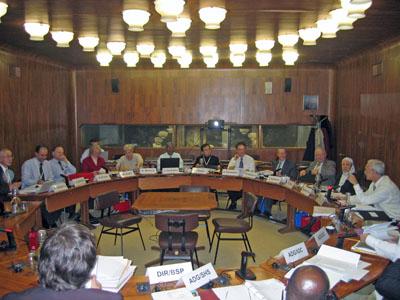
M&E at the 176th meeting of the UNESCO Executive Board


UNESCO's Executive Board is elected by UNESCO's General Conference and is one of the three constitutional organs of UNESCO. Its meetings provide a means for the representatives of the member states to monitor the work of the organization. While all of the reports provided by the secretariat for each meeting serve that end, or deal with proposed initiatives for UNESCO, some of the reports deal specifically with the results of recent evaluation studies or with the performance of UNESCO's monitoring and evaluation systems. Those reports for the current meeting of the Executive Board are linked below.
Report by the Director-General on conclusions and recommendations of the expert team on the overall review of Major Programmes II and III
Report by the Director-General on the evaluation of the first phase of the International Basic Sciences Programme (IBSP) and proposals regarding Draft Document 34 C/4 and Draft Document 34 C/5
Report by the Director-General on the UNESCO Evaluation Policy and elaborated elements of the UNESCO Evaluation Strategy
Comments by the Director-General on the evaluations undertaken during the 2006-2007 biennium and the cost-effectiveness of the programmes evaluated during the period of the Medium-Term Strategy for 2002-2007 (31 C/4)
Monitoring of the implementation of UNESCO's standard-setting instruments
Comments by the Director-General on the implementation of the Internal Oversight Service (IOS) Strategy in 2006-2007: Annual report 2006
Report by the External Auditor on the procedures used to hire consultants for the restructuring of the Education Sector and Comments by the Director-General (176 EX/INF.12)
Progress report by the Director-General on the implementation of International Public Sector Accounting Standards (IPSAS)
Reports by the Joint Inspection Unit (JIU) of interest to UNESCO and the status of implementation of approved/accepted recommendations of Joint Inspection Unit reports
What our friends to the north are doing
The Canadian Commission for UNESCO held its 47th Annual General Meeting in Ottawa on St. Patrick's Day, March 17, 2007. More than 200 persons from across Canada, representing the fields of education, the sciences, culture and communication and information, attended the meeting. The theme of the meeting was Linking Networks, Sharing Ideas. Thus, the meeting focused on the growth of both formal and informal networks in advancing and sharing knowledge around the world. The keynote speaker, Ahmed Djoghlaf, Executive Secretary of the Convention on Biological Diversity, discussed links between biodiversity and cultural diversity.
United States Emphasizes Importance of Protecting Press Freedom
 Secretary Rice addresses the Edward R. Murrow Journalism Participants at the State Department April 10.
In recognition of World Press Freedom Day on May 3, the United States is emphasizing the importance of protecting press freedom.
The briefing recognizes the role of UNESCO in protecting press freedom. Koïchiro Matsuura, UNESCO's Director General has reported that 2006 was the “bloodiest year on record” for journalists worldwide, with more than 150 media member killings. He added that hundreds more media workers were arrested, threatened or attacked because of their work.
UNESCO is sponsoring a May 3-4 conference in Medellin, Colombia, entitled “Press Freedom, Safety of Journalists and Impunity.”
The briefing recognizes the role of UNESCO in protecting press freedom. Koïchiro Matsuura, UNESCO's Director General has reported that 2006 was the “bloodiest year on record” for journalists worldwide, with more than 150 media member killings. He added that hundreds more media workers were arrested, threatened or attacked because of their work.
UNESCO is sponsoring a May 3-4 conference in Medellin, Colombia, entitled “Press Freedom, Safety of Journalists and Impunity.”
World Press Freedom Day 2007
3 May 2007
Ambassador Louise Oliver's Statement to the 176th UNESCO Executive Board Meeting
 Ambassador Louise Oliver
Click here to read the full statement.
She began her remarks with thanks for the expressions of sympathy to the people of the United States after the shootings at Virginia Tech, and continued:
The numerous documents that have been given to us during the past month have made it clear that the Director General and his colleagues in the Secretariat have worked very hard to try to respond to the needs and desires of UNESCO’s member states, as well as to the variety of internal and external pressures currently faced by the Organization.
We would particularly like to commend the Director General for the efforts he has made to transform UNESCO into a more effective results-based organization, and to give it a stronger voice within the United Nations (UN) system as the UN searches for better ways to address the challenges of our world today.
As we all know, the process of reform is not an easy one, particularly in an intergovernmental organization. Because it tends to be disruptive and unsettling, the purpose of reform should be clearly articulated. At UNESCO the goal of reform must be to help the Secretariat do high quality work that achieves the objectives set by its Member States more effectively and efficiently.
Friday, April 20, 2007
Energy in the Changing World
In follow-up to the recommendations of the last G8 Summit, UNESCO and the Ministry of Energy and Industry of the Russian Federation will convene a Ministerial Conference on “Energy in the Changing World” at Headquarters (31 May to 1 June2007). The Conference is to address the energy challenges facing the international community in the 21st century, the role of Science in sustainable energy development, and the reduction of energy poverty.
Millinium Ecosystem Assessment Follow-up Group
Millennium Ecosystem Assessment Follow-up Group formed.
"One of the recommendations from the Millennium Ecosystem Assessment (MA) Partners Meeting in Kuala Lumpur in September 2004 was that ICSU and UNESCO should take the lead in addressing how the experiences from the MA could help identify needs for additional research that could fill some of the knowledge gaps identified by the Assessment. The need for such an analysis has also been stressed in the follow-up discussions in relation to the development of a proposal for a GEF Medium Size Grant. UNU has later agreed to join ICSU and UNESCO in this follow-up activity and it has been decided to move forward despite the uncertain fate of the GEF proposal.......
ICSU, UNESCO and UNU will convene a Scoping Group of experts with relevant natural and social science disciplinary competence representing experiences from the MA as well as the relevant sub-global assessments to produce a report on the priority research gaps that need to be filled in order to improve any future global or-sub-global Millennium Ecosystem Assessment."
The report of the working group "will be transmitted to ICSU, UNESCO and UNU. If the report recommends further development of international and/or regional coordinated approaches, ICSU, UNESCO and UNU will engage the wider science community and other potential MA partners (e.g., IUCN, WRI, etc.) to consider appropriate mechanisms to develop a science and implementation plan, related time schedules, resource needs and possible partnerships, to address the identified research gaps."
The working group is chaired by Harold Mooney, and includes two other people from the United States --Doris Capistrano and Ruth DeFries.
Harold Mooney
Read the full discussion of the working group on the International Science Council website.
"One of the recommendations from the Millennium Ecosystem Assessment (MA) Partners Meeting in Kuala Lumpur in September 2004 was that ICSU and UNESCO should take the lead in addressing how the experiences from the MA could help identify needs for additional research that could fill some of the knowledge gaps identified by the Assessment. The need for such an analysis has also been stressed in the follow-up discussions in relation to the development of a proposal for a GEF Medium Size Grant. UNU has later agreed to join ICSU and UNESCO in this follow-up activity and it has been decided to move forward despite the uncertain fate of the GEF proposal.......
ICSU, UNESCO and UNU will convene a Scoping Group of experts with relevant natural and social science disciplinary competence representing experiences from the MA as well as the relevant sub-global assessments to produce a report on the priority research gaps that need to be filled in order to improve any future global or-sub-global Millennium Ecosystem Assessment."
The report of the working group "will be transmitted to ICSU, UNESCO and UNU. If the report recommends further development of international and/or regional coordinated approaches,
 ICSU, UNESCO and UNU will engage the wider science community and other potential MA partners (e.g., IUCN, WRI, etc.) to consider appropriate mechanisms to develop a science and implementation plan, related time schedules, resource needs and possible partnerships, to address the identified research gaps."
The working group is chaired by Harold Mooney, and includes two other people from the United States --Doris Capistrano and Ruth DeFries.
Harold Mooney
Read the full discussion of the working group on the International Science Council website.
Follow-up on African ST Summit
IMPLEMENTATION BY UNESCO
OF THE DECISIONS TAKEN BY THE AFRICAN UNION SUMMIT
ON SCIENCE, TECHNOLOGY AND SCIENTIFIC RESEARCH FOR DEVELOPMENT,
HELD IN ADDIS ABABA IN JANUARY 2007
(Item 176 EX/56 on the agenda of the Executive Board)
OF THE DECISIONS TAKEN BY THE AFRICAN UNION SUMMIT
ON SCIENCE, TECHNOLOGY AND SCIENTIFIC RESEARCH FOR DEVELOPMENT,
HELD IN ADDIS ABABA IN JANUARY 2007
(Item 176 EX/56 on the agenda of the Executive Board)
The Heads of State and Government of the African Union, at the meeting at the 8th ordinary session of the AU Assembly in Addis Ababa, Ethiopia, from 29 to 30 January 2007, reaffirmed their determination to banish poverty, combat diseases, improve public health, increase agricultural production and achieve the Millennium Development Goals (MDGs).
The Africa Group Bureau and the African Executive Board Members met on 20 February 2007 at UNESCO. They requested that UNESCO's Director-General prepare a plan of action on how UNESCO will participate in the implementation of the African Union Heads of State and Government Summit decision and declaration to be submitted to the Executive Board at its 177th session and subsequently to the General Conference at its 34th session.
The Africa Group Bureau and the African Executive Board Members met on 20 February 2007 at UNESCO. They requested that UNESCO's Director-General prepare a plan of action on how UNESCO will participate in the implementation of the African Union Heads of State and Government Summit decision and declaration to be submitted to the Executive Board at its 177th session and subsequently to the General Conference at its 34th session.
UNESCO: What is it? What does it do?


Click on the above image and you will see a word cloud from Many Eyes (A great set of tools for visualizing data). The size of each word is proportional to the number of times that word is used in UNESCO's booklet. The word cloud seems accurately reflects the nature of UNESCO's work. Play with it, and you may learn something about the organization!
Medium-term Strategy, 2008-2013
UNESCO's Executive Board is now meeting in Paris. One of the items under consideration is the strategy for the organization for the next six years. Based on the recommendations of the Executive Board, the General Conference will approve a strategy when it meets in October.
Read the Draft Medium Term Strategy for 2008-2013!
Please add your comments on the medium term strategy.
A discussion now could inform the U.S. National Commission for UNESCO
when it meets this summer.
A discussion now could inform the U.S. National Commission for UNESCO
when it meets this summer.
Subscribe to:
Posts (Atom)