Wednesday, January 31, 2007

UNESCO Outraged by Attack on Baghdad Girls School

On Sunday, according to DetNews.com:
In Baghdad, mortar shells crashed down on a girls high school, killing at least five students and wounding 13 other people, including two teachers, said Brig. Gen. Saad Sultan of the Interior Ministry.

Hours after the attack, grieving parents wept as the bodies of their children were placed in coffins.

Police said four of the girls were killed instantly and a fifth died later.

No group claimed responsibility for the attack.
The Islamic Republic News Agency reports:
UNICEF and UNESCO in a joint statement, a copy of which was faxed to IRNA here Monday, expressed outrage at a terroristic act of mortar attack on a girls' school in Baghdad on Sunday January 28, 2007.

UNICEF Representative for Iraq, Roger Wright, and Mohamed Djelid, UNESCO Country Director, both emphasized, "This is yet another tragic reminder of the risks facing Iraq's schoolchildren every day as they struggle amidst the insecurity to receive their right to education.

The apparently deliberate targeting of children in this incident is an unforgivable crime."

The two UN agencies stressed that violence and the threat of more violence have seriously disrupted the education system across parts of Baghdad. Girls' schools in particular have suffered, with girls now making up the majority of the far too many children out of school in Iraq's capital.

UNICEF and UNESCO called upon all parties in Iraq to exercise their responsibility and duty to ensure that schools remain safe havens for children to attend, learn and play. Finding appropriate strategies to bring education to children in environments where normal schooling has become impossible is now an imperative.
To read the full article on the Islamic Republic News Agency website click here.

UNESCO Outraged by Attack on Baghdad Girls School

On Sunday, according to DetNews.com:
In Baghdad, mortar shells crashed down on a girls high school, killing at least five students and wounding 13 other people, including two teachers, said Brig. Gen. Saad Sultan of the Interior Ministry.

Hours after the attack, grieving parents wept as the bodies of their children were placed in coffins.

Police said four of the girls were killed instantly and a fifth died later.

No group claimed responsibility for the attack.
The Islamic Republic News Agency reports:
UNICEF and UNESCO in a joint statement, a copy of which was faxed to IRNA here Monday, expressed outrage at a terroristic act of mortar attack on a girls' school in Baghdad on Sunday January 28, 2007.

UNICEF Representative for Iraq, Roger Wright, and Mohamed Djelid, UNESCO Country Director, both emphasized, "This is yet another tragic reminder of the risks facing Iraq's schoolchildren every day as they struggle amidst the insecurity to receive their right to education.

The apparently deliberate targeting of children in this incident is an unforgivable crime."

The two UN agencies stressed that violence and the threat of more violence have seriously disrupted the education system across parts of Baghdad. Girls' schools in particular have suffered, with girls now making up the majority of the far too many children out of school in Iraq's capital.

UNICEF and UNESCO called upon all parties in Iraq to exercise their responsibility and duty to ensure that schools remain safe havens for children to attend, learn and play. Finding appropriate strategies to bring education to children in environments where normal schooling has become impossible is now an imperative.
To read the full article on the Islamic Republic News Agency website click here.

"Young People and AIDS: A Practical Guide"

Published on paper, this UNESCO book was designed for primary and secondary school teachers, youth leaders in voluntary organization and radio and for all those interested in working on HIV/AIDS preventive programmes targeting young people.

For more information or to order a free copy, click here.

Editor's comment: Why in the world would UNESCO publish this first or only on paper, when the problem of educating young people about AIDS is so urgent? They must have had an electronic copy, and it is certainly easier to mount such a copy of the World Wide Web than to type set and print the book. With something like one billion personal computers in the world, most connected to the Internet, it seems clear that this book would be of interest and widely used if and when it is made available on the Web. JAD

Briefing Book for Congress on the UN


The Better World Campaign has published online its 2007 Briefing Book for the Congress with lots of information on the United Nations. It is full of useful, accurate information.

Check out its briefing titled: Agencies, Funds, and Programs

A few years ago, before President Bush announced that the United States would rejoin UNESCO, the Better World Campaign published this add.

"An Ancient Settlement Is Unearthed Near Stonehenge"

National Geographic Society photo of the Stonehenge monument, within UNESCO Stonehenge World Heritage site in January 2007.

Read the full article subtitled "Sites Apparently Used for Ceremonies and Burials" by Marc Kaufman in The Washington Post, January 31, 2007.
New excavations near the mysterious circle at Stonehenge in southern England have uncovered dozens of homes where hundreds of people lived -- at roughly the same time that the giant stone slabs were being erected 4,600 years ago.

The finding strongly suggests that the monument and the settlement nearby were a center for ceremonial activities, with Stonehenge probably a burial site, while other nearby circular earthen and timber "henges" were devoted to feasts and festivals.

The small homes and personal items found beneath the grounds of the Stonehenge World Heritage Site are the first of their kind from that late Stone Age period in Britain, and they suggest a surprising level of social organization and ceremonial behavior to complement the massive stonework nearby. The excavators said their discoveries, about two miles from Stonehenge itself, together constitute an archaeological treasure.

Monday, January 29, 2007

NatCom Seeks Information for List of UNESCO Clubs

The U.S. National Commission for UNESCO (the NatCom) is seeking to compile a list of UNESCO clubs and associations in the United States. Click here for information on how to contact the Department of State UNESCO unit.

There are now some 4.000 UNESCO associations, centers and clubs in about 100 countries throughout the world. However, we believe there are relatively few in the United States. Club movement members, who are all volunteers, share a commitment to UNESCO’s ideals and work to translate them into reality on the ground. In the half-century since the first UNESCO club was founded in Japan, the world has witnessed a vast range of events. Those events have included ones in every one of UNESCO’s fields of competence.

At the international level, the World Federation of UNESCO Clubs, Centers and Associations (WFUCA) is responsible for informing, coordinating and mobilizing its members, with UNESCO's support and cooperation. Officers of Americans for UNESCO currently represent the United States in the World Federation.

There is considerable information on this UNESCO website for those who might be interested in starting a UNESCO club. The materials include a 191 page online book by Anne Willings-Grinda on the history of UNESCO clubs from 1946 to 1996: UNESCO Clubs, Paths to Light

More information about UNESCO clubs, centers, and associations is available from UNESCO.

Apply Now to Become a UNESCO Chair

The deadline to apply is March 30, 2007.

UNESCO Chairs are awarded each year to individual colleges, universities and research institutions to initiate programs that further research and training in one of UNESCO's fields of competence. A Chair may be established by reinforcing an existing teaching or research program and giving it an international dimension, or one may be established as a new teaching and research unit.U.S. organizations wishing to apply.

Upon the recommendation by the U.S. National Commission for UNESCO, UNESCO recently has approved two UNESCO Chairs at U.S. universities. The University of Oregon proposal for a chair in Transcultural Studies, Interreligious Dialogue, and Peace was approved, as well as, a Georgetown University proposal for a chair in Achieving the Promise of EFA: A Focus on Literacy and Sustainable Development.

Obtain more information on how to submit your application through the Department of States Secretariat to the United States National Commission for UNESCO at this website.

Sunday, January 28, 2007

International Fulbright Science and Technology Award

In June 2006, the United States Department of State, Bureau of Educational and Cultural Affairs (ECA) announced a worldwide grant competition for graduate students in Science and Technology. The International Fulbright Science and Technology award is intended for Ph.D. study at top U.S. institutions in science, technology, or engineering.

While the Applications for this academic
year closed in August of 2006, watch this spot for announcement of the competition for the next academic year.

U.S. National Commission for UNESCO Newsletter

Read Volume 2, Issue 4, October/November/December 2006

The New Issue Is Now Out!

Contents:
Overview from the New Executive Director

UNESCO Announces Five Regional Literacy Conferences as a Follow-up to the White House Conference on Global Literacy

UNESCO Released Global Monitoring Report 2007: Strong Foundations - Early Childhood Care and Education


UNESCO Holds Education for All (EFA) High Level Working Group in Cairo, Egypt

Fulbright Program Scholars from Around the World Descend on UNESCO

U.S. Mission to UNESCO Hosts America Roadside Architecture Event at UNESCO

IO-UNESCO Office Supports Indian Ocean Tsunami Warning System

UNESCO Approves Two U.S. Chairs - Georgetown and Oregon; National Commission Opens Call for 2007 Applications

UNESCO Job Vacancies

How the "S" got in UNESCO

UNESCO was originally conceived during World War II as an organization focusing on education. Science was not added to its charter until November 1945. Indeed, it was only on the sixth day of the international conference set up to create the organization that UNECO became UNESCO.

Joseph Needham is as important to the addition as anyone. Needham is best known as the author of a series of books on Chinese science and technology -- a series that changed opinions not only of Chinese history, but of the history of science and technology worldwide. He was also the first person to head the scientific sector of UNESCO. Needham began his career as a Cambridge biologist, but in 1943 was sent to China to establish a Sino-British Science Co-operation Office. There he became impressed with the need to build the scientific and technological capacity of not only China but of the Third World. He began to write other scientists to gain support for an initiative to transfer science and technology from the advanced nations to the third world, and when he learned of the proposed creation of an organization for scientific and cultural cooperation, he transferred his efforts to including science within its functions.

Julian Huxley, a distinguished biologies who was the brother of Aldous Huxley and grandson of Thomas H. Huxley (a defender of Darwin known as "Darwin's Bulldog"), was on the British delegation which hosted the Convention, and lent his support to the effort to include science in UNESCO's charter. Huxley later became the first Director-General of UNESCO,

The American scientific community too was influential in the effort. U.S. Secretary of State Cordell Hull explained to the press in March of 1944
Teachers, students and scientists have been singled out for special prosecution. Many have been imprisoned, deported or killed, particularly those refusing to collaborate with the enemy. In fact, the enemy is deliberately depriving the vicems of those tools of intellectual life without which recovery is impossible.
Recognizing that UNESCO was created to build the peace starting in the minds of men, it is not unlikely that the founders recognized that building a scientific, rational culture would be a significant step in building a culture of peace.

Harlow Shapley, an American astronomer who attended the June 1945 meeting that created the United Nations and that called for the subsequent meeting to set up UNESCO, suggested that science be included in the UNESCO charter. Later in the November London meeting, the U.S. delegation introduced the resolution to that effect.

Ellen Wilkinson, the UK Minister of Education who chaired the meeting noted:
In these days, when we are all wondering, perhaps apprehensively, what scientists will do to us next, it is important that they should be linked closely with the humanities and should feel that they have a responsibility to mankind for the results of their labor.
She too supported the inclusion of the "S" in UNESCO.

It seems likely that the founders also recognized even in the 1940's that science was a necessary tool for sustainable development. Thus, while initially UNESCO focused on rebuilding the scientific capabilities lost during World War II, two of its first science programs focused on arid lands and the Amazon basin.

Read more about the history of science programs at UNESCO:
* "Looking Back on Science and Engineering in UNESCO: 1946-2004" By Philip W. Hemily in Prospects and Retrospects, Volume 1, No. 1, Spring/Summer 2004, pages 22 and 23.

* Sixty Years of Science at UNESCO 1945-2005, UNESCO, 2006.

* UNESCO: Its Purposes and Philosophy, Julian Huxley, UNESCO, 1945

Friday, January 26, 2007

"U.S. Civil Society Views of UNESCO"

Read the full report of the meeting.

The Board on International Scientific Organizations of the National Academies in 2002 held a meeting of experts from U.S. civil society organizations to discuss the United States’ re-entry into UNESCO. The meeting was held at the request of the Bureau of International Organizations of the U.S. Department of State, and took place at the facilities of the National Academies on November 22, 2002. The report of the meeting represents the opinions of individuals who attended, and does not represent the formal recommendations of the National Research Council (nor does it appear to have been subjected to the Academies' peer review process required for more formal recommendations.) Still the material is of sufficient interest and importance to be quoted extensively.

General comments reported from the meeting were:
* Given that there is a significant overlap between U.S. civil society’s priorities and those of UNESCO, a mechanism is needed to better integrate U.S. and UNESCO programs and thereby multiply their effectiveness.
* Several people pointed out that in the United States there is a general lack of awareness and understanding of UNESCO programs. Civil society organizations can help inform the U.S. public about UNESCO and its programs. For example, the media can play an important role in promoting and increasing awareness of UNESCO World Heritage Sites.
* UNESCO programs tend to be too compartmentalized; there is a need for more collaboration across the different UNESCO sectors.
* It would be useful to strengthen partnerships between UNESCO and other international organizations.
* UNESCO’s main role is as an advocate and convener, not as a funder.
* In addition to discussing how the United States can influence the programs funded through UNESCO’s appropriated budget, it is also important to look at how to impact extra-budgetary programs.
* In support of technical cooperation and international assistance objectives, the United States should encourage more partnerships, particularly with the UNESCO regional offices and institutes.
* In looking at UNESCO’s priorities and draft program, participants expressed concern about going to UNESCO with many specific changes to the program and budget without a good understanding of the overarching strategy and priorities. It was suggested that it might be helpful to reexamine UNESCO’s mandate since it has not changed significantly since 1946 when the organization was first established.
* As the United States looks at which UNESCO program areas are most important to U.S. goals, it should especially consider activities that engage large segments of different communities and activities where UNESCO would bring some unique added value that cannot be acquired anywhere else.
* As a member of UNESCO, the U.S. may have some new opportunities. These include: the ability to work globally and benefit from the capacity of each of the members of this global organization, and the formation of partnerships between government and non-government organizations.
Science Education
* Science education is fragmented within UNESCO – higher education in the science sector and K-12 in education. The sectors are beginning to collaborate and hold joint meetings in an effort to develop a common direction.
* The United States is in a leadership role on the issues of gender in science and technology for development and science education.
* In higher education, UNESCO could play a key role on issues of mutual recognition of degrees, credentials, quality assurance mechanisms, and accreditation. It will be difficult for UNESCO to achieve international accreditation standards without U.S. involvement.
Natural Sciences
* Although the engineering community has been involved in international programs similar to the UNESCO priorities, it has not been heavily engaged at the policy level.
* The U.S. engineering community could contribute to UNESCO programs in the following areas:
1) engineering education and capacity building; 2) communication and dissemination; 3) disaster reduction; 4) megacities, 5) commitments made at the World Summit for Sustainable Development.
* Several of the UNESCO strategic objectives for other sectors are important to science. These include promoting experimentation (under Education), encouraging dialogue (Culture), and enhancing linkages between culture and development (Culture).
Social Sciences
* To achieve the principal priority of the social sciences sector, ethics in science in technology, UNESCO should strengthen existing partnerships and collaborations with other international organizations. For example, the International Council for Science (ICSU) Standing Committee on Responsibility and Ethics in Science (SCRES) has collaborated with the UNESCO World Commission on the Ethics of Scientific Knowledge and Technology (COMEST). SCRES conducted an empirical study of existing standards for science, which could serve as a basis for developing an international set of guidelines that could be used by ICSU, UNESCO and others.
* The U.S. behavioral and social science communities need to be made aware of UNESCO programs and the need for their expertise, especially in the role of empiricism in social science research. U.S. scientists can help strengthen the role of evidence and data in UNESCO’s activities and management.
* The behavioral and social sciences could take a lead role in the following areas: the science of learning, peace diplomacy and negotiation, methods for assessment, and the ethical issues regarding the use of human subjects in research.
Communication and Information
* UNESCO is a strong ally for press freedom. At the top, Director General Matsuura appears to be a strong advocate for press freedom. However, at lower levels and in the UNESCO program and medium-term strategy, proposals that threaten press freedom seem to be returning. As a member, the United States can work to prevent this setback.
* The UNESCO priority of universal access to information is particularly important to the scientific community, since many scientists need access to electronic scientific databases. With most of the world’s scientific databases and technical material now being produced electronically, access for developing country scientists must be ensured.
* The Electronic Privacy Information Center has worked closely with UNESCO to promote principles of freedom of expression, access to information, bridging the digital divide and information exchange on the Internet.
The role of U.S. civil society in advising the U.S. government on UNESCO

The UNESCO constitution requires each member state to have a national commission. U.S. legislation from 1946 allows for a commission of up to 100 people: 15 from federal government, 15 from state and local government, 40 from non-governmental organizations, and 30 other at-large groups. Several participants commented that it is important to look at new possible formations. Other countries, such as Canada, Germany and Brazil, are using their national commissions to help inform their domestic policies and programs, not just as the representative body for UNESCO. Participants discussed the idea of ad hoc committees or subgroups on specific issues. Linkages between such groups and good communication among the staff of the commission, the State Department’s IO Bureau, and civil society groups are key to a successful national commission.

There was a discussion on how to reach out to and include civil society – and the private sector – in the national commission. It was suggested that perhaps a few key organizations could have a permanent slot on the commission, with some sort of rotating mechanism so that all of the different professional societies are represented at some stage. The State Department could use the national commission as the head of a civil society network.

In order to facilitate its work and to reach out to the public, the commission could take advantage of information technology. A Web site and a regular online newsletter could be useful in engaging the public in activities of the commission and promoting greater U.S. participation in UNESCO.

The U.S. national commission could use the help of U.S. civil society in recruitment for jobs at the UNESCO Secretariat. Civil society groups could 1) inform the commission of any upcoming vacancies at the UNESCO Secretariat that they hear about through their networks; 2) identify which positions at the UNESCO Secretariat are of primary interest to the United States; and 3) help identify candidates for these positions.

Thursday, January 25, 2007

Donna E. Shalala Joins Americans for UNESCO

Donna Shalala has joined the Advisory Council of Americans for UNESCO.

Donna E. Shalala has been President of the University of Miami since June 1, 2001. She was U.S. Secretary of Health and Human Services (HHS) for eight years (1993-2001), the longest serving HHS Secretary in U.S. history. As Chancellor of the University of Wisconsin-Madison (1987 to 1993), she led what was then the nation’s largest public research university. She served in the Carter administration as Assistant Secretary for Policy Development and Research at the U.S. Department of Housing and Urban Development, and was President of Hunter College of the City University of New York from 1980 to 1987.

Dr. Shalala received her A.B. degree in history from Western College for Women and her Ph.D. degree from The Maxwell School of Citizenship and Public Affairs at Syracuse University. A leading scholar on the political economy of state and local governments, in addition to her current professorship at Miami, she has held tenured professorships at Columbia University, the City University of New York (CUNY), and the University of Wisconsin - Madison.

Wednesday, January 24, 2007

Where would we be now without UNESCO?


Read “The world needs both skeptical intelligence and vision.” by Paul Kennedy in The InterDependent (magazine of the United Nations Association of the United States of America), Vol. 4, No. 4, Winter 2006/07. The article is on pages 15 and 16.

Paul Kennedy is the author of The Parliament of Man: The Past, Present, and Future of the United Nations and a great historian and writer. He says in part:
What does our world posses today, because of the United Nations organization, that it did not possess in, say, 1942-43, the middle of the Second World War?...

We have established a stunning array of international bodies to respond to the needs of the world’s women and children, especially the poorest and most discriminated against...

We have established an international human rights regime that for all its dreadful setbacks may be the single most significant advance in our globe mentality—in our way of thinking about the rights of others—since the campaigns against slavery...

We are steadily, and with setbacks and grudging opposition, setting up an international monitoring regime to protect our environments, local, national and global, and to safeguard future generations from the all too obvious harm that neglect of our ecologies can bring...

We have, alongside all this institutional building, witnessed the emergence of the idea of an international civil society. It is vague, contested and always in flux, which is probably a good thing. It has developed thanks to the profound technological, economic, social and ideological transformations of the post-1945 era. And it has done so not apart from international institutions, but in conjunction with them...
Of course, Kennedy is addressing the entire United Nations system of organizations, but UNESCO plays an especially important role in each of the efforts mentioned above.

Sunday, January 21, 2007

Conference on New Media and the Press Freedom Dimension

Organized by the World Press Freedom Committee, the World Association of Newspapers and UNESCO on 15-16 February 2007 in UNESCO Headquarters, this Conference will focus on the Challenges and Opportunities of New Media for Press Freedom.

The Understanding World Network

Read the full UNESCO News Release.

The Understanding World Network is to promote dialog and mutual understanding by linking traditional and electronic media. Under UNESCO auspices, media organizations, NGOs and governmental representatives are meeting in Bali (Indonesia), from January 21 to 23, to lay the ground for the network.

Editor's comment: The development of low cost radio transmitters and the continuing reduction in the cost of consumer electronics combine to make radio and even television affordable even by the poor in remote villages in developing nations. UNESCO has lead in helping the world to understand that the increasing potential for media communication will not be met unless content of interest to local people can be provided in language and format that they can understand. Thus there is a need to provide interfaces between the so-called "main stream media" and "community media" to bridge a significant current "content divide". The Understanding World Network may be a giant step in the right direction. JAD

About the Understanding World Network: Interview with Abdul Waheed Khan, UNESCO's Assistant Director-General for Communication and Information

Tuesday, January 16, 2007

UNESCO and Mrs. Laura Bush hosted roundtable on literacy and teacher training

DSC_0070 copie WEB 200pixels.jpg The United States and UNESCO yesterday hosted a roundtable discussion at UNESCO’s Paris Headquarters focused on literacy and teacher training for educational practitioners who teach literacy outside of formal school settings. The roundtable, entitled "Teacher Training and Literacy" highlighted the need for a greater supply of trained teachers in regions where an acute shortage is affecting efforts to promote literacy and meet the goals of the Education for All program by 2015. It was hosted by Laura Bush and Koïchiro Matsuura, the Director-General of UNESCO. Mrs. Bush is the Honorary Ambassador for the UN Literacy Decade.

Building Peace through Communication and Information

Power of Peace: Building Peace through Communication and Information

UNESCO, in association with the Government of Indonesia, is hosting a Global Forum in Jimbaran, Bali, Indonesia, on 21-23 January 2007. The purpose is to identify practical measures to harness the mass media and information and communication tools for cultural self-expression and peace.

…since wars begin in the minds of men, it is in the minds of men that the defences of peace must be constructed; …ignorance of each others ways and lives has been a common cause, throughout the history of mankind, of that suspicion and mistrust between the peoples of the world through which their differences have all too often broken into war.
The UNESCO Constitution

Tuesday, January 09, 2007

UNESCO's Guide for Electronic Theses and Dissertations


The Electronic Thesis and Dissertation (ETD) site is a resource for graduate students who are writing theses or dissertations, for graduate faculty who want to mentor ETD authors, for graduate deans who want to initiate ETD programs, and for IT administrators at universities.

Published by UNESCO, The Guide is an international, "living" document, written by ETD scholars throughout the world. The Editors, Web Administrators, Graphic Designers of the Guide are Professors from prestigious US Universities such as Cornell, whose goal is to identify "technologically innovative" theses and dissertations, and provide models of new media scholarship for the next generation of scholars and researchers.

Theses or dissertations that are "technologically innovative" are crafted in new ways, perhaps using streaming multimedia, interactive features (chats, listservs, response questionnaires, three-dimensional models, animation.The Guide will be updated regularly based on submissions by ETD authors and NDLTD members. You may access the ETDs collection, or submit your innovative dissertation on the ETD website.
© Picture: Mahidol University

Monday, January 08, 2007

Towards a Free, Pluralistic, Vibrant Media in Iraq

An International Conference on Freedom of Expression and Media Development in Iraq will take place from 8 to 10 January at UNESCO. The conference is organized by the Communications and Media Commission of Iraq (CMC)* in cooperation with UNESCO and UNDP. A session will be devoted to journalists who have risked – and in all too many cases lost – their lives to cover events in Iraq.

The Conference will provide a forum for debate, reflection and analysis of different issues concerning the Iraqi media landscape and its development needs, addressing such themes as: journalist safety; international assistance; ownership, editorial independence, pluralism; professional standards; human and institutional capacity building and gender issues; markets and commercial sustainability; public service broadcasting; regulatory frameworks and legislation.

With the recent constitution of Iraq’s first permanent government, it is an ideal time to meet again and to take stock of the most pressing challenges faced by Iraqi journalists and media outlets. Furthermore, there remains a great deal to do in terms of journalist protection and capacity-building.

The consensus of opinion is that a conference should be held to refocus attention on challenges faced by Iraqi media, and that the chances of success of such a conference would increase with the involvement of United Nations organizations-players with the objectivity and gravitas to encourage all parties to work together toward common goals.
Some 180-200 participants, including a delegation of Iraqi media professionals, international NGOs and other implementing organizations, donors, Iraqi government officials and other policy makers are expected to attend the event.

*The Communications and Media Commission of Iraq (CMC) was established in mid-2004 under Iraqi law as the independent regulatory body with exclusive authority to license and regulate broadcasting and telecommunications in Iraq. In addition to these regulatory responsibilities, the law obliges the CMC to work towards developing media in Iraq - including print, internet and other media - in accordance with internationally-accepted best practices and requirements of international law for freedom of expression and media independence.

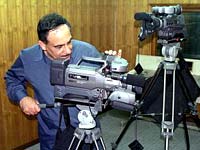
© Photo: UNESCO/ Giovanni Boccardi, Iraki TV, UNESCO provided equipment and trained staff

Sunday, January 07, 2007

Meeting of UNESCO Science Program Review Panel

The next meeting of the panel reviewing UNESCO's programs in the Natural Sciences and the Social and Human Sciences is to be held from the 9th to the 12th of January at UNESCO headquarters in Paris. This will be the fifth meeting in the series. The Panel is to complete its final report in early February, to be submitted to the Executive Board of UNESCO by mid March.

Editorial Comment: It would be very useful for the Panel to recommend that UNESCO make a major initiative in building science, technology and engineering policy capacity in African governments. Africa has been declared a priority area for UNESCO, and could benefit now from a strengthened effort to utilize science and technology for social and economic development.

The 8th Summit of the African Union is to be held on the topic of Science, Technology and Innovation. It will take place in Addis Ababa from January 22 to 30.

A conference on science, technology and innovation is to be held at the World Bank offices in Washington, DC on February 13-15. (UNESCO is one of the cosponsors. The appendices to the background paper for this conference provide information on science and technology in Africa that illustrates the need for an initiative.)

The Fundamental Role of Science and Technology in International Development: An Imperative for the U.S. Agency for International Development published last year by the U.S. National Academy of Sciences should form a useful basis for U.S. participation in building science and technology capacity in Africa.

The African Science Academies Development Initiative (funded by the Gates Foundation) provides a valuable civil society counterpart for STI policy, and would complement such an initiative on the part of UNESCO as would The African Ministerial Council on Science and Technology established under the auspices of the New Partnership for Africa�s Development (NEPAD) and the African Union (AU).