Saturday, June 13, 2009

"Where Poverty and Culture Intersect: Embracing Local Traditions to Better Fight Poverty"


Ivonne A-Baki, currently President of the Andian Parliament and a candidate for the position of Director General of UNESCO has provided this stimulating article in The Huffington Post.
Fostering cultural expression can have a major positive impact on driving local as well as global well-being. Indigenous design, craft, and historical sites hold a wealth of potential in creating new jobs and improving incomes while preserving ages-old traditions. UNESCO (United Nations Educational, Scientific and Cultural Organization), for example, is improving the living standards of the poor in Latin America through projects aimed at generating employment by preserving and promoting the cultural heritage and traditional handicrafts of local communities.

You may also be interested in her article "Women Building a Culture of Peace" written several years ago when she was the Ambassador of Ecuador to the United States.

Editorial: The United States Should Support Associate Expert Posts at UNESCO

UNESCO's Associate Experts’ Scheme provides young professionals every year with the opportunity to contribute to international technical cooperation. The program is open only to the nationals designated by the nations which are supporting the program (with voluntary contributions). Currently they are: Belgium, Finland, Italy, France, Germany, Greece, Japan, Republic of Korea, Spain, Sweden and Switzerland. The United States is not a supporter of the program.

Associate Experts, usually under the age of 32 at acceptance, participate in the program for one year, with an option of a second year. During that time they receive preparatory instruction and in service training. The program is open to young professionals with university degrees in education, culture, science, social and human sciences or communication, or in a field of direct relevance to the management and administration of an international organization.

Of course, Americans are included in the Secretariat of UNESCO as regular, international civil service employees, but the U.S. is underrepresented in that workforce, largely due to the long absence from membership in UNESCO. Some Americans have been detailed to UNESCO by their U.S. government agencies, and the Fulbright Fellowship program has allowed some fellows to participate in UNESCO as part of their fellowship experience. Still, there are comparatively few opportunities for young American professionals to work in UNESCO, especially as compared with the interest expressed from our large population.

Were the United States to contribute to this program the effort could:
  • help to rectify the lack of professionals in this country who understand UNESCO,
  • help to add qualified Americans to the UNESCO staff,
  • build linkages between the American educational, scientific and cultural communities and their counterparts abroad,
  • provide much needed support to UNESCO's valuable programs in ways fully under the control of the United States, thus directing support to the programs we value most.
If properly negotiated, participation in the Associate Experts program could be for the United States, as it already is for eleven European nations, an inexpensive means of providing effective international assistance as well as an effective means of building U.S. capacity to deal with intergovernmental organizations.

Your comments are most welcome on this posting, and I would encourage you also to contact the Department of State's UNESCO watchers if you feel that the United States should participate in the Associate Experts program.

John Daly
The opinions expressed above are those of the author, and do not necessarily reflect those of Americans for UNESCO.

An Example of an Associate Expert

Patrick Montjourides is an Associate Expert who participated on the EFA Global Monitoring Report Team financed by the French government.
He holds a “Maitrise” in international economics from the University of Paris Dauphine and a Master’s degree in education economics from the University of Burgundy. He is now pursuing a PhD in association with IREDU, the Institute of Research in Education: Sociology and Economics of Education, based in Dijon.

UNESCO's Trafficking Statistics Project

The UNESCO TRAFFICKING STATISTICS PROJECT is a first step toward clarifying what we know, what we think we know, and what we don't know about trafficking in human beings.

As part of its mandate to strengthen research, UNESCO is conducting a literature review and meta-analysis of existing statements on trafficking. UNESCO is tracing the origin of numbers cited by various sources, attempting to ascertain the methodology by which these numbers were calculated, and evaluating their validity. The aim is to clarify the bases on which estimates of the numbers of trafficked persons are derived, and to separate trafficking myths from trafficking realities.

Thursday, June 11, 2009

Job: HEAD, INFORMATION AND COMMUNICATION TECHNOLOGY SECTION

Location: The Abdus Salam International Center for Theoretical Physics, Trieste, Italy
Level: P4
Closing Date: August 15, 2009
For more information: http://tinyurl.com/n476n3

Monday, June 08, 2009

Nine Candidates for the Post of Director General

The Chairman of UNESCO’s Executive Board, Ambassador Olabiyi Babalola Joseph Yaï (Benin), today made public the list of candidates to the post of Director-General of the Organization.

A total of nine candidatures were received by the Executive Board. They are (in chronological order of reception):

  • - Ms Ina MARČIULIONYTĖ (Lithuania)
Candidature proposed by: Lithuania, Estonia, Latvia
  • - Mr Mohammed BEDJAOUI (Algeria)
Candidature proposed by: Cambodia

  • - Ms Irina Gueorguieva BOKOVA (Bulgaria)
Candidature proposed by: Bulgaria
  • - Mr Farouk HOSNY (Egypt)
Candidature proposed by: Egypt, Kowait, Sudan, Libyan Arab Jamahiriya
  • - Mr Sospeter Mwijarubi MUHONGO (United Republic of Tanzania)
Candidature proposed by: United Republic of Tanzania
  • - Mr Alexander Vladimirovich YAKOVENKO (Russian Federation)
Candidature proposed by: Russian Federation
  • - Ms Ivonne JUEZ de A. BAKI (Ecuador)
Candidature proposed by: Ecuador
  • - Ms Benita FERRERO-WALDNER (Austria)
Candidature proposed by:Austria, Colombia

  • - Mr Nouréini TIDJANI-SERPOS (Benin)
Candidature proposed by:Benin

Saturday, June 06, 2009

Biographical Information for Sospeter Muhongo

Sospeter Muhongo has been nominated by Tanzania as a candidate for the post of Director General of UNESCO. Here is some biographical information about him:

He was born in Musoma town, Tanzania on 25.06.1954. He is married to Bertha, has a son Rukonge, and is guardian to three orphans.

He is currently based in Pretoria, South Africa, where he is the first and founding Regional Director of the International Council for Science Regional Office for Africa. Among other positions held, he is Chair of the Science Program Committee of the UN-proclaimed International Year of Planet Earth (IYPE), Vice President of the Commission of the Geological Map of the World, Immediate Past Chair of the UNESCO/IUGS/IGCP Scientific Board and member of the Southern African Regional Universities Association (SARUA) Science and Technology Advisory Group. He has been recently elected to Chair the Steering Committee of the EU-funded project, “African-European Georesources Observation System (AEGOS).”

Prof Muhongo is co-Editor-in-Chief of the Journal of African Earth Sciences (Elsevier), Associate Editor of the Precambrian Research Journal (Elsevier) and is also co-Editor of a book (2009, in press) entitled “Science, Technology and Innovation for Socio-Economic Development: Success Stories from Africa.”

He was Head of the Department of Geology at the University of Dar Es Salaam in Tanzania from 1997 to 2000 and is currently Honorary Professor of Geology at the University of Pretoria in South Africa. In the 1990s he was instrumental in raising the profile of the Geological Society of Africa (GSAf) and served as its President from 1995 to 2001. He was the first recipient (2004) of the Society’s Robert Shackleton Award for Outstanding Research on the Precambrian Geology of Africa and he was awarded Fellowship of the Society in 1998.

In 2006, Prof. Muhongo was presented with the National Award for Outstanding Research in Science and Technology (S&T) in Tanzania, and in 2007 The Geological Society of South Africa conferred upon him its “Honours Award”, for his contributions to the Earth Science profession.

Prof Muhongo has undertaken more than 100 contract scientific research projects and has rendered consultancy services in the mineral industry and on environmental issues and policy matters.

He graduated with a BSc Honours Degree in Geology from the University of Dar Es Salaam in 1979 where he founded and chaired the Geological Association of Students (1977). He then undertook postgraduate studies in Germany between 1980 and 1990 at the University of Göttingen (MSc research), and at the Technical University of Berlin (Dr.rer.nat.). He was awarded the Vice-Chancellor’s Prize (1977) and the Gondwana Prize (1979).

Since 1999 Prof Muhongo has been the Chairman of the Board of Directors of the Tanzanian State Mining Corporation (STAMICO) and in 2002 was Chairman of the Tanzanian Government Commission of Inquiry into the deadliest tanzanite mine accident.

He is the author or co-author of over 150 scientific articles and technical papers, and has co-authored the publication of the highly acknowledged geological and mineral maps of Africa, East Africa and Tanzania. Prof Muhongo has been invited to give more than 200 keynote speeches at international conferences in Africa, America, Asia and Europe. He has co-organized over 100 international scientific and policy conferences, including those of UNESCO and ICSU in Africa, Asia and Europe.

Biographical Information for Benita Ferrero-Waldner

Benita Ferrero-Waldner has been nominated by Austria as a candidate for the post of Director General of UNESCO. Here are some facts about her:

Born on 5 September, 1948 in Salzburg, Austria - married to Professor Francisco Ferrero Campos

November 2004
Member of the European Commission in charge of External Relations and European Neighbourhood Policy
February 2000 - November 2004
Federal Minister for Foreign Affairs of Austria
4 May 1995 - 3 February 2000
State Secretary for Foreign Affairs
1993 - 1995
UN Chief of Protocol
February 1993 - December 1993
Federal Ministry for Foreign Affairs Deputy Chief of Protocol
July 1990 - February 1993
Austrian Embassy, Paris
First Counsellor and Deputy Chief of Mission,
Chargé d'Affairs a.i.
May 1987 - July 1990
Austrian Embassy, Paris
Counsellor for Economic Affairs
June 1986 - May 1987 Federal Ministry for Foreign Affairs
Department for Development Co-operation
January - June 1986
Austrian Embassy, Dakar, Senegal
First Secretary
September 1984 - January 1986
Federal Ministry for Foreign Affairs
Department of Economic Affairs; Department of Political Affairs;
Department of Consular Affairs;
1 January 1984
Austrian Embassy, Madrid
Special Consultancy
1981 - 1983
Gerns and Gahler, Freilassing/Germany
Chief Management Assistant
1978 - 1981
P. Kaufmann Inc., New York
Sales Director for Europe
1971 - 1978
Paul Kiefel, Freilassing/Germany (1971-72), Export Department
Gerns and Gahler, Freilassing/Germany
Director for Export Promotion
1966 - 1970 University of Salzburg, study of law (Dr iuris)

Biographical Information for Ivonne Baki

Ivonne Baki is a candidate for Director General of UNESCO, nominated by Ecuador. Attached is her biography.

Personal Data

Name: Leila Ivonne Juez de Baki
Marital status: Married. Spouse: Sami Abd-El Baki
Place of residence: Quito

Studies

  • 1993 Doctorate in Public Administration. School Government John F. Kennedy - Harvard University (Editor's note: This seems to be an error as her website lists a Masters degreee in public administration.)
  • 1992 Master in Public Policy, School of Government John F. Kennedy - Harvard University
  • 1982 Master of Art University La Sorbonne in Paris (Editor's note: The candidates website does not list the degree.)
  • 1979 Architectural Studies at the University of Beirut

Positions

  • 2007 President of the Andean Parliament
  • Andean Parliamentary since 2006; Elected for a period of four years
  • 2003-2005 Minister of Trade Industry, Fisheries and Competitiveness
  • 2003-2004 President of the Commission of the Andean Community of Nations
  • 1998-2002 Ambassador of Ecuador to the United States of America
  • 1984-1990 Honorary Counsel of Ecuador in Lebanon
  • 1992-1998 Honorary Counsel of Ecuador in Boston, MA
  • 1998 Adviser to the President of Ecuador in the negotiations culminated in the signing of peace treaty with Peru
  • 1995 Member of the Foundation "Without Borders"; Dedicated to help depressed areas of the province of Esmeraldas
  • 1994-1996 Member of the Board of Directors of "Conflict Management Group ", a nonprofit organization dedicated to conflict resolution and the promotion of peace in many regions of the World, led by Professor Roger Fisher.

Decorations and Awards

  • "It merits of Excellence l'Européene"
  • Order of the Cedar of Lebanon
  • National Order of Merit of Ecuador
  • Decoration Resident Artist at Harvard University.
  • Award 1992 "Art for Peace", Princeton University
  • Honorato Vasquez Prize 1992, awarded by the Government of Ecuador.
  • The 1998 Order of The House of Representatives United States of America.
  • Designated 1999's "The five most powerful women Washington, "Embassy of Ecuador
  • "Excellency in Leadership Award" of the Economic International Order of Merit of Lebanon
  • The U.S. Women in Leadership Award
  • The Global Citizen Award. Patel Foundation
  • The Humanitarian Rose Award. Princess of Wales Foundation
Publications

  • "Forces of Change: Artists of the Arab World"
  • "A Life of Art: Searching for Peace"

Short Video (Spanish): Homenaje a la Dra. Ivonne Baki

Thursday, June 04, 2009

"Freedom of information: a comparative legal survey"


The importance of the right to information or the right to know is an increasingly constant refrain in the mouths of development practitioners, civil society, academics, the media and governments.

What is this right, is it really a right and how have governments sought to give effect to it? These are some of the questions this book seeks to address, providing an accessible account of the law and practice regarding freedom of information, and an analysis of what is working and why.

Tuesday, June 02, 2009

More Candidates for Director General

Nominations are now closed for the post of Director General of UNESCO.

Yojana Sharma has published an update of her earlier article, identifying two new candidates, each of whom would add some luster to the list of Directors General of the Organization:
  • Benita Ferrero-Waldner, the European Union commissioner for foreign affairs and a former Austrian foreign minister
  • Alexander Yakovenko, Russia's deputy foreign minister and former Ambassador to the United Nations.

Sunday, May 31, 2009

What is Expected of a UNESCO Chief

A reporter contacted me to ask what will be expected of the new Director General of UNESCO, to be elected in October. I will share my thinking with the readers of this blog:

Of course, the Director General is the Chief Executive Officer of the United Nations Educational, Scientific and Cultural Organization, responsible to its General Conference and Executive Board for the conduct of the programs of the Organization. He leads an organization with some 2000 staff members spread over some 58 nations, which has a budget in excess of US$500 million. The designers of the organization, recognizing the complexity of the governance pf UNESCO, created the post of Director General with a considerable amount of authority and independence.

I believe however that this traditionalist view of UNESCO and its Director General tells only a part of the story. UNESCO is especially important in its roles of convening people and organizations to work together. Thus it reaches out to the global education, science and cultural communities through a network of National Commissions in each of its member states. The U.S. National Commission, for example, has 100 members, most of whom in turn represent important educational, scientific or cultural organizations within the United States. UNESCO links educators worldwide in leading the Education for All program. Its intergovernmental scientific organizations link scientists worldwide in areas such as oceanography and geology. It has convened networks of nearly 900 world heritage sites, hundreds of bioreserves, thousands of UNESCO clubs, thousands of UNESCO associated schools, as well as a large network of university chairs. The Director General stimulates and encourages the work of these networks, of course often working through his staff and offices reporting to him.

UNESCO, created in the aftermath of World War II, states in its constitution that since wars are created in the minds of men, it is in the minds of men that we must begin to build the defenses of peace. UNESCO's mission is thus to build those defenses. One of my friends has called UNESCO the conscience of the United Nations system. The Director General has singular moral authority to encourage the development of a culture of peace and a dialog among nations. He regularly denounces violence against reporters and abuses of freedom of the press.

The first Director General was Julian Huxley, scion of the famous Huxley family and a world famous scientist in his own right. He was followed by Luther Evans, a historian who had been the Librarian of Congress, world's largest library and certainly its most influential library at the aftermath of World War II. These men, with their successors by their examples endowed the Director General of UNESCO with great moral authority, especially in matters of education, science, culture and communications.

Rather than try to say what is "expected of" the new Director General, I would say that was is hoped for from the man is:
  • leadership in advancing the mission of UNESCO
  • to be a strong and credible spokesperson for education, science, culture, communications, and peace
  • to effectively promote intercultural understanding and respect for cultural diversity
  • continued progress in improving the operation of the staff of the organization, as well as leadership in developing and allocating resources, and managing UNESCO's programs
  • promoting and leadership in coordinating the global efforts of the networks inspired by and linking to UNESCO.
Today is the last day for nomination of candidates for the post of Director General!

Wednesday, May 27, 2009

Call for Abstracts

UNESCO Chair International Scientific Conference on Technologies for Development
Lausanne, Switzerland, 8-10 February 2010.

Abstract deadline: June 15, 2009

The conference has four objectives:
  1. Promote research for technologies and innovations that are appropriate for developing countries and enable solutions for specific problems affecting the most vulnerable populations.
  2. Raise awareness concerning the potential of these technologies to advance innovation for the benefit of developing countries.
  3. Create a platform for discussion, scientific exchange and knowledge sharing in a spirit of solidarity.
  4. Encourage North-South research partnerships.

L'Oréal-UNESCO Women in Science Booklet

Science/AAAS in collaboration with the L'Oréal Corporate Foundation a new Young Women in Science booklet, following on from last year's very successful Women in Science booklet,

UNESCO and Sun Microsystems Announce Joint Education and Community Development Effort Powered by Open Technologies

In an effort to support social and economic development, UNESCO and Sun Microsystems signed a Collaboration Agreement last week at the World Summit on the Information Society (WSIS) Forum 09. At the signing ceremony, UNESCO’s Assistant Director-General for Communication and Information, Abdul Waheed Khan, and Executive Vice President and Chairman, Europe, APAC and Emerging Markets for Sun Microsystems, Crawford Beveridge, outlined details of the initiative. The agreement recognizes open source technologies as key to increase access to information, communications technologies and ICT skills training in under-served communities throughout the world.

SHS Views 24:


The first World Social Sciences Forum brought together more that 800 participants in Bergen (Norway) from 10 to 12 May on the theme: “One Planet – Worlds Apart?”.

"US asks to host its first UNESCO institute"


Source: Yojana Sharma, SciDev.Net, 25 May 2009.

"The Center for Integrated Water Resources Management, hosted by the US Army Corps of Engineers in Alexandria, Virginia, is set to become UNESCO's first US-based institute.

"We consider UNESCO to be a serious part of the UN system and we want to take the UN system as a whole seriously," says Steven Engelken, the US delegate to UNESCO in Paris.

"Water security is 'the next climate change' as a global concern, Engelken says. 'We can all see looming problems for the future.'

"The center is already linked to a number of US government agencies, universities and scientific organisations. Linking up to the UN 'will be a mechanism to work with a very robust group of institutes of UNESCO,' says Engelken, who has been lobbying hard in Paris on behalf of the US administration.

Read more!

UNESCO Names 22 New Biosphere Reserves

Lagunas de Montebello, Chiapas, Mexico

The 21st session of the International Coordinating Council of the Man and the Biosphere Program (MAB-ICC) (held from 25 to 29 May 2009) added 22 new sites from 17 countries to the UNESCO's World Network of Biosphere Reserves (WNBR) which now counts 553 sites in 107 countries. Read more:

Have you checked these social networking sites?

Here are three social networking sites for those interested in UNESCO:
  • Americans for UNESCO on Twitter (short messages via Internet or phone, with more than 500 followers)
  • UNESCO's Friends (discussions, news and jobs with more than 350 members on LinkedIn, a social networking site for professionals)
  • UNESCO (basic information, discussion board, "wall", links and photos with more than 1000 members on Facebook, the popular social networking site)

Monday, May 25, 2009

Flash: Israel Withdraws Opposition to Hosny

According to Haaretz, the Israeli newspaper:
Israel agreed to lift its objection to the appointment of Egypt's vehemently anti-Israeli culture minister as head of UNESCO, following a recent meeting between Prime Minister Benjamin Netanyahu and Egyptian President Hosni Mubarak.

Farouk Hosni, who has served as Egypt's culture minister since 1987, has declared that if he could, he "would burn Israeli books in Egyptian libraries." Despite such rhetoric, Hosni is a leading candidate for the top spot in the UN's education and cultural organization, having been recommended by Mubarak.

As part of a secret agreement, reached during their May 11 meeting in Sharm el-Sheikh, Netanyahu promised Mubarak that Israel would cease the international campaign it has waged against Hosni's appointment during the past year. It is still unclear whether Netanyahu, who is known for his insistence on the principle of quid pro quo in Israel's relations with the Arab world, received something from the Egyptian leader in return.
Editorial comment: This would seem to greatly increase the likelihood that Farouk Hosny will become the next Director General of UNESCO. JAD

Sunday, May 24, 2009

On the Election of UNESCO's Director General

SciDev.Net has published an excellent article by Yojana Sharma reviewing the candidates for Director General of UNESCO. The article is timely since nominations close on the 31st of May. Ms. Sharma names the following individuals (presented here in alphabetical order):
  • Ivonne Baki, Ecuadorian, 48
  • Marcio Barbosa, Brazilian, 57
  • Mohamed Al Bejawi, Algerian, 81
  • Irina Bokova, Bulgarian, 58
  • Mounir Bouchenaki, Algerian, 66
  • Farouk Hosni, Egypt, 71
  • Ina Marčiulionyté, Lithuanian, 47
  • Sospeter Muhongo, Tanzanian, 54
With a few days left for nominations, new candidates may appear. Indeed, it has been hoped by many that someone of the stature of Al Gore might be nominated. (Gore has said he is not available.)

Editorial comment: I would hope that the next Director General would bring a serious background in science or education to the job, given the critical challenges faced by UNESCO in these areas in the next decade. Of the people listed above only Sospeter Muhongo, a geologist who is the African regional director of the International Council for Science, seems to bring such qualifications to the race.

The post of UNESCO Director General should involve extensive travel, many public appearances, and long periods of intense intellectual concentration; the physical and mental capacity of each candidate to handle such a job should be taken into account in the election.

I would hope that the State Department will take a strong interest in this election. I understand that Assistant Secretary Ester Brimmer has visited UNESCO recently, and her personal interest in the election is important.

The United States should not simply chose a candidate most likely to minimize potential controversy, but rather help elect the candidate most likely to provide the leadership UNESCO needs and deserves in order to meet the challenges of the coming decade. State should work closely with the U.S. National Commission for UNESCO in this respect, as well as with the international development, educational, scientific and cultural agencies of the government. The meeting of the National Commission (that had been scheduled for May) has been postponed, but the members of the Commission could be contacted individually for support and advice. Indeed, they might well take the initiative to contact State if State does not contact them.

John Daly
(The opinions expressed above are those of the author and do not necessarily respresent those of Americans for UNESCO.)

Saturday, May 23, 2009

Sun & UNESCO Partner to Promote Open Source


The agreement includes the use and promotion of Centers of Excellence for Adoption of Open Technologies. As part of these, Sun staff will provide expertise and training materials for the open technologies "stack", while UNESCO will focus on promoting adoption of open technologies and will work to identify institutions that would become partners for providing support and training on these technologies: the partners will be putting at the service of these communities a full range of open and free technologies that provide them with the ability to shape the ICT landscape, enabling transformation and modernization efforts.

The words of Mr. Koïchiro Matsuura, Director-General of UNESCO are encouraging.
“UNESCO values the possibilities offered by all software models and advocates a diversity of choice to ensure that all can benefit from information and knowledge. We are glad to work with Sun to harness the power of free and open source software for extending and disseminating knowledge and to foster community approaches to software development”

Friday, May 22, 2009

Three in Opposition to the Election of Farouk Hosny

Three intellectual leaders have written an opinion piece in the French journal Le Monde calling for opposition to the election of Farouk Hosny as Director General of UNESCO. Bernard-Henri Lévy, a philosopher, Claude Lanzmann, a filmmaker and director of the review Les Temps modernes and Elie Wiesel, writer and 1986 Nobel Prize winner cite a history of anti-Israeli and anti-Semitic statements to conclude:
L'évidence est donc là : Farouk Hosni n'est pas digne de ce rôle ; Farouk Hosni est le contraire d'un homme de paix, de dialogue et de culture ; Farouk Hosni est un homme dangereux, un incendiaire des coeurs et des esprits ; il ne reste que très peu de temps pour éviter de commettre la faute majeure que serait l'élévation de Farouk Hosni à ce poste éminent entre tous.
I translate this as:
The evidence therefore is that: Farouk Hosny is not worthy of this role; Farouk Hosny is the opposite d' a man of peace, dialog and culture; Farouk Hosny is a dangerous man, one who inflames hearts and spirits; There remains very little time to avoid the major mistake of elevating Farouk Hosni to this eminent position.
Comment: It appears that there is increasing opposition to the candidacy of Hosny, currently the Egyptian Minister of Culture. I have heard that the French government has abandoned its original support of his candidacy, and that the governments of the United States and Israel remain adamant in their opposition to Farouk Hosny. The Brazilian government, which has announced support for Hosny, is running into a firestorm of criticism from Brazilians calling for support of Brazilian Marcio Barbosa, currently Deputy Director General of UNESCO who has also been nominated for Director General in the coming election. JAD

Thursday, May 21, 2009

Call for Articles from UNESCO


Source: India Water Portal Blog, May 21, 2009

UNESCO articles of up to three pages (about 1200 words) on traditional water harvesting structures. The articles should link water resources management with local culture. UNESCO will select a maximum of 6 of these articles for publication in the magazine Power of Creativity, a high-quality photo-based magazine.

Power of Creativity has a print run of 5,000 copies that are circulated to the government, embassies, consulates, the tourism sector, and the corporate sector. UNESCO will acknowledge and credit the author(s).

U.S. Natural History Museum helps Mexico


Research conducted under the auspices of the San Diego Natural History Museum played a crucial role in the recent decision by UNESCO officials to list Mexico's Gulf of California, including 244 islands and coastal areas, as a World Heritage site. As such, the area joins a list of the world's most spectacular places, including the Great Wall of China, the Taj Mahal, the Galapagos Islands, the Pyramids of Egypt, the Great Barrier Reef, and Yosemite National Park. The UNESCO decision was of course made on the basis of the nomination made by Mexico, the member nation claiming the Gulf of California.

The Gulf is unique in the richness of its biodiversity: the area is documented as containing 695 vascular plant species; 891 fish species, 90 of them endemic; 39% of the world's marine mammal species; and a third of the world's marine cetacean species.

Dr. Exequiel Ezcurra, director of the Biodiversity Research Center of the Californias (the research arm of the Museum), edited a compendium of recent scientific research documenting the significance of the Gulf, A New Island Biogeography of the Sea of Cort?s, which was published in 2002. This book provided essential evidence in the argument to place the islands on the UNESCO list.

Wednesday, May 20, 2009

Celebrating UNESCO's Attention to Media

The quest for gathering accurate information and protecting those who seek to disseminate it should always be a priority. This information, after all, can inspire countless numbers of individuals to understand their worlds, to promote knowledge societies, and to take action to improve their local and not-so-local surroundings. And--as history has consistently shown--the highest caliber of information often comes when individuals collaborate and constantly analyze what is distributed.

Given the importance of these practices, even a cursory look at UNESCO's initiatives encouraging collaborative, participatory media is encouraging. The initiatives are well worth reviewing. From the current World Summit on the Information Society to the Director-General's public condemnation of the murder of journalists and media professionals, UNESCO has striven to foster unhindered communication and best practices worldwide. More information on current initiatives can be found here.

One recent publication particularly worth noting is UNESCO's publication regarding the importance of civic education is one of the many ways the organization shows its realization that media shapes development around the world. See more information on this publication here.

This and other publications are valuable for anyone within or outside the media. Fighting for the right to gather and distribute information is important in any field, and being aware of what is being done to protect knowledge societies is essential if they are to be built or maintained.

Sunday, May 17, 2009

UNESCO to help community media with mobile content production

© UNESCO

UNESCO is analysing the potential for mobile-friendly content to be generated by community media in the context of developing countries. As the use of mobile media steadily grows, the Organization is conducting a study on the possibility to shape alternative audio and video productions by community media into mobile content.

In January 2009 UNESCO launched a project aiming at empowering community media for mobile broadcasts of local content and news in order to better reach populations.

Watch the WSIS Forum 2009 Online

Critical knowledge societies issues will be addressed in six high-level panels and 35 sessions with the participation of experts, practitioners, representatives of governments, civil society and the private sector during the upcoming World Summit on the Information Society (WSIS) Forum 09.

More than 850 participants have already registered for next-weeks event, which will be jointly organized by ITU, UNESCO and others in Geneva, Switzerland, from 18 to22 May 2009.

Thursday, May 14, 2009

Job: Director, Secretariat - Governing Bodies/Secretary - General Conference and the Executive Board

Level: D2
Location: Paris, France
Closing Date: 28 June 2009
For more information click here.
To apply click here.

An Interesting Initiative from Our Northern Neighbors

The Pimachiowin Aki (Pim-ah-chee-owe-in Ahh-key) Corporation is a non-profit corporation formed by four First Nations: Poplar River, Little Grand Rapids, Pauingassi and Pikangikum, Ont. Pimachiowin Aki’s goal is to achieve international recognition as a UNESCO World Heritage Site for lands on the east side of Lake Winnipeg that straddle the Manitoba-Ontario border. The area under discussion is about 40,000 square kilometres. It includes the traditional territories of the Poplar River, Little Grand Rapids, Pauingassi and Pikangikum First Nations, Atikaki Provincial Park in eastern Manitoba and Woodland Caribou Provincial Park in northern Ontario.

The application for World Heritage status will include the final boundaries of the designated site and will describe the innovative ways the area will be managed using both traditional Anishinabe and western scientific knowledge. Extensive community consultations, research, mapping and comprehensive community-based, land-use planning are required to complete the nomination.

The Manitoba and Ontario provincial governments in Canada are partners with the corporation. The Manitoba government has announced $531,000 in new provincial funding to support efforts to achieve the prestigious international designation and to help east side communities develop their land use plans.

Perhaps we in the United States might emulate this Canadian initiative to develop partnerships with native Americans and state and federal governments to protect tribal lands which have both natural and cultural values of such magnitude to justify world heritage status.

Iowa City Book Festival set for July 18

As a UNESCO City of Literature, Iowa City this summer will inaugurate a new festival to celebrate and investigate the city's literary connections. The inaugural Iowa City Book Festival will be held Saturday, July 18.

2008 Félix Houphouët-Boigny Peace Prize is awarded to President of Brazil Lula da Silva


The President of Brazil, Luiz Inácio Lula da Silva, has been chosen as the laureate of UNESCO’s 2008 Félix Houphouët-Boigny Peace Prize. The award ceremony will take place in July.

Keep Updated Through IFAP

Providing access to information about projects that could improve people's lives around the world is more essential now than ever as global policy debates intensify. The Information for All Programme (IFAP) seeks to provide such a venue; it is the only intergovernmental program that solely focuses on promoting widespread access to information and knowledge for development.

Created in 2000 by UNESCO, the IFAP database provides information regarding over 500 projects whether funded or unfunded. Also, you can find out more about IFAP's history and objectives as well as its plan for the future as it seeks to more closely work with governments and international organizations in the coming years. Its database is well worth examining as IFAP seeks to truly expand the global knowledge society. Find the database:


Wednesday, May 13, 2009

"U.S. elected to U.N. rights council for first time"

The Washington Post reports:
The United States won election to the U.N. Human Rights Council for the first time on Tuesday, joining 17 other nations picked for the body, after the Obama administration ended a U.S. policy of boycotting it.
Recall that in the United Nations there is a convention that Council such as the Security Council are more powerful than Commissions such as the Commission on Science and Technology for Development. In the recent reorganization, the "Human Rights Commission" was upgraded to the "Human Rights Council" in an effort to increase the quality of UN attention to human rights issues. The United States was a member of the Human Rights Commission in the past, but did not seek membership in the Council under the Bush administration. Thus this is in fact the first election of the United States to the Human Rights Council.

The State Department issued a press release stating:
Secretary of State Hillary Rodham Clinton and U.S. Permanent Representative to the U.N. Ambassador Susan Rice are pleased with the outcome of the election and eager to take up the important work of the Council.

When the United Nations was formed, it sent a powerful and historic message by placing human rights at the very core of its charter. To fulfill that mission, we strongly believe that all member states must work to ensure that the United Nations offers a credible, balanced and effective forum for advancing human rights.

The United States sought a seat on the UN Human Rights Council at this time to underscore our commitment to human rights and to join the efforts of all those nations seeking to make the Council a body that fulfills its promise.
One of the early acts of the United Nations General Assembly was to issue the Universal Declaration of Human Rights, drafted under the leadership of the U.S, delegate to the Human Rights Commission, Eleanor Roosevelt, and with the assistance of UNESCO.


While the Declaration did not have the force of a treaty, it has had enormous moral influence in the six decades since it was issued. It has also been the basis for a number of Human Rights Covenants and Conventions that do have the force of treaties.
Over the past sixty years, UNESCO, in cooperation with the international community, has achieved significant progress in the implementation of the four rights which figure in the Universal Declaration of Human Rights, which are directly within its fields of competence:

* Right to education (Article 26) ;
* Right to take part in cultural life (Article 27) ;
* Right to freedom of opinion and expression including the right to seek, receive and impart information (Article 19) ;
* Right to enjoy the benefits of scientific progress and its applications (Article 27)......

Within UNESCO, the protection of human rights is assured by the Committee on Conventions and Recommendations, working alongside the countries concerned. Relatively unknown, this committee examines cases and issues relating to complaints of alleged violations of human rights. From 1948 to 2007, amongst 545 cases that have been examined by the committee, 344 have been settled.
The decision of the Obama administration to seek membership in the Human Rights Council, together with President Obama's statement of support for UNESCO suggests that there may be increased U.S. support for UNESCO's human rights efforts.

Monday, May 11, 2009

UNESCO Pilots Community Radio + Community Telectenter


Directed and Produced series of documentaries for UNESCO on bridging the digital divide in Asia. Executive producer: Sharmini Boyle, Editor: Chami on the Avid

UNESCO in Cyberspace

Keyword popularity across the Blogosphere
This chart illustrates how many times blog posts across the Blogosphere contained the following keywords.

Technorati provides this widget with the frequency of mentions of UNESCO (red) and World Heritage (blue) in blogs. The widget updates the information, but as it is shown today, there is a peak interest in UNESCO in mid-April. That might be related to the meeting of the Executive Board of the Organization.

I have noted that there seems to be recent concern among Brazilians participating in Twitter that their government is supporting Farouk Hosny, a controversial Egyptian candidate for Director General of UNESCO rather than Marcio Barbosa, the Brazilian Deputy Director of UNESCO who is widely regarded as having done a good job and as being a serious candidate for the post.

There has also been some recent twittering about "Is UNESCO damaging the world's treasures?" The article in The Independent (UK) expresses a serious concern that UNESCO designation as a World Heritage site results in damaging some important sites as the designation results in more traffic to fragile sites that their governments can not properly maintain.

Wednesday, May 06, 2009

International Conferences of the UNESCO History Project

The opening of UNESCO's first General Conference at the Sorbonne, Paris (20 November to 10 December 1946).
The International Scientific Committee for the UNESCO History Project is organizing a series of three international conferences in 2009-2010, with the common purpose of encouraging and stimulating historical research and reflections on UNESCO's programs, activities and orientations from 1945 to date. These three conferences are a follow up to the international symposium on UNESCO's history that took place in Paris on the occasion of the Organization's 60th anniversary in November 2005.

The Committee has selected the following three themes:
  1. "Towards the Transnational History of International Organizations: Methodology / Epistemology". This conference will pay special attention to UNESCO as a case-study, and take a broader view of methodological issues relating to the study of the history of international organizations. The conference was hosted by the Center for History and Economics at King's College, Cambridge University, United Kingdom, and took place on 6 and 7 April 2009.
  2. "UNESCO and the Cold War". UNESCO was an important arena for the Cold War, but it was also an actor with an agenda of its own. The purpose of the conference is to explore different historical perspectives concerning the extent of the Cold War's impact on UNESCO and vice versa. The conference is to be hosted by the Heidelberg Center for American Studies at the University of Heidelberg and to take place on 4 and 5 March 2010.
  3. "UNESCO and Issues of Colonization and Decolonization". Among UNESCO's founding Member States were both colonial powers and former colonies. This Conference invites students and scholars utilizing a range of methodological approaches and intellectual frameworks to reflect on UNESCO's historical role, relevant orientations and actions in regard to colonialism and the era of decolonization. The conference will be hosted by the Cheikh Anta Diop University in Dakar, Senegal, and take place on 1 and 2 October 2009.
There is a very brief history of the Organization on its website. The website of UNESCO's Archives has a number of featured links on various aspects of the history of the organization, Additional materials may be found using the "history tag" of the online UNESCO bibliography.

Upcoming Meetings of the UNESCO Future Forum

Source of figure: Futures of Europeans

The UNESCO Future Forum series is part of the Foresight programme of UNESCO which aims at fostering the reflection on key future-oriented issues in the domains of the Organization.

The World Social Sciences Forum Next Week

The 1st World Social Science Forum, organized by the International Social Science Council (ISSC) in cooperation with the University of Bergen and the Stein Rokkan Centre and supported by more than 30 partners including UNESCO, will meet in Bergen (Norway) from 10 to 12 May 2009, with more than 800 participants from some 40 countries.

The Forum is to provide perspectives on the following themes:
  1. The changing world and the challenges it presents to social science
  2. The interface between social science and the changing world
  3. The state of social science itself, as it seeks to confront the challenges

CONFINTEA VI postponed

The Government of Brazil has decided to postpone the Sixth International Conference on Adult Education (CONFINTEA VI) – which had been due to take place in Belém do Pára (Brazil) from 19-22 May 2009 – following the spread of the influenza virus H1N1 (“swine flu”).

Tuesday, May 05, 2009

Landmark UNESCO-Professional Team Partnership

FCBarcelona is one of Europe's great professional soccer teams. Now its associated Foundation, the FCBarcelona Foundation, has signed a landmark agreement with UNESCO by which they will partner in four areas:
  • The fight against racism and violence in sport
  • The fight against doping
  • Education and literacy teaching for defenseless children
  • The creation of a UNESCO Chair FCBarcelona on "Sports and Civic Responsibility"

Finding Space for All in Our Crowded Seas

The Washington Post, in its weekly science column, discusses the need to manage the space at sea accommodating the many users in a way to maximize the benefits. The articles mentions:

While a few states are leading the way in the United States, the Europeans and Australians have done this for years. Charles Ehler, a Paris-based consultant who is drafting a manual on the subject for UNESCO, the U.N. Educational, Scientific and Cultural Organization, said the demand for offshore wind farms and other activities has spurred countries such as Belgium, Germany, Norway and the Netherlands to establish specific marine boundaries.

UNESCO Cooperation With U.S. NGO (Datadyne.org) project in Chile


Farmers in the Coopeumo cooperative in Chile will be receiving SMS messages sent using the MIP (Mobile Information Project) technology being developed by DataDyne as part of the DatAgro project, with the technology funded by Knight Foundation. UNESCO and the Fund for Agricultural Innovation (FIA) are participating by providing content for for the four text messages which the cooperative members are to receive each day.

Call for Project Proposals

The global internet forum On the Frontlines of Climate Change was launched in June 2008 by UNESCO, in partnership with the Secretariat of the Convention on Biological Diversity, the Secretariat of the UN Permanent Forum on Indigenous Issues and the Office of the High Commissioner on Human Rights.

The Frontlines Forum is now calling for community-level project proposals focusing on local experiences with climate change impacts and adaptation. With assistance from the Government of Denmark Frontlines Forum is offering from US$3000 and US$5000 per project. Further funding may subsequently be provided for projects with interesting outcomes.

Proposals can be made by interested groups or individuals, for example, local and indigenous organizations, research centers, researchers, graduate students with interdisciplinary training, community members (youth groups, women, elders) etc.

Proposals should reach UNESCO on or before 15 July 2009

China View Says Hosny in Lead

China View reports, based on an interview Hosam Nassar, a consultant to Farouk Hosny in his role as Egyptian Minister of Culture
there are about 30 out of 58 countries which have the right to vote.

Earlier, Russia, Chad, Congo and Brazil have announced their support for Farouq Hosni.
As previous postings have pointed out, Hosny is a controversial figure. Nominations by national governments are open until the end of the month. The 58 person Executive Board of UNESCO will vote on the candidates just prior to the General Conference meeting in October and its recommendation would be expected to be accepted by the General Conference.

International Conference on Technologies for Development

Cooperation@epfl, the UNESCO Chair in Technologies for Development, has announced that an international scientific conference concerning technologies for development will take place at EPFL on 8-10 February 2010.

Keynote Speakers
  • Prof. Jeffrey Sachs, Director of the Earth Institute, University of Columbia
  • Prof. Mohamed H. A. Hassan, Executive Director of the Academy of Sciences for the Developing World (TWAS)
  • Prof. Melissa Leach, Institute of Development Studies, University of Sussex

Job: SENIOR PROGRAM SPECIALIST (Basic and Engineering Sciences)

Level: P5
Location: Venice, Italy
Applications due by
30 June 2009
For more information click here.
To apply click here.


Editor's note: I would advise Americans interested in this job to contact the State Department staff for the U.S. National Commission for UNESCO for information and support. JAD

Monday, May 04, 2009

Director-General condemns murder of Colombian journalist José Everardo Aguilar

The Director-General of UNESCO, Koïchiro Matsuura, has condemned the brutal killing of Colombian journalist José Everardo Aguilar in the south western town of Patia, 450 kilometres south of the capital Bogotá, on 24 April.

According to Roy Greenslade:

Veteran Colombian journalist José Everardo Aguilar, a noted critic of official corruption, has been shot dead on his doorstep. The 72-year-old, who worked for several radio stations including Radio Súper Popayán, was killed when he answered the door of his home in Patia, 450 kms south of Bogotá, thinking it was a delivery man.

"This is the gravest in a series of attacks against colleagues all around the country," said Eduardo Márquez, president of the Federation of Colombian Journalists, which believes the murder is a tactic to silence the press.
Editor's note: Popayan is a beautiful small city full of buildings reflecting its colonial past, the capital of the Colombian state of Cauca. It seems so sad that the violence continues in Colombia, a land of such beauty whose citizens were so kind to me when I lived there. JAD

Sunday, May 03, 2009

Class: The Social and Human Science Program of UNESCO

This is the smallest of UNESCO's five programs both in terms of approved budget and in terms of extrabudgetary resources contributed by member states. Yet it is also quite diverse in content.


The Management of Social Transformations program is the leading program dealing with social sciences as usually defined in the United States. Rather than organize the effort around traditional disciplines such as Economics, Sociology and Anthropology, or around Area Studies such as Latin American Studies, it takes an approach based on comprehensive studies of the processes of transition going on in so many societies. However, UNESCO is also involved in the production of a World Social Science Report and publishes a Social Science Journal.

There is a strong focus on the Ethics of Science and Technology based on the activities of World Commission on the Ethics of Science and Technology (COMEST) and its Bioethics committees. UNESCO has provided the forum for the development of declarations on bioethics, and provides an online Bioethics Observatory. It is also involved in capacity building efforts oriented towards developing nations.

UNESCO has produced a number of regional histories, drawing on experts from the areas discussed. The multi-volume studies, such as those of African history and the history of the Silk Road, provide encyclopedic reviews.

In the field of human rights, UNESCO's Social and Human Sciences Program works
  • to encourage and disseminate human rights research;
  • to promote education in human rights;
  • to lead action in the fight against all forms of discrimination at national, regional and international level;
  • to encourage cooperation among all actors and networks;
  • to promote democracy and
  • to further reflection on new forms of violence, notably by drawing up regional plans for human security.
UNESCO also promotes a human rights approach to the efforts to reduce poverty. It has sponsored the World Conference on Human Rights.

UNESCO has received considerable publicity for an aspect of its program in Sports Ethics -- The Anti Doping Convention -- in conjunction with the Olympic Games.

John Crowley: Towards a Culture of Peace and Knowledge
(This video was shown to the class.)

Saturday, May 02, 2009

More about the election of the Director General

The recent opening remarks of Stephen Engelken, acting as Representative of the United States, to the Executive Board of UNESCO have been made available online. He stressed the importance of the election of the new Director General.
The choice of the next Director-General is the most important decision we will face for many years. Sixty years after its founding, the basic reasons for having UNESCO remain as strong as ever. Members of the world community need to cooperate with each other on education, science, culture, and communications. Now, more than ever, we need to tear down these mental barriers and suspicions that keep us apart.

While it may be too early to talk of names – the deadline for submitting candidacies is not until May 31 – it is not too early to begin thinking seriously about the qualities we seek in the next Director-General.

To some extent, we have already begun. In the text of the letter agreed at our last Board we said we were looking for someone with management skills, a strong commitment to the objectives of the Organization, a good knowledge of the UN system, and high moral and ethical standards. Most importantly, we said we wanted someone who could display leadership and a visionary approach. All of these qualities are important, but perhaps none more than the sense of vision. UNESCO urgently needs to look forward into the coming century and to keep reinventing itself to meet the needs of all of its members.
In another story we learn that Ambassadors of 60 UNESCO member countries are to visit Bulgaria.
Bulgaria’s permanent mission to UNESCO, the National Commission for UNESCO and the Ministry of Culture organize from May 2 to May 9 a cultural visit to Bulgaria of members of the UNESCO Executive Council. As part of the visit on May 4 the Boyana governmental residence in Sofia is hosting a one-day conference on the protection of heritage and cultural diversity as an original response to globalization under the aegis of President Georgi Parvanov, who will open the event. Speakers at the conference will be Sri Lanka’s Minister of Education Susil Premajayantha, the President of the UNESCO General Conference and Greek Ambassador to the organization George Anastasopoulos, the Rector of Sofia University Prof. Ivan Ilchev, as well as ambassadors of UNESCO member countries.
Note that Ambassador Irina Bokova, of Bulgaria, is campaigning for the post of UNESCO Director General with the support of her government.

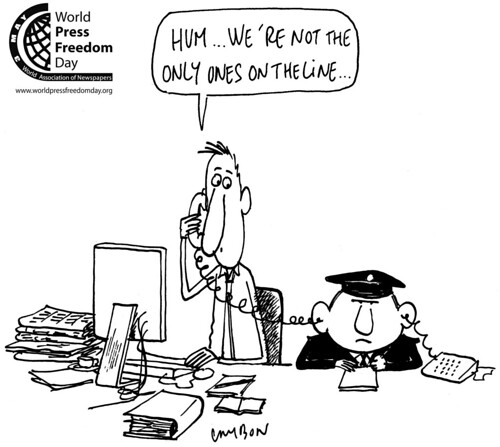
2009 World Press Freedom Day Debate:

Controlling the International Media in War - Are governments winning the Battle?


The debate was held May 1st, although World Press Freedom Day is actually May 8th.

Thursday, April 30, 2009

A Call for Restoration of Support for UNESCO


Bryan Gould, the chair of the New Zealand National Commission for UNESCO, has published an opinion piece in The Guardian (UK) on the occasion of the current meeting of UNESCO's Executive Board. I quote:
Step forward UNESCO. The oldest UN agency, during the era of economic man, has been pushed to the sidelines. Its emphasis on education, on the physical, human and social sciences, on culture and language, on the sustainable use of natural resources, as the mainsprings of human development and wellbeing, has seemed quaintly old-fashioned in an era of aggressive profit-seeking. But a restatement of those goals and values is now overdue. We can now assert, amid the wreckage created by economic man, that we are more than economic agents, and that Unesco's preoccupations point the way to a more complete and empowering sense of where our future lies.....

There are.......better ways of spending our money......Our focus should be on strategically planned programs for education in countries where schooling is still at a premium, in the strengthening of cultural identities to give people confidence to understand who they are and how they can play a constructive role in the world, in projects to protect and develop sustainable supplies of fresh water.....

UNESCO has never been funded to undertake these activities itself. Its current budget is pathetically small, and – in the current crisis – likely to get smaller. But, with proper financing, UNESCO could provide the intellectual leadership and strategic direction to ensure that skills and capabilities that are at present scattered and fragmented across the globe can be linked and co-ordinated, so that we get the maximum benefit from what we already have. UNESCO's role is to help us to do better than merely learn what not to do. Agencies like UNESCO can help us move forward by providing outcomes that are greater than the sum of their parts.

World Press Freedom Day 2009

UNESCO is organizing World Press Freedom Day celebration, from 2 to 3 May 2009 in Doha, the capital of Qatar. It will focus on the potential of media in fostering dialogue, mutual understanding and reconciliation.

The international conference will gather prominent media professionals and representatives of major non-governmental organizations from different parts of the world. This year, UNESCO invites participants to explore the enormous potential of media to serve as a platform for dialogue and a vehicle for understanding.

Tuesday, April 28, 2009

Clubs for UNESCO: a practical guide

Clubs for UNESCO: a practical guide, published in 2009 is a manual for those interested in starting or managing a UNESCO club. There are nearly 4,000 UNESCO clubs worldwide, but very few in the United States. The manual is an attractive 33 page brochure in PDF format.

World Heritage Scholarships in U.S. National Parks

Anasazi site, Mesa Verde National Park. NPS Photo


The U.S. National Park Service (NPS) is offering fellowships to qualified candidates who wish to learn from the U.S. experience in managing and protecting World Heritage Sites. All expenses paid extended residencies in U.S. parks designated as World Heritage Sites will be available to site managers and staff of World Heritage Sites in developing nations.

The training opportunity will allow selected individuals to work alongside NPS professionals in a variety of areas including resource management, concessions, interpretation and education, planning, and law enforcement. The NPS Office of International Affairs, in cooperation with park partners, will pay for and arrange for travel to the US, while individual host parks will provide housing and a modest living stipend.

The NPS has considerable experience in international training. Every year, more than one hundred individuals from all over the world volunteer in America's National Parks. The International Volunteers-in-Parks Program (IVIP) benefits both the individual volunteer and the National Park Service (NPS).

Perhaps the most famous sites which are both World Heritage sites and U.S. National Parks such as Yosemite and Yellowstone are best known as natural heritage sites. However, there are also important cultural World Heritage sites managed by the NPS such as Mesa Verde, the Statue of Liberty and Philidelphia's Independence Hall.

Fellowship candidates should be English speakers willing to spend a minimum of 6 weeks in the US. Residencies; up to 4 months can be arranged. The NPS Office of International Affairs will assist each selected individual in securing the appropriate visa to allow entry to the United States.

For more information, you may contact the responsible NPS officers:

Human Rights Pledges of the United States

On March 31, U.S. Secretary of State Hillary Rodham Clinton and U.S. Permanent Representative to the U.N. Ambassador Susan Rice announced that the United States will seek a seat this year on the United Nations Human Rights Council with the goal of working to make it a more effective body to promote and protect human rights.

As part of the process that will culminate in elections on May 12, each candidate country is asked to produce a pledge outlining its commitment to promoting human rights. This information is circulated among countries and posted on the UN Human Rights Council website. The United States has produced its pledge - Human Rights Commitments and Pledges of the United States of America.