Monday, April 27, 2009

Be In the Know: UNESCO Publication Plan Alert


Always feeling like the last to know about UNESCO publications? You're not alone. Yet for those seeking to stay current, UNESCO has made it easy to receive immediate notification about the upcoming and current UNESCO publications that are most of interest.


The UNESCDOC Publication Plan lets you subscribe to information updates for the publications about the areas or countries of interest . You can set how frequent you'd like the updates and which updates you'd like to receive. I just registered, and it was extremely user-friendly:


Sunday, April 26, 2009

On the Election of the Director General

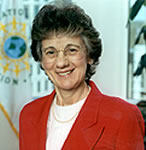
When she addressed the UNESCO Executive Board in March of 2008, Ambassador Oliver mentioned this year's election of a new Director General for UNESCO, including the following:
I’d like to end my remarks by mentioning the most important issue facing UNESCO and the U.S. in the immediate future, which is of course the election of a new Director-General at the General Conference in October 2009. This will be the first time in 27 years that the U.S. will be engaged in the election process.

The selection of a new Director-General is critical for the organization, not only because that individual gets to choose his or her cabinet and the senior staff, but also because approximately one-third of UNESCO’s staff will reach the mandatory retirement age in the next five years. Moreover, since the U.S. has no veto at UNESCO, it is of the utmost importance for us that a new Director-General who is supportive of active U.S. engagement at that organization be selected.

The Chairman of the Executive Board is supposed to send a letter to all the delegations in June outlining the D-G selection process that took place last time. The process will be discussed at the October Executive Board, after which the Executive Board will send out a formal letter inviting individuals to apply for the position.

What makes this election process a bit awkward is that several candidates have already been actively campaigning for months. It is also unfortunate that although the U.S. really needs to play a major role in this process, both the State Department and the Mission will be facing significant changes in personnel and leadership. We must make sure that despite the transition to a new Administration, the U.S. voice at UNESCO remains strong during this crucial time.
UNElections.Org in March published a long and useful article on the election of the new Director General.

Saturday, April 25, 2009

The Power of Peace Network

The Power of Peace Network (PPN) is a UNESCO-led initiative seeking to harness the power of the 2.0 web and the energy of young innovators and activists.

Another Candidate for UNESCO Director General


I understand that Mounir Bouchenaki, currently Director-General of the International Center for the Study of the Preservation and Pestoration of Cultural Property (ICCROM) has been nominated for the post of Director General of UNESCO. He served as a UNESCO staff member for many years before being appointed to ICCROM.

UNESCO at the Anti-Racism Conference

Source: "UN anti-racism conference winds down amid NGO expulsions for bad behaviour," UN News Center, 23 April 2009.

I quote:
A number of the UN agencies spoke at the five-day Durban Review Conference, which comes to a close tomorrow, including the International Labour Organization (ILO), which warned that saying no to racism in the work is key to promoting respect, tolerance and inclusiveness.

For its part, the UN Educational, Scientific and Cultural Organization (UNESCO) highlighted its own role in countering pseudo-scientific theories of racial superiority.

Friday, April 24, 2009

World Press Freedom Day

World Press Freedom Day 2009:

Dialog, mutual understanding and reconciliation

A UNESCO conference will mark World Press Freedom Day 2009. The conference is to be held in Doha (Qatar) on 2 and 3 May. During the conference, uNESCO Director General Matsuura will present the 2009 World Press Freedom Prize, awarded posthumously to murdered Sri Lankan journalist Lasantha Wickrematunge.

Thursday, April 23, 2009

Summer Internship working on the new UNESCO website


UNESCO is currently searching for summer interns to work on helping define and launch the new UNESCO website. Duties vary from editorial, technical to promotional activities.

UNESCO.ORG has over 1.5 visitors per month from around the world and publishes content in over seven languages. The site is currently undergoing a total overhaul including a content renewal and development of a new user interface.

Sound exciting? Then visit UNESCO's volunteer webpage to find out if you have the right profile and submit your candidature:

http://portal.unesco.org/en/ev.php-URL_ID=11716&URL_DO=DO_TOPIC&URL_SECTION=201.html

You can contact Stephen Roberts, UNESCO Web Coordinator, directly once this has been done, with a short letter of introduction and motivation. Note that he is a member of the UNESCO's Friends Group on LinkedIn, the social networking site.

Wednesday, April 22, 2009

"Water Experts Talk World Conflict"

I quote from the Santa Barbara Independent:
As part of the Earth Day celebration, the Santa Barbara Coalition for Global Dialogue is hosting a public policy forum titled Thirst for Security: Global Water and Tomorrow’s Armed Conflicts. Julie Bowden, coalition cochair, said that the dispute over water resources is a timely and critical environmental issue in the Santa Barbara area as well as globally.....

Four distinguished authorities on global water issues will give keynote speeches in their area of expertise. Jeff Dozier and Hilal Elver, both professors at UCSB, as well as Jerome Dell Priscoli, an engineer with the U.S. Army Engineer Institute for Water Resources, and Engin Konagul, the United Nations case studies coordinator for the Paris UNESCO World Water Assessment Program, will discuss the recent UNESCO Water Summit in Turkey, describe the areas of conflict around the globe and the use of mediation in resolving water conflicts, as well as examine the existing water crises on the western slopes of North America. They will explore how investment in water management can help build social stability and security to avoid societal warfare.

Job: DIRECTOR, Division of Science Policy and Sustainable Development

Level:D1
Location: Paris
Apply by: 3 June 2009
For more information: http://recrutweb.unesco.org/pdf/SC370.pdf
To apply: http://tinyurl.com/dlsdox

Tuesday, April 21, 2009

Launch of the World Digital Library

The world is atwitter with the news of the launch of the World Digital Library, literally. The Twitter social networking site was abuzz with hundreds of tweets about the inauguration, including tweets in Spanish, French, Portuguese and Italian, as well as other languages.


In 2005, at the first meeting of the U.S. National Commission for UNESCO after the United States reentered its community of nations, James Billington took advantage of his opening plenary address to lay our a vision of the World Digital Library. He proposed an online collection, global in scope and catalyzed by UNESCO, that would be modeled after the Library of Congress' American Memory, a website that provides free and open access through the Internet to written and spoken words, sound recordings, still and moving images, prints, maps, and sheet music that document the American experience. At the time of his talk, the American Memory already contained 40 million entries.

Billington's proposal, that the United States delegation take his proposal to UNESCO, was enthusiastically accepted by the members of the National Commission. Since that time the proposal has been exhaustively reviewed and approved by UNESCO's governing bodies. A number of national libraries and the Library of Alexandria joined in the effort. $10 million has been raised, including $3 million from Google.

This week the World Digital Library was made available with 1,200 documents and their explanations from scholars in Arabic, Chinese, English, French, Portuguese, Spanish and Russian. But it is designed to accommodate an unlimited number of such texts, charts and illustrations from as many countries and libraries as want to contribute.

Read the article describing the launch in:

Join the LinkedIn UNESCO Group


A group has formed on the LinkedIn social network in support of UNESCO and its programs. It currently has 280 members, and more are welcome. The website provides news, a forum for discussions, job information, and means to link with others interested in the UNESCO. LinkedIn is the social network most used for professional networking.


Sunday, April 19, 2009

April 23: World Book and Copyright Day

By celebrating this Day throughout the world, UNESCO seeks to promote reading, publishing and the protection of intellectual property through copyright.


23 April: a symbolic date for world literature for on this date and in the same year of 1616, Cervantes,

Saturday, April 18, 2009

The Alladin Online Library

Aladdin is a multilingual, free online library offering its subscribers 24/7 access to an online collection of books translated for the first time into Arabic and Persian with the aim of enhancing mutual knowledge among peoples of different cultures and rejecting conflicts of memory, including all forms of Holocaust denial and trivialization.

Subscribers can read every book cover to cover and can download the entire book free of charge. The library allows subscribers to electronically search all of the books and articles in the collection.

The library is the result of a partnership that aims to create a network of non-governmental organizations, intergovernmental institutions and private publishers in Europe and in the Muslim world with the objective of providing a multilingual, reliable and free source of knowledge and information easily accessible on the Internet.

The online library itself is part of the broader Aladdin Initiative, a programme launched under the patronage of UNESCO, that brings together more than 200 prominent intellectuals, academics, historians and public figures from Muslim, Jewish, Christian and other cultures and faiths to promote a climate of tolerance and friendship through intercultural dialog.

Friday, April 17, 2009

The International Day for Monuments and Sites

The Thermo Technical Institute
of the Catholic University of Leuven


April 18th

The International Day for Monuments and Sites (informally known as the World Heritage Day) was created on 18 April, 1982, by the International Council on Monuments and Sites (ICOMOS) and later approved at the 22nd UNESCO General Conference in 1983.

The theme of the meeting this year is Heritage and Science.

The ICOMOS April 18 website
With lots of information on sites of technological heritage.

Perhaps in commemoration of the day, the Examiner (Seattle, Washington) has published an article by Annika Hipple:
UNESCO's World Heritage List: What does it mean, anyway?

Class: "UNESCO: Agenda for the 21st Century"

The UNESCO Headquarters illuminated
© UNESCO/N. Guy


Our GWU seminar discussed the future of UNESCO last night. The two hour session began with three brief presentations>

Frank Method began the class with a discussion of demographic trends of the next 40 years. While much of the educational effort for less and least developed nations has been focused on expanding educational services both to increase enrollment and to meet the demands of increasing numbers of children, those pressures will be decreased in future decades and the numbers of children may even decrease in some countries such as China and India. On the other hand, the numbers of people over 60 years of age will increase rapidly, implying needs to educate people for their longer lives among other things. Frank pointed out that UNESCO is the logical forum for international policies to be worked out in response to these demographic trends. He also pointed out that UNESCO has been deeply involved in a number of multiyear educational programs which will end in the next few years, and there will probably be a need to find new vehicles for international cooperation. Frank suggested that in the future there would be need for more focus on educational quality, on vocational education, on higher education and on educational technology than in the past.

Ray Wanner referred back to the response of Archibald MacLeish, the head of the U.S. delegation at the founding of UNESCO, when asked about the program of the Organization. MacLeish suggested the metaphor of a kite on the ground that would lift and fly in response to breezes and changes in the wind. UNESCO would similarly respond to currents of international thought and dialog. In fact this has happened again and again, as in the case of the creation of the World Heritage Convention or the creation of the Intergovernmental Oceanographic Commission. Next week the World Digital Library will be launched, representing the latest major initiative; it was proposed in 2005 at the U.S. National commission meeting by the Librarian of Congress, and has gone through the complex approval process resulting in a network of major libraries around the world working with a platform developed by industrial partners.

Ray also described the complex governance process of UNESCO, which involves a General Conference of about three weeks every other year with delegations from all the member nations. The Executive Board, of 58 nations, has business several-week-long meetings twice a year, with additional information meetings. These cost the organization $14 million per year, and require the presence of senior staff at all plenary sessions. The next meeting of the Executive Board has 60 agenda items, for each of which the Secretariat has produced a supporting document translated into five languages.

I (John Daly) sought to promote serious and original thinking by suggesting for discussion the proposition that UNESCO should be broken up. I summarized a critique of the diversity of programs and their lack of synergy, the governance, the system of election of Directors General, the lack of serious concern for its mission "building the defenses of peace in the minds of men", and the resultant unwillingness of member nations to budget adequately for UNESCO to carry out its many missions. I also pointed out that programs such as education, water and world heritage both met an increasing need and were widely regarded as effective within their constraints. I suggested that the United States might still have the clout to lead an effort to unbundle the programs of UNESCO, but that increasingly its influence in UNESCO governing bodies would be diminished as other countries successfully improved their economies and sought influence in world forums.

I suggested that therefore UNESCO might be broken up into a World Education Organization, A World Water Organization and a World Heritage Organization. While some programs would be abolished, others might be transferred to other intergovernmental organizations (Basic Sciences to the Trieste System, Copyright to the World Intellectual Property Organization, Doping in Sports to the World Anti-Doping Organization, etc.).

The Discussion

The discussion generally focused on defending the continued existence of UNESCO. Arguments for UNESCO included that:
  • it has a relatively well known, accepted and prestigious brand,
  • there are synergies among its programs, and efforts such as those helping children in conflict situations would suffer,
  • that the human rights focus fundamental to UNESCO is important, it it would probably be impossible to negotiate an agreement on a comparably strong support for freedom of expression and freedom of religion in new organizations.
It was noted that efforts to spin off programs from UNESCO were not always successful. The the MIRCEN microbiological network has gone silent when it was dropped from the UNESCO family of programs, even though such microbiological fields such as biotechnology and genetics are becoming increasingly important. In that context it was suggested that programs such as science education and vocational education which were deemphasized when the United States, the United Kingdom and Singapore pulled out of UNESCO have never been adequately restored.

Especially interesting was the discussion of the important role of UNESCO as a forum for discussion. At the General Conference heads of government and Government Ministers get a chance to meet and discuss issues in an environment that minimizes conflict and promotes reasoned discourse. During the course the role of UNESCO's Future Forum and its ability to convene the heads of the UN agencies to work our common approaches to problems such as those imposed by the current global economic crisis were not emphasized. Thus this discussion provided an important complement to the discussions of individual programs.

The discussion also focused on my critique of UNESCO's governance and management. Arguments were advanced that modest improvements could and should continue to be made. It was also argued that while the plenary sessions of UNESCO's governing bodies tend to be dominated by diplomats, there are associated round tables "crackling with energy" at which sectoral experts do in fact provide effective guidance to UNESCO's Secretariat. It was noted that UNESCO's style of governance and management allows flexibility that is often conducive to innovation and initiative. Finally, it was suggested that while the view of UNESCO using models of top-down bureaucratic management suggest permanent problems of coordination and efficiency, newer models of networked organizations might also be applied; as the world learns more about network management we may see improvements in the efficiency and coordination of the operations of UNESCO's distributed networks of Institutes, Centers, Clubs, National Commissions, World Heritage Sites, Biosphere reserves, Associated Schools, University Chairs and Networks, etc.

While a couple of hours is not enough time to discuss the future of UNESCO in any detail, the session tended to draw upon the foundation laid during the rest of the semester to focus student attention on the future of the Organization.

Thursday, April 16, 2009

In Layman's Terms: The IPCC Report on Climate Change

Want to know more about how you can help the environment but don't have the time or scientific expertise to weed through what can be extremely dense reports? A new report summarizing the latest Intergovernmental Panel on Climate Change (IPCC) reports on climate change can help.

For laymen like me, Climate in Peril: A Popular Guide to the Latest IPCC Reports is a useful guide that seeks to explain the 2007 Synthesis Report put out by the IPCC. The IPCC which is an evaluative body that assesses the risk of climate change brought on by human activity.


The guide itself is helpful as it uses formats and structures that non-specialists in the field can understand. Its goals is to raise awareness regarding the urgency of acting on climate change and to provide information that may help bridge the gap between science and policy.

The report can be found here:

The guide was recently put out by GRID-Arendal and SMI books with the support of multiple organizations; UNESCO's programs and research contributed to the information assessed by the IPCC in its reports. More information about ordering the book or viewing it in other languages can be found on UNESCO's site. Reading the short document and considering how to act on the information presented is one small way to contribute to the climate change issues that affect us all.

Sunday, April 12, 2009

Young People Can Volunteer at UNESCO

Interns at the UNESCO Asian Youth Forum
Source: Korean National Commission for UNESCO: Luce Program - Korea
via Wellesley College Internship website.


UNESCO offers unpaid internships of one to four months to graduate and postgraduate students. The internships are available in UNESCO's Paris headquarters and also in UNESCO's field offices.

Depending on qualifications, these internships relate either to UNESCO's strategic activities or to administrative or technical functions. The aim is to provide an opportunity for professional experience in an international organisation which relates to and supplements interns' studies. UNESCO does not remunerate or pay interns. Costs and arrangements for travel, visas, accommodation, health insurance, and living expenses are the responsibility of interns or their sponsoring institutions.


The UNESCO office in Bangkok has an especially active program that not only offers internships but also puts non-student volunteers to work.


It appears that UNESCO decentralized institutes such as The UNESCO Institute for Lifelong Learning in Hamburg and The UNESCO-UNEVOC International Center for Technical and Vocational Education and Training in Bonn will sometimes provide internships.

The World Heritage Center offers opportunities to volunteer at World Heritage sites around the world.


Gorillas and Chimps are among the world's most endangered species. The UNESCO/IUCN Great Apes Survival Project (GRASP) looks for volunteers to help in their protection.


For several years the Institute for International Education managed a UNESCO Fulbright Fellowship Program for U.S. citizens funded by the State Department, but it seems no longer to be available.

Friday, April 10, 2009

Class: U.S. Foreign Policy and UNESCO - A View from the Top

Esther Brimmer
Recently confirmed as Assistant Secretary of State
for International Organizations


Michael Southwick spoke to our graduate seminar last night, drawing from his experience as Deputy Assistant Secretary of State during the Clinton and Bush administrations, and especially on his experience as the United States rejoined UNESCO.

Michael Southwick (and Frank Method)

There was a confluence of circumstances that resulted in the U.S. reentry into UNESCO:
  • It was generally agreed that the problems that had been cited when the United States withdrew from UNESCO had been ameliorated or resolved.
  • President Clinton had made a public statement at the end of his administration that the United States should rejoin UNESCO when the United States had paid the billion dollars it owed to the United Nations agencies. Thus when the debt had been repaid, the support of the Democratic leadership could be counted upon.
  • The State Department had done a low-level internal review of the value of UNESCO membership in terms of U.S. foreign policy interests which concluded that membership in UNESCO offered a low-cost alternative to achieve U.S. objectives in international education, science and culture, that UNESCO would be more effective than bilateral agencies in some locations important to U.S. foreign policy, and that letting UNESCO work in other locations would relieve the need for the U.S. government to take action.
  • Rep. Tom Lantos had introduced legislation in the House of Representatives calling for reentry which had passed.
  • The United Kingdom and Japan were strongly supporting U.S. reentry into UNESCO, and were combining personal appeals with more formal diplomatic contacts.
  • Key gatekeepers in the State Department and White House supported the reentry, as did the Secretary of Education and the First Lady.
  • Surprisingly, there had been no delegations from civil society leaders (in education, science or culture) to the State Department advocating reentry, and surprisingly there had been no request from Rep. Lantos for inputs from State on his UNESCO legislative initiative.
While the process was put on hold due to 9/11, it was found convenient to announce reentry when President Bush made a major address to the United Nations General Assembly. He received a standing ovation on making the announcement, something that is both exceptional and against UN rules on that announcement.

The reentry into UNESCO remained controversial within the Republican Party, but the opponents were unable to muster their forces when the decision was made; they were able to do so later, and key members of the Bush administration were only won over to support for UNESCO with years of experience with the organization.

Ambassador Southwick indicated that UNESCO one of 42 intergovernmental agencies for which the State Department Bureau of International Organization Affairs provides U.S. representation, and indeed receives less attention than others such as the United Nations itself.

He emphasized the importance of the Universal Declaration of Human Rights in the operations of the United Nations system, and characterized UNESCO (as seen from State) as the soul of the system, the agency in which intellectual leaders could debate important issues. UNESCO is a place in which American diplomats can hold serious discussions with diplomats from Islamic nations.

Within the State Department, the most prestigious posts deal with major countries -- Russia, China, etc. Foreign Service Officers, chosen for their economic and political expertise, depend on officers from other government agencies for substantive leadership as they deal with the specialized agencies in areas such as education, public health and agriculture. (He described leading a 90 person delegation to a meeting of the International Postal Union, in which 85 delegates came from the Postal Service including the Post Master General. U.S. Government policy is that even in such technical discussions, delegations be led by diplomats rather than sector specialists.) In these circumstances, there is little understanding of U.N. mission agencies in the higher levels of the State Department, and little attention to their programs.

In the discussion, Ambassador Southwick distinguished between the United Nations treaties, for which negotiations are led by diplomats, and programs of cooperation and assistance. He noted the fact that many key UN treaties have not been ratified by the United States, and the difficulties involved in trying to explain that failure to ratify a treaty does not imply opposition to its objectives.

One of his more interesting comments compared the process of negotiating an international agreement in a UN conference to the process of serving as a liaison of the State Department with the Congress. In both cases it pays to develop a strategy, recognizing the structure of the body in which the debate is taking place, and focusing on the key players in the negotiation.

There was some discussion of the means by which different governments influence international negotiations, ranging from diplomat-to-diplomat requests for support, to block voting, arm twisting of heads of government by heads of government, offers of increases in foreign aid, and even illicit financial incentives.

This was an exceptional opportunity for graduate students to get the straight information from someone who was really in the know, having lived the diplomatic process for years under different administrations. As such, it was an opportunity that might be unique in the Washington DC university system.

Check out:
Students Calder, Auten, Khouri, Tew and Cline
(and Method) listening to the speaker

Thursday, April 09, 2009

A World of Science (April–June 2009)

Contents Vol. 7 n° 2

IN FOCUS
2 The thrill of drilling

NEWS
10 Poles warming faster than expected
10 Denmark gets behind climate change education
11 Ten years to save coral reefs
12 Awards for exceptional women
12 2011 to be Year of Chemistry
13 Pierre Auger Observatory inaugurated
13 Optics prize for Iranian

INTERVIEW
16 Jacques Weber on why the financial crisis is also an opportunity

HORIZONS
16 Tending to the 'ailing mother river of China'
19 Of shipwrecks, lost worlds and grave robbers

IN BRIEF
24 Diary
24 New releases

New digital library to display world on a website

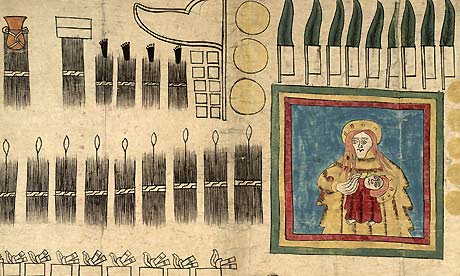
Huexotzinco Codex, 1531, documenting in pictographic language part of the testimony in a legal case against representatives of the colonial government in Mexico, ten years after the Spanish conquest in 1521. Photograph: Library of Congress

The Guardian has an article today on the forthcoming World Digital Library. I quote:
Four years after Washington's Librarian of Congress, Dr James Billington, suggested the idea, curators have accomplished the first stage in the construction of a truly global library. With all material free of charge on a website translated into seven different languages, the WDL is expected to be an unrivalled educational tool.

"We hope that this brings cultures together, that it promotes better understanding between those cultures and that it provides educational uses for a world in which reading and scholarship have to face competition from 24/7 media," said John Van Oudenaren, the director of the project.

Wednesday, April 08, 2009

UNESCO University Chairs and Networks in the United States

The UNITWIN/UNESCO Chairs Program, created in 1992, was conceived as a way to advance research, training and program development in higher education by building university networks and encouraging inter-university cooperation through transfer of knowledge across borders.

The 15 UNESCO Chairs in the United States are shown below, with the year in which they became part of the UNESCO network. Note that several of them were enrolled prior to the time when the United States rejoined UNESCO and the U.S. National Commission for UNESCO was revived, including three in Puerto Rico. (The number in parentheses represents the place in the list of Chairs in chronological order of enrollment.)
  1. UNESCO Chair of Education for Peace (1996), Universidad de Puerto Rico, San Juan de Puerto Rico (172)
  2. Mobile UNESCO Chair dedicated to the Problems of Habitability in the Hispanoamerican Cities and to the Integral Revitalization of their Historical Centres (1996), Universidad Interamericana de Puerto Rico, San Juan (173)
  3. Chaire UNESCO d'enseignement supérieur (1999), Universidad de Puerto Rico, San Juan de Puerto Rico (485)
  4. UNESCO Chair in Comparative Human Rights (2001), University of Connecticut, Connecticut (544)
  5. UNESCO Chair in Human Rights (2002), Florida Atlantic University, Boca Raton (595)
  6. UNESCO-Cousteau Ecotechnie Chair in Global Coastal Assessment (2004), University of Rhode Island, Narragansett (658)
  7. UNESCO-Cousteau Ecotechnie Chair in Coastal Resources (2004), The State University of New Jersey, Rutgers (665)
  8. UNESCO Chair in Communication (2000), The University of Texas, Austin (673)
  9. UNESCO chair in Inclusive Education (2005), The University of Colorado, Denver and Health Sciences Center (692)
  10. UNESCO Chair in Bioethics (2005), the Ethics and Public Policy Center, Washington D.C. (700)
  11. UNESCO Chair on Growing up in cities (2005), Cornell University, New York (702)
  12. UNESCO Chair in creating independent, pluralistic media: training and exchange program for journalists (2005), University of Colorado, School of Journalism and Mass Communication, Boulder (703)
  13. UNESCO Chair on Achieving the Promise of EFA: A Focus on Literacy and Sustainable Development (2006), Georgetown University, Washington, DC (741)
  14. UNESCO Chair in Transcultural Studies, Interreligious Dialogue, and Peace (2007), the University of Oregon (774)
  15. UNESCO Chair in Sustainable Rivers (2008), the University of Washington (808)
There are also two UNITWIN Networks headquartered in the United States:
  1. UNITWIN Network for Improving Biological Sciences Education through the Development and Use of Information Technologies in some Arab States Universities (318), established in 1997 at Purdue University, West Lafayette
  2. UNITWIN Network on Gender, Culture and People-Centered Development (780), established in 2007 at Boston University, Women’s Studies Program

Tuesday, April 07, 2009

The New Issue of the UNESCO Courier is Out

Laanecoorie reservoir, Bendigo (Australia)
© Rodney Dekker


The UNESCO Courier: 2009 - Number 3: Troubled water

Increased demand, waste and insufficient investment: water shortage may come sooner than we think. Although water covers three-quarters of the world’s surface, only 0.0075% of this immense volume is available for humanity’s use. Some countries have already reached the limits of their resources.

We must act now, warns the just-launched United Nations World Water Development Report, “Water in a changing world”, which assesses the global water situation. The UNESCO Courier examines some strategies for better management.

Read the editorial

Contents:

  • The water we eat

  • Blue Scorpions against water corruption

  • The Yangtze or a journey through time

  • Australia’s water revolution

  • Water in a Changing World

"After the G20: UN chiefs point the way to recovery"

Meeting at UNESCO headquarters in Paris on the weekend of 4 and 5 April, the Chief Executives of 28 UN bodies issued a joint communiqué on the economic crisis.
The social effects of the crisis are already disturbing and could worsen. If action is not taken urgently, it can be devastating for the most vulnerable and voiceless, with growing social insecurity and displacement of people. The achievement of the MDGs is at stake. Progress in reducing poverty and hunger in developing countries is being set back. The 850 million people already suffering from chronic hunger in 2006 will increase to around one billion in 2009. The middle class in many countries is being weakened. The vulnerable groups, children, women, youth, elderly, migrants and people with disabilities, are hit the strongest.

Even before the onset of the current financial crisis, significant challenges existed in terms of food, education, health, water and sanitation, housing and minimum welfare for the most needy. Poverty and deprivation define the lives of too many.
The communiqué defined a set of joint initiatives:
1. Additional financing for the most vulnerable: advocating and devising a joint World Bank - UN system mechanism for the common articulation and implementation of additional financing, including through the World Bank proposed Vulnerability Fund.
2. Food Security: strengthening programmes to feed the hungry and expanding support to farmers in developing countries.
3. Trade: fighting protectionism, including through the conclusion of the Doha round and strengthening aid for trade initiatives and finance for trade.
4. A Green Economy Initiative: promoting investment in long-term environmental sustainability and put the world on the climate-friendly path.
5. A Global Jobs Pact: boosting employment, production, investment and aggregate demand, and promoting decent work for all.
6. A Social Protection Floor: ensuring access to basic social services, shelter, and empowerment and protection of the poor and vulnerable.
7. Humanitarian, Security and Social Stability: Emergency action to protect lives and livelihoods, meeting hunger and humanitarian needs, protecting displaced people and shoring up security and social stability.
8. Technology and Innovation: developing technological infrastructure to facilitate the promotion and access to innovation.
9. Monitoring and Analysis:
• strengthening macroeconomic and financial surveillance and implementing an effective economic early warning system;
• Urgently establish a UN system-wide vulnerability monitoring and alert mechanism to track developments, and report on the political, economic, social and environmental dimensions of the crisis.

Monday, April 06, 2009

The UNESCO WSIS Publication Series

On the occasion of the World Summit on the Information Society (WSIS), UNESCO publishes a series of titles summarizing some of the most essential issues related to the development of the information society. Titles in the series are:

Status of Research on the Information Society

UNESCO's Basic Texts on the Information Society

Science in the Information Society

Cultural and Linguistic Diversity in the Information Society

Media development in the Information Society

Measuring Linguistic Diversity on the Internet
Measuring & monitoring information & knowledge societies

Education in the Information Society

Social Transformations in the Information Society

Memory of the Information Society

Gender in the Information Society: Towards Equity?

Orbicom

The University Chairs forming the Orbicom Network

Orbicom is an international network that links communications leaders from academic, media, corporate and government circles with a view to providing for the exchange of information and the development of shared projects. While Orbicom is supported by internationally-based institutions, media, governments and corporations, Orbicom's mandate derives from UNESCO's New Communications Strategy unanimously adopted at the 1989 General Conference. This Conference foresaw that new communications technologies would have a significant impact upon the complex processes shaping economies, the environment, social justice, democracy, and peace.

Orbicom continues to produce important reports on the status of the Information Revolution and the Digital Divide.

Editor's Note: Orbicom is in my opinion an excellent example of UNESCO's ability to catalyze networks of collaborators who meet important international needs. The Orbicom network is an important contribution of the UNESCO Communications and Information Program.

World Digital Library: An Interview


Interview of Abdul Waheed Khan, UNESCO, Assistant Director-General for Communication and Information, about World Digital Library.

The MAP-IT Project

MAP-IT-MED.EU is the official website under the MAP-IT! project – (Knowledge Mapping of IT competencies in the Mediterranean region and dialog fostering) and is funded by the European Commission under the FP6 IST Program. UNESCO is one of the partners in the project.

The project aims to highlight the opportunities for research collaboration in ICT between Europe and the Mediterranean region with a specific focus on the following MED partner countries: Algeria, Egypt, Jordan, Lebanon Morocco, Palestinian Authority, Syria, Tunisia.

Sunday, April 05, 2009

Friday, April 03, 2009

Class: The UNESCO Commuication and Information Program


Last night a student presented the Communication and Information Program of UNESCO to our seminar. She covered the organizational structure of the Secretariat, the program priorities and budget, the history of the program, the themes of the program, and the networks and partners involved in the program, with examples. She spent some time on the "New World Information Order" controversy that was cited in the decisions by the United States and United Kingdom to withdraw from UNESCO. She also described the UNESCO role in the World Summit on the Information Society and its followup.

The student remarked that she had been quite concerned in developing the class because it was difficult (if not impossible) to understand the program being described from the set of alternative perspectives available to her. She finally concluded that the differing perspectives were useful in helping people find the aspects of the program most interesting to themselves.

In thinking about the multiple perspectives, I was reminded of my engineering drawing classes decades ago. In those we were asked to draw orthogonal projections of three dimensional objects. It was hard to get the knack of representing a complex three-dimensional object in three two-dimensional views and to reverse the process of visualizing the object from its formal drawn representation. Having gained the knack, however, you could better understand the object from the multiple views than from any two dimensional picture. So too, I think the multiple views of UNESCO's program give a fuller understanding than any single view would allow.

A gifted teacher, our leader effectively used the classroom computer and internet connection as well as teaching aids and stimulated discussion from time to time with well chosen questions.

I was especially taken with her opening of the class with an exercise. Students were divided into groups, and each group provided with a package of paper cutouts representing the blocks of an organizational diagram for the program. They were told to race in sticking the blocks on the wall in the correct order. The effect was to get students fully involved in studying the organization managing the CI program; it was one of the most effective approaches I ever saw in getting students to focus on an organizational diagram.

There was a kicker. One team finished the complex diagram while the other had done less than half. Our leader asked why they thought that was true. After an embarrassed pause she revealed that she had provide a copy of the real organizational diagram to only the winning team. Her point: information counts, and the Communication and Information Program of UNESCO is important.

It is interesting that both groups were constrained by prior conceptions of what an organizational diagram should look like. Both sought a conventional representation although it would have been faster to stick the block on the wall in random order. Our leader pointed out that unconstrained by the model organizational diagram, students might have been more creative in illustrating the nature of the relationship in the staff responsibilities for program elements.

I was again struck by the disparity between the need for an intergovernmental body to provide leadership to the United Nations system with respect to the developing knowledge economy and the resources available to UNESCO for that purpose. The ICT Industry alone is more than $3 trillion per year, and the UNESCO CI budget (which focuses on much more than ICT) is some $36 million per year. No wonder that many of the program activity descriptions on the website seem to be sparsely populated.

Thursday, April 02, 2009

JOB: UNESCO recruits Chief of Universal Access and Preservation Section

UNESCO Headquarters
© UNESCO

The post of the Chief of the Section for Universal Access and Preservation (UAP) of the Communication and Information Program of UNESCO is currently open.
The major responsibility of this post consists in managing the Section and its staff by providing intellectual, strategic and operational leadership, and by planning and executing regular programme and extra-budgetary activities.
Candidates to the post must have advanced university degree in information management or in one of the fields covered by the work of the Section. A combination of relevant professional qualification and extensive experience in the field of communication and information may be taken into consideration.

Applications are due before 27 April 2009.

Read more!

Our Man for UNESCO

The United States maintains a Permanent Delegation at UNESCO. Until a new Ambassador is in place, Stephen Engelken, the Chargé d'Affaires runs the U.S. Mission to UNESCO and leads in our relations with the Organization.

Engelken is a veteran of more than 30 years in the U.S. Foreign Service. He began his career with service as a vice consul at the U.S. Consulate in Dhahran, Saudi Arabia and subsequently served at U.S. Embassies in Jordan, Lebanon, Italy, France, and Australia. Immediately before joining the staff of the U.S. Mission to UNESCO in June 2007, Mr. Engelken served in Washington as director of the Office of Pakistan and Bangladesh Affairs in the State Department’s South and Central Asia Bureau.

Permanent Delegation of the United States of America to UNESCO
18, avenue Gabriel
75382 PARIS Cédex 08

Mr Stephen Engelken
Deputy Permanent Delegate,
Chargé d'Affaires a.i.

Mr Michael T. Peay
Legal Adviser

Ms Jennifer Larson
Second Secretary (Public Affairs)

Mr. John Hoff
Health Attaché

Ms Sally Lovejoy
Attaché (Education)

Mr David Ostroff
Political Assistant

Mr Geoffrey Prentice
Science Attaché

Wednesday, April 01, 2009

AU Board Member Calls for Science Masters Programs

Americans for UNESCO Board of Directors member, Rita Colwell, has published an article in the current issue (27 March) of Science titled "GRADUATE EDUCATION: Professional Science Master's Programs Merit Wider Support."
In most fields in the natural sciences, master's degrees have long been viewed mainly as milestones en route to a doctorate, rather than destinations in their own right. But about a decade ago, foundations and universities began experimenting with new master's programs that develop advanced scientific knowledge and professional skills such as communication, project management, and commercialization. Most of these innovative Professional Science Master's (PSM) degree programs are interdisciplinary and provide hands-on learning through internships and team projects. They are not intended to displace traditional programs. Instead, they aim to engage students with professional goals and help them become scientists uniquely suited to the 21st-century workplace, equipped with a deeper and broader scientific knowledge than that acquired with a Bachelor of Science degree and the skills to apply it.
Dr. Colwell concludes:
PSM programs can make a vital contribution to this century's work force, which needs employees who can work well in teams and across disciplines (3). It is time for leaders in government, education, and industry to show similar teamwork in supporting these programs--an investment to yield a talented group of scientists with the skills our nation requires most to meet the global challenges of the 21st century.
Dr. Colwell recently chaired a National Research Council committee that wrote the report Science Professionals: Master's Education for a Competitive World.

Job: RECTOR, UNESCO-IHE INSTITUTE OF WATER EDUCATION

RECTOR, UNESCO-IHE INSTITUTE OF WATER EDUCATION

Location: Delft, The Netherlands
Deadline for Applications: 14 May 2009
Description: http://recrutweb.unesco.org/pdf/NETSC0001readv.PDF
To Apply: http://tinyurl.com/c49dp2