This blog seeks to spotlight noteworthy UNESCO science and communications programs; it emphasizes links between the United States and UNESCO.
Monday, April 06, 2009
The UNESCO WSIS Publication Series
Orbicom
Orbicom is an international network that links communications leaders from academic, media, corporate and government circles with a view to providing for the exchange of information and the development of shared projects. While Orbicom is supported by internationally-based institutions, media, governments and corporations, Orbicom's mandate derives from UNESCO's New Communications Strategy unanimously adopted at the 1989 General Conference. This Conference foresaw that new communications technologies would have a significant impact upon the complex processes shaping economies, the environment, social justice, democracy, and peace.
Orbicom continues to produce important reports on the status of the Information Revolution and the Digital Divide.
Editor's Note: Orbicom is in my opinion an excellent example of UNESCO's ability to catalyze networks of collaborators who meet important international needs. The Orbicom network is an important contribution of the UNESCO Communications and Information Program.
World Digital Library: An Interview
Interview of Abdul Waheed Khan, UNESCO, Assistant Director-General for Communication and Information, about World Digital Library.
The MAP-IT Project
The project aims to highlight the opportunities for research collaboration in ICT between Europe and the Mediterranean region with a specific focus on the following MED partner countries: Algeria, Egypt, Jordan, Lebanon Morocco, Palestinian Authority, Syria, Tunisia.
Sunday, April 05, 2009
The International Year of Astronomy 2009
Friday, April 03, 2009
Class: The UNESCO Commuication and Information Program
Last night a student presented the Communication and Information Program of UNESCO to our seminar. She covered the organizational structure of the Secretariat, the program priorities and budget, the history of the program, the themes of the program, and the networks and partners involved in the program, with examples. She spent some time on the "New World Information Order" controversy that was cited in the decisions by the United States and United Kingdom to withdraw from UNESCO. She also described the UNESCO role in the World Summit on the Information Society and its followup.
The student remarked that she had been quite concerned in developing the class because it was difficult (if not impossible) to understand the program being described from the set of alternative perspectives available to her. She finally concluded that the differing perspectives were useful in helping people find the aspects of the program most interesting to themselves.
In thinking about the multiple perspectives, I was reminded of my engineering drawing classes decades ago. In those we were asked to draw orthogonal projections of three dimensional objects. It was hard to get the knack of representing a complex three-dimensional object in three two-dimensional views and to reverse the process of visualizing the object from its formal drawn representation. Having gained the knack, however, you could better understand the object from the multiple views than from any two dimensional picture. So too, I think the multiple views of UNESCO's program give a fuller understanding than any single view would allow.
A gifted teacher, our leader effectively used the classroom computer and internet connection as well as teaching aids and stimulated discussion from time to time with well chosen questions.
I was especially taken with her opening of the class with an exercise. Students were divided into groups, and each group provided with a package of paper cutouts representing the blocks of an organizational diagram for the program. They were told to race in sticking the blocks on the wall in the correct order. The effect was to get students fully involved in studying the organization managing the CI program; it was one of the most effective approaches I ever saw in getting students to focus on an organizational diagram.
There was a kicker. One team finished the complex diagram while the other had done less than half. Our leader asked why they thought that was true. After an embarrassed pause she revealed that she had provide a copy of the real organizational diagram to only the winning team. Her point: information counts, and the Communication and Information Program of UNESCO is important.
It is interesting that both groups were constrained by prior conceptions of what an organizational diagram should look like. Both sought a conventional representation although it would have been faster to stick the block on the wall in random order. Our leader pointed out that unconstrained by the model organizational diagram, students might have been more creative in illustrating the nature of the relationship in the staff responsibilities for program elements.
I was again struck by the disparity between the need for an intergovernmental body to provide leadership to the United Nations system with respect to the developing knowledge economy and the resources available to UNESCO for that purpose. The ICT Industry alone is more than $3 trillion per year, and the UNESCO CI budget (which focuses on much more than ICT) is some $36 million per year. No wonder that many of the program activity descriptions on the website seem to be sparsely populated.
Thursday, April 02, 2009
JOB: UNESCO recruits Chief of Universal Access and Preservation Section
The major responsibility of this post consists in managing the Section and its staff by providing intellectual, strategic and operational leadership, and by planning and executing regular programme and extra-budgetary activities.Candidates to the post must have advanced university degree in information management or in one of the fields covered by the work of the Section. A combination of relevant professional qualification and extensive experience in the field of communication and information may be taken into consideration.
Applications are due before 27 April 2009.
Read more!
Our Man for UNESCO
Engelken is a veteran of more than 30 years in the U.S. Foreign Service. He began his career with service as a vice consul at the U.S. Consulate in Dhahran, Saudi Arabia and subsequently served at U.S. Embassies in Jordan, Lebanon, Italy, France, and Australia. Immediately before joining the staff of the U.S. Mission to UNESCO in June 2007, Mr. Engelken served in Washington as director of the Office of Pakistan and Bangladesh Affairs in the State Department’s South and Central Asia Bureau.
Permanent Delegation of the United States of America to UNESCO
18, avenue Gabriel
75382 PARIS Cédex 08
Mr Stephen Engelken
Deputy Permanent Delegate,
Chargé d'Affaires a.i.
Mr Michael T. Peay
Legal Adviser
Ms Jennifer Larson
Second Secretary (Public Affairs)
Mr. John Hoff
Health Attaché
Ms Sally Lovejoy
Attaché (Education)
Mr David Ostroff
Political Assistant
Mr Geoffrey Prentice
Science Attaché
Wednesday, April 01, 2009
AU Board Member Calls for Science Masters Programs
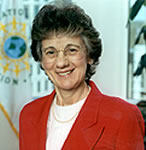
In most fields in the natural sciences, master's degrees have long been viewed mainly as milestones en route to a doctorate, rather than destinations in their own right. But about a decade ago, foundations and universities began experimenting with new master's programs that develop advanced scientific knowledge and professional skills such as communication, project management, and commercialization. Most of these innovative Professional Science Master's (PSM) degree programs are interdisciplinary and provide hands-on learning through internships and team projects. They are not intended to displace traditional programs. Instead, they aim to engage students with professional goals and help them become scientists uniquely suited to the 21st-century workplace, equipped with a deeper and broader scientific knowledge than that acquired with a Bachelor of Science degree and the skills to apply it.Dr. Colwell concludes:
PSM programs can make a vital contribution to this century's work force, which needs employees who can work well in teams and across disciplines (3). It is time for leaders in government, education, and industry to show similar teamwork in supporting these programs--an investment to yield a talented group of scientists with the skills our nation requires most to meet the global challenges of the 21st century.Dr. Colwell recently chaired a National Research Council committee that wrote the report Science Professionals: Master's Education for a Competitive World.
Job: RECTOR, UNESCO-IHE INSTITUTE OF WATER EDUCATION
RECTOR, UNESCO-IHE INSTITUTE OF WATER EDUCATION
Location: Delft, The NetherlandsDeadline for Applications: 14 May 2009
Description: http://recrutweb.unesco.org/pdf/NETSC0001readv.PDF
To Apply: http://tinyurl.com/c49dp2
Tuesday, March 31, 2009
The Second Forum of the Alliance of Civilizations

On 6-7 April 2009, the second Forum of the United Nations Alliance of Civilizations will be held in Istanbul, Turkey. In addition to high-level plenary debates, the event is intended to feature:
- An international platform for participants to develop joint initiatives and launch new programs.
- A range of project-specific working sessions, which will provide an interactive, inclusive convening space for policy-makers, international organizations and civil society groups to share lessons on best practices and develop joint work platforms.
- A unique 'Marketplace of Ideas' that will showcase some of the most innovative and successful grassroots projects with the purpose of transcending cultural divides and building peace.
The Alliance of Civilizations (AoC) was established in 2005, at the initiative of the Governments of Spain and Turkey, under the auspices of the United Nations. The AoC Secretariat, which is based in New York, works in partnership with States, international and regional organizations, civil society groups, foundations, and the private sector to mobilize concerted efforts to promote cross-cultural relations among diverse nations and communities, and in particular between "Muslim" and "Western" societies.
The Alliance works in four program areas to support such projects. These areas are: youth, media, education, and migration.
At a political level, mainly through role of our High Representative President Sampaio, former President of Portugal, the Alliance works to establish platforms for dialogue among political, religious, media and civil society personalities who are prepared to use their influence in advancing the Alliance of Civilizations’ objectives.
The Alliance has developed memoranda of understanding with a number of partner organizations, including UNESCO, the Arab Educational, Scientific and Cultural Organization (ALESCO) and the Islamic Educational, Scientific and Cultural Organization (ISESCO).
The Alliance of Civilizations Group of Friends community is vital to the AoC’s implementation process. The Group of Friends consists of representatives of States, UN agencies, and other international organizations and bodies that have demonstrated active interest in and support of the Alliance.
Surprisingly, there is no representative of the United States Government listed among the Group of Friends. Perhaps this is something that the Obama administration can rectify.The Alliance of Civilisations International Network of Foundations brings together foundations working to build trust and cooperation among religions, cultures and peoples. The Network includes U.S. foundationsL the Carnegie Corporation of New York and the Doris Duke Foundation for Islamic Art, as well as many of the most important foreign foundations.
Puerto Rican Biosphere Reserve - UNESCO
Casa Pueblo in Adjuntas, Puerto Rico is initiating its 25th anniversary celebration with a local, national, and international campaign directed at having the UNESCO proclaim the Bosque del Pueblo a Biosphere Reserve and World Heritage Site.
The organization is inviting students, teachers, professors, labor unions, associations, groups, churches, and citizens at large to participate.
Monday, March 30, 2009
UNESCO Non-Alligned Countries Meet
The participants in the meeting reaffirmed the priorities given to South-South cooperation on education, cultural diversity and human rights. The meeting also identified as important UNESCO fields of action:
In the plenary meeting, chaired by the Héctor Hernández Pardo (Cuban Ambassador to UNESCO and president of the Group, Farouk Hosni was presented as the candidate of the Arab nations in the October election for the new Director General of UNESCO.
- New information and communications technologies
- The effects of the global economic crisis on education
- the defense of linguistic diversity and
- the support of the Palestinian peopls.
Sunday, March 29, 2009
UNESCO and 15 to 24 Year Olds
The question often comes up as to how UNESCO serves youths. There is a facet of the UNESCO website that describes the Organization's approach to youth, but there doesn't seem to be a separate Youth Portal specifically designed to be lively and directed to the interests of young adults.
I would guess that UNESCO's most important function with respect to youth is encouraging countries to develop youth-friendly policies and services. This is a prototypical function for an intergovernmental organization.
In this respect, the Infoyouth Network was created by UNESCO to provide an overview of youth policies and programs throughout the world.
The Infoyouth network operates in conjunction with the National Commissions for UNESCO, youth organisations, governmental and non governmental institutions and information and data research agencies and bodies. The Steering Committee, made up of representatives from UNESCO, the French National Commission for UNESCO, the Youth and Community Education Unit of the French Ministry for Youth and Sports and the National Institute for Youth and Community Education ensures a regular follow-up of all Infoyouth projects.UNESCO also engages in partnerships with young people’s networks and organizations both to solicit information from them and to help them develop projects and programs in the areas of UNESCO’s competence.
Recall that UNESCO has a relatively small staff and budget as compared with the challenges it faces at the lead agency in the intergovernmental United Nations system in education, science, culture and communications and information. As such its direct services to youths must necessarily be limited. One important function however, is the Youth Forum UNESCO holds in conjunction with each of its General Conferences. The next Youth Forum will be this fall.
John Daly
(Opinions expressed above are mine and do not necessarily represent those of Americans for UNESCO.)
Saturday, March 28, 2009
WSIS Forum 2009
The Forum will offer participants a series of highest level panels addressing critical issues to the WSIS implementation and follow-up in multi-stakeholder set-ups.
Friday, March 27, 2009
Class Exercise: ExBrd Working Group on Old City of Jerusalem
Last night in our UNESCO Seminar we did a role playing exercise based on a real negotiation that took place in May, 2007 in the context of a Special Session of the Executive Board of UNESCO.The Old City of Jerusalem has been inscribed in UNESCO's World Heritage List since 1981. There is a ramp leading from the square in which the Wailing Wall (perhaps the most sacred place in Judaism) is located to the mount above where the Al Aqsa Mosque (which includes the Dome of the Rock), one of the holiest sites in Islam.
A retaining wall supporting the ramp failed and the Israeli authorities began archaelogical works prior to restoring the ramp. The communication between Israeli and Palestinian archaeological authorities has long been broken, and Palestinians were concerned as to the scope and purpose of those works, which they felt should have been under Arab auspices; the site of course holds remains of more than 1000 years of Muslim rule and occupation. The World Heritage Center was also experiencing difficulties communicating with the Israeli authorities.
Arab delegates asked for the Special Session of the Executive Board to review the situation. A subcommittee of the Executive Board was formed to draft a resolution on the matter, to be considered by the entire 58 member Board. The subcommittee consisted of Delegates from Egypt, Israel, Jordan, Norway, the Palestinian Authority, and the United States as well as the Deputy Director General of UNESCO. In our role playing exercise, students took the roles of these participants.
A team consisting of the Director a staffer from the World Heritage Center, the Director-General of ICCROM and the President of ICOMOS had previously visited Jerusalem and investigated the situation; their report was made available to the subcommittee.
The purpose of the exercise was to help the students understand the complexity of such a negotiation and the many levels at which it take place.
Of course, a common concern among all the Delegates was the preservation of a site which is of huge cultural importance to billions of people, and which is must be managed to accommodate millions of visitors.
Underlying the negotiation of course was a concern for the potential for violent confrontations in Jerusalem. The Al Aqsa Intifada was ignited at the very location under discussion. And of course, the negotiation was conducted in the context of the overall Peace Process in which Norway and the United States have played key roles.
The participants in the Working Group were unanimous in their statements that the issue should not be dealt with as a political issue, yet of course the Delegates were all diplomats of ambassadorial rank, and the venue was not the specialized agencies dealing with monuments and heritage sites, nor the World Heritage Center, but rather the governing body of UNESCO itself.
Students discussed the fact that each participant in the negotiation faced domestic constituencies that were very concerned with the condition of the sites and the political contexts. Israel's government was facing upcoming elections and the Palestinian authority was soon to dissolve in civil war; a large portion of the Jordanian population describes itself as Palestinian.
The media was characterized as influential in the negotiations even if not present. While U.S. media were silent on the situation, it was extensively covered in Israeli, Palestinian and Arab media. While the actual conduct of the negotiation would not be revealed, the results would be publicized in the countries of several of the delegates.
Moreover, Delegates were likely to be concerned with groups of nations, as the European Delegate might have been concerned with representing the views of European powers, and the Arab nations with representing other Arab and Islamic nations.
It was recognized that much of the work of the committee would be done outside of the meeting room, that the Delegates were likely to have received instructions from their governments, and that there were possibilities of incentives being offered or sanctions being threatened in the process of the negotiations. Israel, Egypt, Jordan and the Palestinian Authority are all heavily dependent on European and American support.
While the secretariats of UNESCO and other involved organizations were concerned with the integrity of the organizational processes, they must also have been concerned with the potential benefits and threats implied by the negotiation to their own organizations. The key organizational members were the heads of their respective organizations, rather than lower level technical staff.
And of course the Delegates were individuals, with their own ideological positions. One at least was probably chosen both as a neutral party and because of the respect he had earned as a skilled and experienced diplomat. Two of the Secretariat members have since been mentioned as attractive candidates in this year's election of a new UNESCO Director General. And of course, while all were internationally experienced, each Delegate came from his/her own cultural background -- Arab, Israeli, Scandinavian, Texan, etc. and might have understood the negotiations in part from that cultural background.
We reviewed the actual Resolution that had been approved
- which documented the previous agreements that set the stage for the current resolution
- recognized the universal cultural importance of the site
- acknowledged the work of the team that had done the site visit
- referred future work on the issue to the World Heritage Center
- called upon Israel to provide more information and coordinate with Islamic authorities on the works, and
- thanked the Secretariat for its work
The seven students and two coordinators had a lively, two hour discussion greatly facilitated by the fact that all of the students had prepared for the class. A fairly extensive set of case study materials had been made available for their review prior to the class, but most had gone beyond those materials.
Monday, March 23, 2009
Job: Chief of Section C&I
CHIEF OF SECTION (UAP), Communications and Information Sector
Section for Universal Access and Preservation (UAP), Information Society Division
Duty station Paris, France
Grade P-5
Closing date 27 April 2009
For more information: http://recrutweb.unesco.org/pdf/CI063.pdf
An Arab Plan of Action for Science and Technology
The Economic Summit of the Kings, Heads of State and Governments of the Arab League has adopted an Arab Plan of Action for Science and Technology. The plan was adopted at the summit held in Kuwait from 19 to 20 January 2009. UNESCO and the Arab League Educational, Cultural and Scientific Organization (ALECSO) are spearheading efforts to implement the plan.
Under the plan, a network of centres of excellence in the Arab world will be set up. These centres will work together on joint research projects to facilitate cooperation and thereby strengthen scientific ties and mobility within the Arab world. As many Arab scientists are living and working farther afield, the plan includes a collaborative research programme with the diaspora.
An Arab observatory of science and technology will be set up to monitor progress in research and development (R&D) and the application of research results to problem-solving in Arab society. Four priority areas for R&D have been identified: water, food, energy and agriculture.
More on the Election of the Director General
Source: "Sexo e intriga en UNESCO (I)," Jorge AsÃs, Internacionales, March 8, 2009.
A new UNESCO Director General is to be elected in October, and Jorge Asis has provided an analysis of the state of the election in a Spanish language OP/Ed piece. He notes that in the spirit of geographical rotation of the post, given that the last three DGs were African, European and Asian, it is likely to be the turn of the Islamic peoples. Farouk Hosny, an artist an long time Minister of Culture of Egypt, is a leading contender. Morocco and Oman have apparently chosen to withdraw their nominees.
Asis suggests that two candidates from former Communist countries, Bulgaria and Lithuania, are in consideration but are less likely to be elected. He also notes the possibility of Marcio Barbosa, a Brazilian who is currently Deputy DG, but predicts that Barbosa may not obtain the full support of the Brazilian government that would be needed for his election.
Hosny is controversial in part for past anti-Israeli statements, especially unfortunate in the context of UNESCO's emphasis of dialog among cultures. Asis also suggests that while Hosny has strong support for the wife of Egyptian President Moubarak, his personal style may detract from the support he obtains from other Islamic nations.
Sunday, March 22, 2009
National Commission Meeting Postponed
Meeting of the National Committee for the IOC
It was an auspicious day to attend my first meeting of the National Committee. Jane Lubchenco's nomination to head the National Oceanic and Atmospheric Administration had been unanimously approved by the Senate on Thursday and it was expected that she would be sworn in during the day of the meeting; there was great pleasure among the oceanographers that a well known and respected scientist would be leading NOAA.
The IOC will celebrate the 50th anniversary of its founding during in 20010-11. The participants in the meeting debated how they could schedule events in the United States as part of the observance, and how those events could help educate the scientific community and the public about the IOC and its activities. There was a general agreement that such education is very much needed. (I suggested that an editorial in Science magazine might help.)
Roger Revelle, who was born in 1909, was very much involved in the founding of UNESCO, as he was one of the oceanographers who was deeply involved in the large collaborative studies of the oceans at the time. It was that experience which led him and others to recognize the need for an intergovernmental organization to sponsor such efforts and to enlist the national governments in support of the needed research. Last year there were a set of Revelle Memorial Lectures held in conjunction with the meeting of the Commission. (I was fortunate enough to know Roger, who was a real scientific statesman.)
There are currently 136 member states of the Intergovernmental Oceanographic Commission; the United States has been a member since 1961.
One of the more important matters before the IOC is the appointment of a new Executive Secretary of the Commission, and the National Committee heard a report on the process. From 85 candidates, a dozen have been short listed, and the member nations are to make recommendations on the three to four that each preferrs. It is not surprising that the majority of the short list are U.S. citizens, were educated in the United States, or are now employed in the United States. After all, the United States is a world leader in oceanography. The consensus of the National Committee was that there are several outstanding candidates on the short list!
The IOC plays a significant role in lending its authority to the Global Ocean Observing System (GOOS) which is an important part of the Global Climate Observing System (GCOS). Not only is understanding of the oceans and the changes that they are undergoing fundamental to understanding climate change and its causes, but that understanding has great scientific and economic importance. IOC also lends its authority to the International Oceanographic Data and Information Exchange (IODE). It is important to understand the economic importance of this science, and I was glad to note that there is a NOAA project on Coastal and Ocean Resource Economics.
I was also able to see a presentation on the IOC Tsunami Project. Recall the outpouring of concern after the tsunami in December 2004 led the IOC to undertake to promote the development of a global system for tsunami alerts. Five years later, that system is well under way providing protection in South East Asia. The small staff in UNESCO that was working to promote and coordinate this program is about to be disbanded as the nations funding that staff through extrabudgetary contributions are ending that support. Yet we heard that there will be other tsunamis in the future, and that they have the potential again to kill hundreds of thousands of people unless the warning system can be made effective and sustained.
The Reagan administration withdrew the Convention from Congressional consideration leading to a long renegotiation of portions of the treaty. The Bush administration resubmitted the treaty to the Senate, where it still awaits a vote. The authors of the Boston Globe article call for the Obama administration and the current Congress to ratify the Convention. The IOC has responsibilities assisting member nations to implement portions of the Convention.The United States has 12,500 miles of coastline and 360 major commercial ports. Among the world's largest importers and exporters of goods and services, it has more to gain by ratifying the convention than by avoiding it, especially against the backdrop of global recession.
In the absence of such a legal framework, history is replete with examples of rogue nations unduly restricting maritime access and encroaching upon others' interests, potentially compromising military operations, disrupting commerce, and flouting accountability for environmental degradation.
So far, 156 countries and the European Community have ratified the treaty.
Thursday, March 19, 2009
World Water Day 2009
World Water Day 2009, which will be celebrated on Sunday 22 March, will highlight Transboundary Waters. People around the world are encouraged to celebrate the day to draw attention to the challenge of sharing water and opportunities.
Tuesday, March 17, 2009
The United States and UNESCO
In 2007 voluntary contributions from the United States to UNESCO amounted to USD 3.3 millionUNESCO provides a website describing U.S. cooperation with the Organization.
Voluntary contributions have increased since the United States re-joined UNESCO in 2003. During its 19-year absence, the United States nevertheless continued to make voluntary contributions to a number of UNESCO’s activities.
Saturday, March 14, 2009
The UNESCO-IHE Institute for Water Education
The Institute is based in Delft, the Netherlands, and is owned by all UNESCO member states. It is the largest water education facility in the world, and the only institution in the UN system authorised to confer accredited MSc degrees.
UNESCO-IHE - Facilities&Services
UNESCO-IHE - Living in Delft
Click here to go to the UNESCO-IHE video site for more information on the Center and its programs.
Friday, March 13, 2009
Editorial: Response to Ambassador Oliver
was founded in 1982 by Unification Church founder Sun Myung Moon. The Times is known for its conservative stance on political and social issues.Ambassador Oliver was a political appointee of the Bush (43) administration, given the rank of ambassador. She is widely considered to have won the respect of the UNESCO Secretariat and of other diplomats representing their governments at UNESCO, and to have been an effective advocate for the issues on which she chose to focus. The Interpress Service reported in 2005:
Two years ago, Bush appointed the former head of an aggressive Republican fund-raising and lobby group, Louise Oliver, as U.S. ambassador to the U.N. Educational, Scientific, and Cultural Organization (UNESCO), which had been boycotted by Washington for almost 20 years before.I agree wholeheartedly with what I take to be Mrs. Olivers key points in the piece:
Oliver had also been a founding director of the right-wing Independent Women's Forum along with Lynne Cheney, the wife of Vice President Dick Cheney. Oliver's daughter, Anna Louise Oliver, was appointed special assistant to the State Department's PRM Bureau in 2001 primarily to work on population issues, particularly with respect to reproductive services and abortion.
- "This October, the United Nations Educational, Cultural, and Scientific Organization (UNESCO) will elect a new director general to a six-year term. It is critical that the Obama administration focus its attention on that election."
- "President Obama has stated his intention to promote multilateralism and the use of 'soft power' as the hallmarks of his foreign policy. What the administration does with regard to UNESCO - and when - will send a clear signal about the seriousness of his commitment to use international organizations to advance U.S. national interests and the global good."
When I arrived at the UNESCO headquarters in Paris in March 2004, I was the first U.S. ambassador to the organization in 20 years. Given UNESCO's name, I expected to find my new colleagues focused on schools, scientific research and the arts. Instead, they were busy developing three new "normative instruments." each of which would have important legal implications: a declaration on bioethics, and two treaties, known at UNESCO as "conventions," on anti-doping in sports and "cultural diversity."There are a couple of thousand employees of UNESCO, many more people who participate in the international forums of UNESCO, and a large diplomatic community around UNESCO. All of these people might have been considered her colleagues. In my experience, the large majority of them are indeed focused on improving education, promoting science, and protecting culture. If as Ambassador, Mrs. Oliver missed that point it was probably because she chose to devote her time and effort to those three normative instruments.
Of course, it is not surprising that a diplomat focuses her attention on the negotiation of treaties; that is an important part of the job. What may be more surprising is that the Bush administration appointed someone to the UNESCO post who did not know the organization well before assuming her duties as the Permanent Delegate to that six-decade-old organization.
Mrs. Oliver states:
On the U.N. Security Council, the United States has a veto. At UNESCO, it does not. Effective U.S. diplomacy and strong personal relationships with the secretariat and representatives of UNESCO's 192 other member states are the only means the United States has to generate support for its ideas and policies, and to thwart the efforts of those who seek to harm U.S. interests.The United States and the other great powers emerging victorious from World War II indeed created the Security Council's veto system to assure that they could block any U.N. action that threatened their security. UNESCO was created, with the United States taking a lead role, for the exchange of ideas -- an open forum. While diplomacy and personal relations count in a forum of ideas, another critically important means to winning debates is to have good ideas to promote and strong arguments with which to promote them. UNESCO was created to build the defenses of peace in the minds of men, and that is best done by reasoned discussion rather than force.
Mrs. Oliver states that she and her staff "successfully negotiated the Declaration on Bioethics and Human Rights". The Declaration had been under negotiation prior to the U.S. reentry into UNESCO, and after reentry an American was added to the drafting committee. That person, an eldely physician with a distinguished history as a medical academic, was also known for his strong "right to life advocacy"; he served on the very controversial Presidential Committee on Bioethics.
Was it appropriate for UNESCO to consider bioethics and human rights? UNESCO's concern for human rights goes back to the request from the United Nations to investigate whether there were indeed rights that were so widely shared among cultures of the world as to be "universal". Similarly, it has always focused on ethics and indeed has been termed "the conscience of the United Nations system."
Was the negotiation successful? A declaration is the weakest of the international instruments, and the bioethics declaration might not affect country behavior much in any case. Still, the Universal Declaration of Human Rights, negotiated under the guidance of Eleanor Roosevelt, has been hugely influential over the past six decades, and there may well have been useful things that a new declaration on bioethics could have done. In point of fact, the declaration was widely criticized by philosophers and human rights experts.
Mrs. Oliver seems concerned that other nations disagree with us about some aspects of human rights and use UNESCO as a forum to seek to convince the majority of nations of the superiority of their beliefs. The very purpose of UNESCO was to allow peaceful discussions of issues so important that if unresolved they might lead to war.
The debate on the abolition of slavery was conducted over many years before the right to freedom from involuntary servitude was acknowledged by the community of nations, So too, there has been a debate in the last couple of years over the use of torture on prisoners for which the majority of Americans appear to disagree with the position of the Bush administration. People do go to war over such issues!
There is another UNESCO decision before the Obama administration -- the appointment of a new U.S. Permanent Representative to UNESCO. I hope that the administration will find a skilled diplomat, devoted to advancing education, science and culture, who will be an effective advocates for the best of American ideals, and who will fully understand the UNESCO milieu in which that advocacy is to take place. I would also hope that the new representative emphasizes efforts to make UNESCO more efficient and effective in improving education, promoting science and protecting culture globally.
John Daly
(The opinions expressed in this editorial are those of the author, and do not necessarily represent those of Americans for UNESCO or any other organization.)
Comments on the Budget of UNESCO
One of the more difficult issues for the students in my class has been to understand the budget of UNESCO. I did this simple spreadsheet (click on it to enlarge) to help them to understand the Organization. It describes the budget for the two year period, of almost one billion dollars.The UNESCO budget is divided between the Approved budget funded from the assessed contributions of the member nations, and the extra-budgetary resources which are voluntary contributions made to specific projects and units of the organization. (There are lots of activities done under the UNESCO umbrella which are not included in these budgets, such as those of the so called "Category 2 Centers", National Commissions, Associated Schools, and University Chairs, not to mention the in kind services of people consulted by UNESCO.)
Note first that more than one-third of the expected funding is extra-budgetary. On the one hand, this allows the donors to direct the funding to efforts that they feel are especially valuable; on the other hand, the Organization's focus is heavily dependent on the contributions it can obtain as donations.
Part II of the budget, which includes the direct budgets for the various programs of UNESCO (including direct staff and other direct expenses), represents only about 70 percent of the total, and that is about equally divided between assessed contributions and voluntary contributions. I suspect that this is a glitch in the accounting principals. Thus the communication of UNESCO's work done via the Internet is probably accounted as supporting services, while I would regard that communication as one of UNESCO's more important functions. So too, some of the meetings hosted by UNESCO would seem to be accounted as part of the direction, but may also represent an important function of the organization as promoting dialog and serving as a clearinghouse for ideas.
Note how the balance of approved and extra-budgetary resources differs from program to program. The education program appears to be the priority for UNESCO as viewed from its Approved budget, while the natural science program would appear to be the priority of the nations making voluntary contributions.
I would also note that the budget for the social and human sciences program is smaller than that for other programs. Given the importance that improved understanding of economics, sociology, anthropology, political science, management sciences, psychology, cognitive science, etc. could have for the world, this is too bad. On the other hand, it would be hard to justify taking money away from starved programs of education, natural sciences, culture and communications to build new capacities in UNESCO. More resources are clearly needed.
If one were to take a billion dollar budget for an organization with UNESCO's charter and allocate it optimally, this is not the budget that would result. Rather this is the budget that funds the UNESCO organization and program that has evolved over six decades, under the influence of a complex legislative and bureaucratic decision making process, and the willingness of the more affluent nations to fund the Organization.
Wednesday, March 11, 2009
U.N. Secretary General Meets with Obama
Source: "Obama, UN’s Ban Call for Unified Response to Sudan," Bill Varner and Hans Nichols, Bloomberg.com, March 10, 2009.
Susan Rice, the U.S. ambassador to the UN, said Obama’s meeting with Ban less than two months into his administration was a sign of renewed support for the international organization.Editorial comment: The willingness of President Obama to meet with the Secretary General so early in his term in office is indeed encouraging. This is especially true given the economic crisis that the nation is facing, which must necessarily take a great deal of the President's time. I suspect this bodes well for the U.S. relationships with UNESCO during the Obama administration. JAD
“The early timing of this meeting and the breadth of its substance I think underscores the importance that President Obama and the administration attach to the United Nations,” Rice said today in New York.
After their Oval Office meeting, Ban expressed similar sentiments, saying that he was encouraged that Obama met with him “at such an early stage” of his presidency.
ITU Reports Global Development in ICT
The evidence that developing information communication technology (ICT) is becoming an increasing priority around the world continues to mount. In illustrating this, the International Telecommunications Union (ITC) recently published its ICT Development Index (IDI) and indicated all but 1 of the 154 countries under study improved their levels of ICT from 2002 to 2007. These findings included data from UNESCO and were based off of 11 indicators that measured factors like ICT access as well as use and skills of the population. Monday, March 09, 2009
Social Network Sites Linked to UNESCO
Jennie Lawrence has also created a Twitter account with the username UNESCOoer, which focuses on UNESCO's Open Education Resources.
LinkedIn, the social networking site I use most because it serves a community strongly involved in international development, has a UNESCO Group. Currently there are 141 member who can hold discussions, share news, advertise jobs, etc.
There are other LinkedIn groups related to UNESCO, such as the International Webmasters Group, but most are smaller and linked to rather specific fields.
Facebook, a social networking site very popular with youths and the general population has a Group focusing on World Heritage Sites, as well as one for Friends of World Heritage.
The Millennium Development Goals – bankable pledge or sub-prime asset?
The bad news is that projections of economicconditions are getting worse and worse.
The not so bad news is that they may not
be very credible.
Kevin Watkins and Patrick Montjourides of the team writing the Education for All Monitoring Report made a presentation to a UNESCO Future Forum session titled "The Global Financial and Economic Crisis: What Impact on Multilateralism and UNESCO?" (Others of the presentations at the session are available online.)
A UNESCO press release summarizes the presentation, beginning with this assessment:
We are in the greatest economic crisis since 1929 – international experts at the UNESCO Future Forum (Monday, 3 March) were in agreement on this. Its consequences could be disastrous, starting with the deaths of two million children between now and 2015.The report from which this presentation was drawn is not yet published, but I have obtained a copy of the presentation itself which you can download from Box.net.
A further 200 million people, mostly in Africa, could be living on less than US$1.25 per day (up 6.1% on 2007 figures) and, as Aart de Geus, Deputy Secretary-General of OECD, pointed out, the world’s unemployed could swell to 30 million, even 50 million, over the course of the coming years, if the situation continues to worsen (see interview). This would mean an unemployment rate of 7.1% with 230 million job seekers worldwide, over half of them women.
The Gender Mainstreaming facet of the UNESCO website makes streaming videos available of some of the presentations from the Future Forum that focused specifically on women and gender equality.
Sunday, March 08, 2009
Women Make the News
This year the International Federation of Journalists (IFJ), with support from UNESCO and Sweden’s LO-TCO Secretariat of International Trade Union Development Cooperation, has published a handbook entitled Getting the Balance Right.
Saturday, March 07, 2009
Editorial: A Failure of UNESCO Communications
An international omnibus TNS Worldpanel survey about the perception of science and scientific careers among the general public has been conducted within the framework of the partnership between the L’Oréal Foundation and UNESCO.
Unfortunately, it does not seem to be available on the Internet. UNESCO has published on its website an unsatisfactory summary of the findings by a journalist without a link to the survey report itself.
Why would UNESCO fail in so simple a responsibility? It is the United Nations agency most responsible for developing knowledge and understanding of science, and the information would have been of interest to both the followers of its science policy efforts and its social science efforts.
New Edition of World Water Development Report
© Jacques Descloitres,
MODIS Land Rapid Response Team, NASA/ESFC
Third United Nations World Water Development Report, entitled Water in a Changing World, will be presented by UNESCO at an event on 12 March at United Nations headquarters. It is published as a contribution to the Fifth World Water Forum in Istanbul (Turkey), 16 to 22 March.
"Increased demand linked to population growth and mobility, to evolving consumption and higher energy needs, and to the tangible effects of climate change are putting additional pressure on the world’s water resources."
International Women's Day at UNESCO
UNESCO’s International Women’s Day 2009 celebrations will focus on UNESCO’s commitment to designate gender equality as a global priority of the Organization in its Medium-Term Strategy for the period 2008-2013.
Thursday, March 05, 2009
UNESCO Courier: Endangered Languages
Sullivan U.S. Rep at IPDC Bureau Meet
Marguerite H. Sullivan, director of the Center for International Media Assistance at the National Endowment for Democracy and a member of the U.S. National Commission to UNESCO, traveled to Paris to join U.S. delegation members in the meetings. The Bureau allocated almost $2 million to projects around the world.
The Global Financial and Economic Crisis: What Impact on Multilateralism and UNESCO?
The UNESCO Future Forum held a session on this topic on 2 March 2009 at UNESCO Headquarters. Its purpose was to reflect on the ramifications of the present financial and economic crisis and their implications for international cooperation in general and in particular for UNESCO’s domains, namely education, the sciences, culture, communication and information.
The one-day event had three goals:
- Provide the Secretariat, Member States of UNESCO, media, NGOs and the public at large with a better understanding of the potential impact of the global financial and economic crisis on multilateralism and UNESCO
- Contribute to the sharpening of UNESCO’s approaches in a context of lower resource prospects and growing needs
- Underline UNESCO’s role as a laboratory of ideas and to enhance its visibility in this regard.
The Morung Express has an interesting article related to the meeting.
Wednesday, March 04, 2009
UNESCO-L’Oréal For Women in Science International Fellowships
The program emphasizes cross-cultural communication and discussion as well as international scientific cooperation. To promote diversity, three fellows are chosen from each of the program's five geographic regions: Africa, Arab States, Asia and the Pacific, Europe and North America, and Latin America. Past winners also play large roles in supporting the fellows; more information about the impressive past and present winners can be found here for L’Oréal's information and here for UNESCO's site.

This program is one important aspect of the UNESCO-L’Oréal partnership. In 1998, the two organizations joined together to create the For Women in Science Partnership and began awarding the UNESCO-L’Oréal International Fellowships in 2000 . Since the creation of the partnership, over 500 women have been supported in their careers with 135 women receiving this fellowship. The themes recognize physical sciences and life sciences every other year; this year, the theme was physical sciences.
Both UNESCO and L’Oréal should be applauded for their recognition of these very accomplished researchers. Let us hope their stories of making great change in their fields prompts others to conduct research that could improve the lives of many.
Sunday, March 01, 2009
Meeting of National Commissions
UNESCO Staff Members . ParÃs, France, february 2007
A meeting was held in January of representatives of the National Commissions for UNESCO of developed nations. Fourteen developed nations sent representatives, and three developing nations sent observers. Unfortunately, the U.S. National Commission did not send a representative.
Kelly Seikman, of the State Department's Office of UNESCO Affairs, was queried about the meeting, and responded:
I wish that the U.S. could have attended the meeting, but unfortunately it was on a day that the U.S. was not able to attend.The conclusion of the report of the meeting stated:
National Commissions are a modern instrument of governance, truly reflecting the participatory approach of UNESCO as laid down in its Constitution, and creating a strong link between governments, civil society and multilateral cooperation. They especially support the intellectual function of the Organization by mobilizing national expertise and they create awareness and advocacy for UNESCO in its Member States. We have to find more intelligent ways to maximize this resource for the Organization.The participants in the meeting, noting that National Commissions differ from country to country, there are some general standards that should be maintained for all to assure their efficient functioning. Their examples of such standards were:
- National Commissions should be well structured and equipped with (at least) minimum financial resources.
- A well trained Secretary-General with a mandate of at least 5 years and one
professional staff for each of UNESCO’s major programmes - Experience is one of the main assets of National Commissions’ staff. Therefore, frequent changes of professional staff in National Commissions are to be seen as a main impediment to their effectiveness; there is clear evidence of a close relation between the quality of work of a National Commission and the number of years of tenure of its professional staff, especially with regard to the Secretary-General. Effective mechanisms should be developed to ensure stability in the Secretariats of National Commissions.
- Inter-sectoral outreach of National Commissions is essential. A however limited autonomy in the administrative linkage to a national ministry allows National Commissions to establish good relations to all ministries concerned by UNESCO’s large mandate. A National Commission should not, through the attachment to a particular ministry, be limited to work exclusively in one of the Organization’s major programs
- Experience shows that it is necessary to address governments in order to enhance the status of National Commissions.
IPDC Moves to Foster Free Media in Developing Countries
UNESCO's International Program for the Development of Communication (IPDC) last week allocated a total of US$1.95 million to support 63 new media development projects in developing countries and to facilitate evaluations of the media sector of selected pilot countries using the Media Development Indicators.
Observatory named after UNESCO scientist inaugurated in Argentina
The Observatory is exploring the mysteries of the highest energy cosmic rays – charged particles showering the Earth at energies 10 million times higher than the world’s highest-energy particle accelerator. Launched more than a decade ago under the auspices of UNESCO, the observatory is a network of 1600 sensors spread over 3000 km2 in Argentina.
The Auger Observatory is a ‘hybrid detector’, employing two independent methods to detect and study high-energy cosmic rays. One technique detects high energy particles through their interaction with water placed in surface detector tanks. The other technique tracks the development of air showers by observing ultraviolet light emitted high in the Earth's atmosphere.
Check out the Observatory website!
The international collaboration in support of the Observatory formally got off the ground in a meeting at UNESCO headquarters based on Argentina’s offer to host the effort.
The project is named after former UNESCO Science Director Pierre Auger (1948-1958), who died in 1993. He is perhaps best-remembered for orchestrating UNESCO's key role in the founding of the European Organization for Nuclear Research (CERN) near Geneva, which launched the Large Hadron Collider on 21 October last year.
Pierre Auger was an experimental physicist, in the fields of atomic (photoelectric effect), nuclear (slow neutrons) and cosmic ray physics (atmospheric air showers). After his service with UNESCO, he served as Director of the Cosmic Physics Service at the French National Centre for Scientific Research (1959-1962) and as Director-General of the European Space Research Organization (1962-1967).
The Pierre Auger Collaboration involves about 350 scientists from Argentina, Australia, Bolivia, Brazil, the Czech Republic, France, Germany, Italy, Mexico, Netherlands, Poland, Portugal, Slovenia, Spain, UK, USA and Vietnam. Nobel Laureate in Physics, James W. Cronin, of the University of Chicago, conceived the Pierre Auger Observatory, together with Alan Watson of the University of Leeds.
"Scientific Stimulation From The Stars"
the U.S. rejoined UNESCO in 2002 after the agency implemented reforms. UNESCO has changed; many of its programs can now be applauded. And this year, there's one that's fun, enlightening and universally engaging. It's one you may even want to participate in.
To mark the 400th anniversary of Galileo's first discoveries in the heavens, UNESCO has proclaimed 2009 to be the International Year of Astronomy (with the required approval of the U.N. General Assembly). The point is to spread scientific knowledge about the skies and the universe, encourage research in astronomy and raise awareness, as the proclamation declared, "of the importance of astronomy to social development through the establishment of links between scientific research networks and the cultural perception of the universe."