Thursday, March 16, 2006

Science in UNESCO


On Monday 13 March, Koïchiro Matsuura, the Director-General of UNESCO, opened the first meeting of the Committee reviewing UNESCO's science programs with an important address.

Here are some excerpts:
When plans were being laid for the foundation of the Organization towards the end of the Second World War, education was the main theme; the S for “scientific” was added only in November 1945 by the preparatory commission that met in London to create UNESCO as we know it today. The change was made mainly in response to the advocacy of many scientists’ groups, particularly in the United Kingdom. With the appointment of Julian Huxley as UNESCO’s first Director-General, the place of science and technology was strengthened, given that he was not only a distinguished scientist but also a great popularizer of science.

Since then, the action of the Organization in the natural sciences and the social and human sciences has developed in a rich variety of ways, always in keeping with its constitutional purpose “of advancing, through the educational and scientific and cultural relations of the peoples of the world, the objectives of international peace and the common welfare of mankind for which the United Nations was established and which its Charter proclaims”.

Needless to say, we must stress the relevance of this purpose for our future action. This relevance endures despite – and because of – the great changes that have taken place over recent decades during which the international community has had to tackle many major, inter-related challenges. To effectively address the complexity of these challenges, the evidenced-based contributions of a wide range of scientific disciplines are required. Four main areas of understanding must be enhanced:
First, we must gain a better understanding of the impact of human activity, which has often had disastrous consequences for the sustainability of our natural environment in many parts of the world.

Second, we need to better appreciate the key role that science and technology play in development, in the struggle against poverty and in ensuring human security for the most vulnerable populations.

Third, we need a deeper understanding of the various social transformations which characterize our contemporary world, particularly in the context of accelerating globalization, which is also having an important impact in the so-called “politics of knowledge”. After all, many countries tend to finance scientific and technological research in those fields that can strengthen their competitiveness in the global arena.

Fourth, we must better understand the impact of scientific and technological progress itself on societies, including the way in which major developments are giving rise to more and more important ethical questions, for example (but not only) in the field of bioethics.
All these issues must be tackled together, taking into consideration the clear trends relating to the growing gap between a relatively small number of industrialized countries, which account for more then 80 per cent of scientific research in all fields, and the rest of the world. A related issue is the phenomenon of brain drain, which continues to be a major problem despite some recent progress in a few countries to ensure new opportunities for their graduates of higher scientific education.

Summary Findings and Recommendations of Recent UNESCO Evaluations

This Word document compiles the findings and recommendations of evaluations carried out on activities and programs of UNESCO's Major Programs II (Natural Sciences) and III during the 2004 – 2005 biennium, as presented to UNESCO’s Executive Board last year. The programs included are:
* The Environment and Development in Coastal and Small Islands (CSI) Platform

* UNESCO’s Contributions to the World Solar Programme 1996-2005

* The Man and the Biosphere (MAB) Program

* Information Services in Social and Human Sciences

* “Cities: Management of Social and Environmental Transformations” MOST Project

* UNESCO’s Management of Social Transformations (MOST) Programme (2002-2003)

* UNESCO─IUGS International Geological Correlation Programme (IGCP)

* Small Historical Coastal Cities (SHCC)

* International Hydrological Programme (IHP-V) 1996-2001
Full versions of the evaluations are available from UNESCO on request.

Review of UNESCO's Science Programs

An overall review of UNESCO’s Major Program II -Natural sciences- and Major Program III -Social and Human Sciences- has been initiated. The review is to take place against the background of the Organization’s mandate, country and regional priorities and today’s global needs. The results of the review are to contribute to program planning and to form an integral part of the preparation of the Draft Medium-Term Strategy for 2008-2013 and the Draft Program and Budget for 2008-2009.

A Review Committee has been formed with two members from the United States:
* Dr. Kathie L. Olsen, Deputy Director and Chief Operating Officer, National Science Foundation, and
* Dr. Calestous Juma, Professor of the Practice of International Development and Director, Science Technology & Innovation, Belfer Center for Science and International Affairs, Harvard University.
The Review Committee held its first meeting at UNESCO headquarters in Paris on March 13 to 15, 2006.

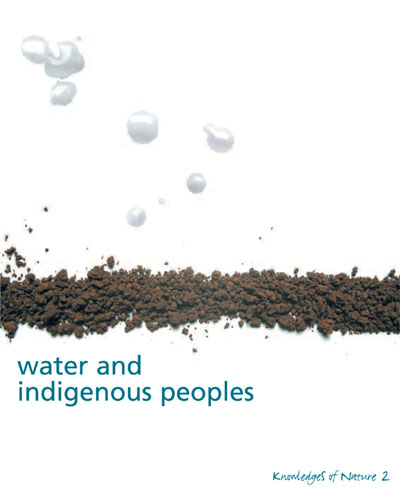
Water and Indigenous Peoples


Edited by R. Boelens, M. Chiba and D. Nakashima. Knowledges of Nature 2, UNESCO: Paris, 177 pp., March 2006.

To request a copy, email - sc_links@unesco.org

This book has been launched by UNESCO during the Fourth World Water Forum in Mexico City (March 2006). It is based on the papers delivered atf the Second and Third World Water Forums (The Hague in 2000 and Kyoto in 2003). It brings to the fore some of the most incisive critics from indigenous communities of international debates on water access, use and management, as well as indigenous expressions of generosity that share community knowledge and insight in order to propose remedies for the global water crisis.


Water and Indigenous Peoples
advocates a revision of international development efforts to fully embrace indigenous peoples' knowledge, values, land tenure, customary management, social arrangements and rights pertaining to water. Contributions cover a wide array of approaches and issues, ranging from 'worldviews' to 'rights-based struggles'.

Wednesday, March 15, 2006

Follow-up to the World Summit on the Intormation Society

UNESCO has for some time had created a website communicating about its actions following up the WSIS.

It has now opened an online platform to facilitate initial contacts among stakeholders and to launch activities under the Action Lines of the Geneva Plan of Action that are in the area of competence of the Organization.

These action lines include the following:

# C3: Access to information and knowledge

# C7: E-learning and E-science

# C8: Cultural diversity and identity, linguistic diversity and local content

# C9: Media

# C10: Ethical dimensions of the Information Society

The platform is intended to gather the opinion on all aspects related to multi-stakeholder implementation of all those who are interested in working to implement the above action lines.

There has also been published by the International Telecommunication Union (ITU), following up WSIS:

The GOLDEN BOOK: STAKEHOLDER COMMITMENTS AND INITIATIVES

The Golden Book is a permanent record of the new commitments and resources pledged by stakeholders during the Tunis Phase of WSIS. Participants and stakeholders at the Summit were asked to submit details of their activities planned and announced during the Tunis Phase using an online questionnaire to highlight the different activities being undertaken to implement the WSIS Plan of Action. As a result, ITU estimates that at least € 3.2 billion (US$ 3.9 bn) were committed to activities promoting the WSIS goals during the Tunis Phase. The Golden Book highlights some of the valuable work being done around the world to promote ICTs in projects, large and small, by governments, individuals or team effort, for the benefit of all. It provides illustrative examples of new and innovative projects to build infrastructure, promote ICTs in education, health and governance, ensure fair access and enhance online security. A database and online search engine are available to help agencies, NGOs and administrators make contact with networks and support organizations within their field and area of operations.

Monday, March 13, 2006

Creating the Information Commons for e-Science: Toward Institutional Policies and Guidelines for Action

Go to the conference website.

This International Workshop was held at UNESCO Headquarters in Paris on 1-2 September 2005.

It was an important element of ongoing efforts to achieve the broader goals of The World Summit on the Information Society. In particular, this workshop aimed to promote development of institutional policies and guidelines for action in support of the “information commons” for e-science. The work plan comprised four objectives:

* Review opportunities/challenges for realising global collaborative e-science on the emerging "cyber-infrastructure."
* Review government and university mechanisms for managing publicly funded scientific information in the digitally networked research environment; identify problems and develop procedural solutions.
* Identify and analyse institutional, economic, policy, and legal benefits/drawbacks to providing public access to and unrestricted use of publicly funded scientific information.
* Put forward resolutions/recommendations that enable the scientific community to more effectively utilise publicly funded scientific data and information.

The draft proceedings are available online.

"Education Makes News" training kit

UNESCO has launched a revised and improved the Education For All media training and resource kit titled “Education Makes News”. Education for All (EFA) is the international initiative to achieve education for all by 2015. The kit is to be used to encourage the communication media to highlight EFA goals locally, regionally and globally. The kit can be used to develop the interest, knowledge and skills of journalists and other media professionals in writing, reporting and investigating the EFA issues. It can help them to create stories from statistics and bring the EFA debate to the center stage. The revised kit has been updated with recent statistics, facts, and examples and newly organized contents. The technology used in the Computer Based Training (CBT) is simplified for easy use by learners/trainers.

Click here to downloaded the kit.

Sunday, March 12, 2006

The McBride Commission and its Findings

A major reason that the United States withdrew from UNESCO in the 1980's was the anger generated by UNESCO's discussions of a New World Information and Communications Order.

A major contribution to that discussion was a UNESCO publication, "Many Voices, One World". This was the report of UNESCO's International Commission for the Study of Communication Problems. The Commission is ofter known as the McBride Commission, after its chair, Sean MacBride.

As a result of the report, UNESCO is described by Sourcewatch as having launched the International Program for the Development of Communication. (The United States is now a donor to this program.) The Program web site states that it "exists to strengthen the means of mass communication in developing countries, by increasing technical and human resources for the media, by developing community media and by modernising news agencies and broadcasting organizations."

McBride was an interesting man, and the scion of a famous Irish family (see a brief bio). An Irish statesman, he was born in Paris. His father was executed for his part in the 1916 Easter Rising. His mother was Maud Gonne MacBride, a beauty and one of the strongest advocates of Irish Nationalism. Together with William Butler Yeats, Maude Gonne helped establish the Abbey Theatre in Dublin. (Yeats fell in love with her and his feelings for her inspired a large number of poems. In 1902 Gonne played the leading role in his play, Kathleen Ni Houlihan.)

Sean McBride was Irish Minister for External Affairs when the Council of Europe was drafting the European Convention on Human Rights and is credited with being a key force in securing the acceptance of this convention. He was President of the International Board of Amnesty International for 14 years, and Secretary-General of the International Commission of Jurists for seven. He was also elected Chair (1968-1974) and later President(1974-1985) of the International Peace Bureau. In 1973 he was elected by the General Assembly of the United Nations to the post of UN Commissioner for Namibia with the rank of Assistant Secretary-General of the United Nations. He was awarded the Nobel Peace Prize for his life's work in 1974. He died in 1988.

The McBride principles, named after San McBride, were adopted as US law in 1998 creating a fair employment code for US companies in Northern Ireland, and contributing to the peace in Ireland.

The MacBride Round Table on Communication is a communications rights advocacy group created in 1989 to stimulate discussion of issues embodied in the 1980 UNESCO MacBride Report.

The reassessment of the McBride Report continues. For example, Andrew Calabrese has written a paper, "The MacBride Report: Its Value to a New Generation". Similarly, Stewart M. Hoover, has written a paper citing the report, titled "All Power to the Conglomerate: If Information Is a Commodity, What Price Is International Understanding?".

Saturday, March 11, 2006

Philip Hall Coombs; Education Expert and Advocate

Read the obituary in the Washington Post, March 10, 2006.

Read the obituary in the New York Times, March 7, 2006.

Philip Hall Coombs, 90, the first assistant secretary of state for educational and cultural affairs, died Februar 15, 2006 in Chester, Conn.

Mr. Coombs worked for UNESCO's International Institute for Educational Planning in Paris. In 1970, he became vice chairman and then chairman of the International Council of Economic Development, focusing on improving education in developing countries.

His books include "The Fourth Dimension of Foreign Policy" (1964); "Education and Foreign Aid" (1965); "Attacking Rural Poverty: How Nonformal Education Can Help" (1974); and "The World Crisis in Education: The View From the Eighties" (1985).

"We praise education's virtues and count on it to help the new generation solve great problems which the older generation has failed to solve," Secretary Coombs told an international meeting in Washington in 1961. "But when it comes to spending more money for education, our deeds often fail to match our words."

22 March - World Day for Water 2006: Water and Culture

Go to UNESCO's website for the World Day for Water 2006.

The United Nations General Assembly has declared that 22 March of each year is World Day for Water. States are invited to devote the Day, as appropriate in the national context, to concrete activities such as the promotion of public awareness through the publication and diffusion of documentaries and the organization of conferences, round tables, seminars and expositions related to the conservation and development of water resources and the implementation of the recommendations of Agenda 21.

World Water Day (WWD) 2006 will be guided by the theme 'Water and Culture' under the leadership of UNESCO.

Wednesday, March 08, 2006

Japan-UNESCO agreement signed

Read the full story on the Bahrain News Agency website.

UNESCO and Japan have signed two agreements to establish an international center in Japan on how to manage water engendered dangers, aiming, particularly, at preventing natural disasters such as Tsunami and hurricanes. The center was inaugurated on March 6 at the Japanese Institute of public works researches in Tsukuba, Japan. It is to focus on research, and on the creation of information networks on water-engendered dangers and their management. The Center is to be added to a 12-center network, already created under the superintendence of UNESCO.

"UNESCO: Sixty Years of Standard-Setting in Education, Science and Culture"

Go to the Conference website.

This Symposium is is to take place 9-10 March 2006 in Paris at the UNESCO Headquarters. It has been organized by UNESCO's Office of International Standards and Legal Affairs.

UNESCO has adopted over the last sixty years 35 conventions, 31 recommendations and 13 declarations in the fields of education, science and culture.
* What has become of all these instruments ?

* Have they contributed to the realization of the principles and objectives of UNESCO as laid down in its Constitution ?

* What is their impact on national laws and policies of Member States ?

* Have they become part of international law ?
This symposium on UNESCO’s standard-setting activities - the first of its kind - is organized in the context of the sixtieth anniversary of the Organization. It brings together eminent international legal scholars and practitioners to address the above issues, and to assess the impact of UNESCO’s standard setting-activities in the realization of the mandate of the Organization.

Two experts from U.S. universities are included among the distinguished participants:
* Prof. Ruth OKEDIJI from the University of Minnesota, and

* Prof. Jerome H. REICHMAN from Duke University.

UNESCO Chair Program Celebrates International Women's Day

Women diplomats in China appointed counselors for the UNESCO Chair Program on media and gender. Photo: CRIENGLISH.com


A celebratory event to mark International Women's Day was held Monday in Beijing as part of the program of the UNESCO Chair on Media and Gender. The Communication University of China in Beijing leads the UNESCO Chair Program. The program is reported to have paid special attention to supporting women in Tibet's Bailang County, one of the poorest areas in China.

Tuesday, March 07, 2006

Science, Technology and Economic Development in South East Europe

Read the book online.

UNESCO-ROSTE launched its Science Policy Series with a study entitled 'Science, Technology and Economic Development in South East Europe'. The five countries concerned are: Albania, Bosnia and Herzegovina, Croatia, FYR of Macedonia, and Serbia and Montenegro. The publication underlines the urgent need for decision makers to take steps necessary to ensure that science and technology re-gain a leading role in national development strategies as a key element for the integration of concerned countries into the knowledge based society.
________________________________

Milica Uvalic, SCIENCE POLICY SERIES Volume N°1., UNESCO Regional Bureau for Science in Europe, 79 pp., 2005.

U.S. Public Opinion on International Relations

"America's Place in the World 2005: An Investigation of the Attitudes of American Opinion Leaders and the American Public About International Affairs"

This is a study produced by the Pew Center for the People and the Press in association with the Council on Foreign Relations. It is the latest of a series. It is perceived by many to indicate a shift toward isolationism on the part of the American Public.

Peter Beinhart wrote last month, for example:
Public isolationism has jumped sharply since 2002. Even more striking is the change in elite opinion. According to a recent Pew study, the percentage of security experts who say the United States should be highly assertive around the world has dropped from 75 percent in 1993 to 53 percent today. Among leading scientists and engineers, it has dropped from 55 percent to 32 percent. Among top religious leaders, it has fallen from 57 percent to 36 percent.

Larry Seaquist, a member of the Board of Directors of Americans for UNESCO, provided a column by David Brooks of the New York Times, in which he takes an alternative view:
A polling analyst, Ruy Teixeira, has taken the closest look at the data over at his Web site, Donkey Rising. Teixeira argues that instead of seeing a turn to isolationism, what we are seeing in poll after poll is public opinion returning to normal post-World War II levels, after the unusual 9/11 blip.

Much of the isolationist talk started when a Pew survey found that 42 percent of Americans believe that the U.S. should mind its own business internationally, a 12-point rise over three years. But Teixeira points out that the 42 percent number puts Americans back where they were throughout the Clinton years, when Americans supported more foreign interventions than ever before.

Ruy Teixeira, on his website "Donkey Rising", in fact wrote:
Is the US public moving toward isolationism? Last week, I cited the John Mueller article on “The Iraq Syndrome” that suggested a trend among the public toward isolationism was likely in reaction to the Iraq debacle. Partial confirmation of this trend is provided by data from a new Pew Research Center/Council on Foreign Relations study, “American’s Place in the World, 2005". I say partial confirmation for two reasons: (1) There are counter-trends that suggest the public mood cannot easily by typecast as simply isolationist; and (2) The move away from internationalism, such as it is, is mostly relative to the post-September 11, 2001 surge in internationalism. Therefore, the public is mostly returning to the status quo ante–the post Vietnam era of qualified internationalism--rather than true isolationism.

Brooks seems clearly to have wrongly interpreted Teixeira, who thinks that the level of isolationism is returning to post Desert Storm levels, not post WWII levels. The key finding from the Pew study is shown in the graph below:


The report itself states:
Fully 42% of Americans say the United States should “mind its own business internationally and let other countries get along the best they can on their own.” This is on par with the percentage expressing that view during the mid-1970s, following the Vietnam War, and in the 1990s after the Cold War ended.
Thus, on the basis of this one indicator, public opinion appears more isolationist not only than after WWII, when the failure of isolationism was fresh in the minds of the public, but than at any time other than right after Viet Nam and right after Desert Storm.

Teixeira also writes:
Data on the UN are somewhat contradictory. On the one hand, favorability toward the UN has nosedived, so it is now 29 points lower than it was just prior to September 11, 2001. And sentiment that the “The United States should cooperate fully with the United Nations” is now at just 54 percent, down 13 points from just before 9/11 and 6 points since 2002 (though this is still substantially higher than the previous low of 46 percent in 1976). But views on whether “strengthening the UN” should be a top priority (40 percent) are just about the same as they were before 9/11 and quite a bit higher than they were in 1997 (30 percent).

However, consider the results from "Americans on Addressing World Poverty of June 2005":
A large majority of Americans favors the US committing to the goal of devoting seven-tenths of one-percent of GDP to reducing world poverty, provided that other developed countries do so as well. An equally large majority favors the US committing up to $50 a year per taxpaying household to meet the Millennium Development Goals by the year 2015—once again, provided that other developed countries do so as well.

I suggest that public opinion polls show a reduction in support for the wars in Iraq and Afghanistan, and the related policies in the Middle East and West Asia. The changing views of the United Nations, especially if ascertained in the context of the wars, are probably also related to the conflict. Few opinion leaders and few in the public would distinguish the United Nations and its peace keeping functions, from the IAEA and its non-proliferation functions, from the decesntralized agencies such as UNESCO.

In fact I suppose there is great public support for some U.N. agencies. Thus the concern for a possible avian flu pandemic has required leadership on a global level from the World Health Organization, and I would guess that there is practically no isolationism expressed in terms of waiting for the pandemic to hit the United States, rather than working through multilateral channels to stop the disease where it breaks out in the human population.

I would suggest that UNESCO represents a special case. Opinion leaders and the public should be very supportive of its efforts toward Education for All. They should see international cooperation in science to be a public good, promoted effectively by UNESCO. But due to the long period that the United States was out of UNESCO, Americans know even less about it than about other U.N agencies. At a time when Americans for UNESCO is seeking to promote more linkages between UNESCO and its natural consitituencies in the United States, and to promote better understanding of UNESCO, those efforts might well be endangered by fall-out criticism of other international policies or of the United Nations.

I was especially concerned that opinion leaders from the scientific and engineering community were among the least positive in these Pew study toward international involvement of the United States. These communities should be important constituencies for and collaborators with UNESCO. It would be especially unfortunate if these communities were to form negative opinions of UNESCO. On the other hand, the survey suggests that these communities "in the know" about the environmental threats that face the international community, should also be the first to recognize the importance of UNESCO's water and oceanographic programs.

UNESCO at the African Union Summit

The African Union held a Summit meeting in Khartoum, Sudan in January.

UNESCO provided a documentary exhibition describing the works of UNESCO in the service of culture, science and technology on the continent. Click here to see the exhibit.

Mr. Koichiro Matsuura, Director General of UNESCO addressed the heads of government and other attendees at the meeting. Click here to read his remarks.

Among other decisions, the Summit:
* Called upon the international community and in particular the relevant UN Agencies to render maximum support and assistance to the countries in the Horn and Eastern African region affected by long term drought with a view to saving human lives and minimizing the effect of the drought on the livelihood of the peoples;

* Requested that the Commission (in cooperation with a Group of Experts) consider further the establishment of an African Educational, Scientific and Cultural Organization (AFESCO).

Tuesday, February 28, 2006

Rebuilding the Mosques in Iraq

Askariya Before the Bombing

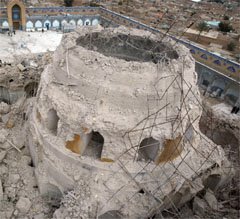
The bombing on February 22 of the Golden Mosque in Samarra, Iraq was a purposefully outrageous act, in the original sense that it deliberately provoked outrage.

CNN tells us this of the 1,200-year-old Askariya shrine:
# The Golden Mosque is one of the four major Shiite shrines in Iraq. The other major sites are in Najaf, Kerbala and the Baghdad district of Kadhimiya.

# Two of the 12 revered Shiite Imams are buried in the shrine. Imam Ali al-Hadi, who died in 868 AD and his son, the 11th Imam Hasan al-Askari, who died in 874 A.D.
The Golden Mosque was a beautiful building because a community of believers saw it as a symbol of their faith. It commemorated two men who were not only directly descended from the Prophet, but who were great leaders of their faith.

Retaliation lead to retaliation, and the process included more purposefully outrageous acts, including the desecration of many other mosques. More and more people have been outraged.

According to Relief Web,
The Special Representative of the U.N. Secretary-General in Iraq Mr. Ashraf Qazi, confirmed on Monday, UN/UNESCO support to the Iraqi initiative to rebuild the Shrine of Imam Ali Al-Hadi and other damaged religious sites.
He indicated that the UN, through its Iraq trust fund and UNESCO with its technical expertise, are ready to assist in rebuilding the damaged complex.

U.S. Ambassador to Iraq Zalmay Khalilzad and General George Casey, the commander of the coalition troops in Iraq, said,
Given the historic, cultural, and religious importance of this shrine, this attack is a crime against humanity. The Shrine should be rebuilt and the United States will contribute to its reconstruction.
Michael Southwick, a member of the Americans for UNESCO Board of Directors, stated:
I think it would be great if some American would spearhead a widely publicized effort to collect contributions here from Muslim and non-Muslim American alike.
I agree that it would be great if the American public were to raise money to rebuild the mosques that have been destroyed, Sunni and Shiite alike. Indeed, given the separation of church and state in this country, I think it would be better done through private philanthropy than through public funds. And I think Americans of all faiths would be willing to donate to show their support for the people of Iraq.
Askariya After the Bombing

Friday, February 24, 2006

From the Digital Divide to Digital Opportunities.


Go to the report's UNESCO website.

Summary: "This work is the first result of the merger of two well-known initiatives, ITU’s Digital Access Index (DAI) and Orbicom’s Monitoring the Digital Divide/Infostate conceptual framework and model, and from now known as the “ICT Opportunity Index”. This is a response to calls from the international community and follows the explicit recommendation of the WSIS Plan of Action, paragraph 28, to '…develop and launch a composite ICT Development (Digital Opportunity) Index' to combine statistical indicators with analytical work on policies and their implementation. This measurement tool reflects the importance the ITU attaches to the collection, dissemination and exchange of information on telecommunications/Information and Communication Technologies (ICTs). It further highlights the role of ITU as the main source of global telecommunication/ICT statistics."

Wednesday, February 22, 2006

Financing a UNESCO Chair or Participation in an UNITWIN Network

Since 1992, UNESCO has worked to strengthen higher education in the developing world through the UNITWIN and UNESCO Chairs programs. These programs encourage higher education systems in the industrial world to build relationships and share research and expertise with institutions in developing countries as well as regions in transition.

UNITWIN/UNESCO Chairs projects deal with training and research activities and cover all major fields of knowledge within UNESCO’s competence such as Education, Human Rights, Cultural Development, Environment, Basic and Engineering Sciences, Communication, etc. Thus far, 618 UNESCO Chairs and Networks have been established in 123 countries. A directory of existing projects is available online.

Each year, UNESCO designates approximately thirty new UNITWIN networks and UNESCO Chairs in total throughout the world; a majority is awarded to universities.

UNESCO Chairs

UNESCO Chairs are awarded each year to individual colleges, universities and research institutions to initiate programs that further research and training in one of UNESCO's fields of competence. A Chair may be established by reinforcing an existing teaching or research program and giving it an international dimension, or one may be established as a new teaching and research unit. More information on current Chairs can be found on the UNITWIN/UNESCO Chairs section of UNESCO's website.

UNITWIN Networks


Through the University Twinning and Network Scheme (UNITWIN), UNESCO matches colleges, universities and research institutions in industrialized countries with counterparts in the developing world to share information and knowledge in areas of need. Scholars who participate are often linked through web sites and portals, in addition to loaned faculty positions, trainings and conferences.

The Competitive Process

Selection of participants in this program is competitive, bases on project proposals, that are reviewed by UNESCO.

When the project proposal concerns the establishment of an inter-university network, it can be submitted either by the heads of all institutions involved, or by a single institution which takes the lead, acts as the focal point and ensures the development of the network.

UNESCO seeks the advice and endorsement of national commissions on these proposals, as part of its review process.

In the case of the U.S. National Commission for UNESCO, it will first screen applications, passing the successful ones to UNESCO itself. Its deadline for receipt of applications this year is March 27. Click here to go to the National Commission website for the program.

Scholars and institutions seeking to apply for a UNESCO Chair or to participate in the UNITWIN program should prepare application materials based on UNESCO's "Guidelines for the Submission of Project Proposals." More information can also be obtained in the UNESCO document "Procedures for the UNITWIN/UNESCO Chairs Programme: A Practical Guide."

The deadline for receipt of the applications at UNESCO (after their review in the National Commission) is April 30.

Sources of Funding

UNESCO has limited resources. It sees the universities in countries like the United States as financing their own participation using domestic resources. (UNESCO can make some seed money available to universities in developing nations.)

For a U.S. university, this raises the question of where to obtain the resources needed to create a chair or participate in a network. Several U.S. government sources of funding seem possible:

The U.S. Agency for International Development (USAID) funds the "Higher Education for Development (HED) Program" which promotes higher education's engagement in social and economic development through institutional and human capacity building in developing countries. Between 1998 and 2005, ALO awarded funding to more than 250 partnerships in more than 60 countries.

The National Science Foundation (NSF), and its Office of International Science and Engineering, have a number of programs that might provide the funds needed for a UNESCO chair. The Partnerships for International Research and Education was run as a one-time, pilot competition in 2005. If the NSF chooses to hold additional competitions, the PIRE program would be an exceptional source of support.

The Fogerty International Center of the National Institutes of Health is primarily a source of funding for biomedical research. (Note that there is a Special Focus program on HIV/AIDS, which includes a center at Johns Hopkins University.) Fogarty research areas include the Health, Environment, and Economic Development (HEED) Program, the International Cooperative Biodiversity Groups (ICBG) and International Studies on Health and Economic Development.

There are, in addition, thousands of foundations and other charitable organizations that might finance the efforts of a UNESCO Chair or network. The Foundation Center offers a searchable database of foundation programs, and your institution might well have subscribed to its online database. (Monthly subscriptions are not expensive, and you can search free of charge at the Center's offices in New York, Washington DC, Atlanta, Cleveland, or San Francisco. There are also cooperating collections in many states.

Check the Research Office of your university. They have information on sources of financing, and offer assistance in preparing proposals.

It is a good time for Yanks to seek UNESCO jobs.

UNESCO management, like that of other multilateral agencies, is concerned that the organization maintains a fair balance of staff from its member nations. It uses a formula to calculate the number of staff members it should have from each nation. In the case of the United States, it has estimated that there should be between 46 and 76 citizens on its staff. There are currently 32. Thus UNESCO might reasonably add another 30 Yanks to its staff!

Both UNESCO and the State Department are seeking qualified U.S. citizens for UNESCO jobs.

The Global Ethics Observatory

Go to UNESCO's Global Ethics Observatory.

The observatory is a system of databases with worldwide coverage in bioethics and other areas of applied ethics in science and technology such as environmental ethics, science ethics, and technology ethics. Its official launch occurred on December 15, 2005 at the International Bioethics Committee (IBC) Meeting in Tokyo, Japan.

This UNESCO initiative is freely accessible online. The Observatory is designed to serve as a reference, collaborative, consultative, and comparative resource hub of ethics activities around the world. The observatory is also intended to become a platform for supporting and advancing ethics activities by assisting Member States and other interested parties to identify experts, establish ethics committees, construct informed policies in the area of ethics, and design ethics teaching curricula.

The Observatory includes four major databases:
* Who’s Who in Ethics,
* Ethics Institutions,
* Ethics Teaching Programs, and
* Ethics Related Legislation and Guidelines.

Wednesday, February 15, 2006

Integrity in Scientific Research

The Knowledge Economy community page of the Development Gateway is featuring UNESCO's program on Ethics of Science and Technology at this time. The community of more than 8,400 members focuses on four main areas: Innovation Systems (including scientific systems), Education and Training, Information Infrastructure, and Economic and Institutional Incentive Regime.

UNESCO at 60: 60 weeks 60 themes

This website provides a wonderful introduction to UNESCO. In celebration of the 60 years since its creation, UNESCO has chosen to highlight a major area of its activity on its website each week for 60 weeks. The website provides links to all of the highlights presented to date in chronological order.

The New Courier: UNESCO at 60


This 60th anniversary issue marks a new format for the New Courier. Bridging the tranformation of the paper edition into a full fledged e-magazine, this special edition presents articles on ten key subjects, providing web links for each article to guide the user towards more information from the UNESCO portal.

The themes explored are as follows:

# Education For All
# Oceans
# Heritage
# Copyright
# Bioethics
# Environment
# Cultural diversity
# Water
# Digital Divide
# Crises and emergencies

UNESCO's Man and the Biosphere Programme (MAB)

Go to the MAB website.

The Man and the Biosphere Programme (MAB), proposes an interdisciplinary research agenda and capacity building aiming to improve the relationship of people with their environment globally. Launched in the early 1970s, it notably targets the ecological, social and economic dimensions of biodiversity loss and the reduction of this loss. It uses its World Network of Biosphere Reserves as vehicles for knowledge-sharing, research and monitoring, education and training, and participatory decision-making.

MAB is pursuing three main lines of action:
1: Minimizing biodiversity loss through research and capacity-building for ecosystem management
2: Biosphere reserves - promoting environmental sustainability
3: Enhancing linkages between cultural and biological diversity

During the period that the United States was out of UNESCO, the government continued to fund Americans to participate in Man and the Biosphere projects.

Tuesday, February 14, 2006

The Information for All Program (IFAP)

Go to the IFAP website.

The Information for All Program is the only intergovernmental program exclusively dedicated to promoting universal access to information and knowledge for development. This is a key plank in building Knowledge Societies, and an important element in realizing the hopes created by the World Summit on the Information Society.

The objectives of the Information for All Program are to:
* promote international reflection and debate on the ethical, legal and societal challenges of the information society;
* promote and widen access to information in the public domain through the organization, digitization and preservation of information;
* support training, continuing education and lifelong learning in the fields of communication, information and informatics;
* support the production of local content and foster the availability of indigenous knowledge through basic literacy and ICT literacy training;
* promote the use of international standards and best practices in communication, information and informatics in UNESCO's fields of competence; and
* promote information and knowledge networking at local, national, regional and international levels.

The Intergovernmental Council for the Information for All Program is composed of 26 member states of UNESCO. It has been invested with the authority to speak on strategic priorities and to lobby and create awareness about issues pertaining to the use of information and ICT for development at the international level.

The Council is, or course, responsible for guiding the planning and implementation of the Information for All Program. In particular, the Council is to consider proposals on the development and adaptation of the Program, recommend the broad lines of action that the Program could take, review and assess achievements and define the basic areas requiring increased international cooperation, promote participation of Member States in the Program and support all fund-raising efforts for its implementation.

The fourth session of the Intergovernmental Council for the Information for All Programme will be held at UNESCO Headquarters in Paris, France, from 20 to 22 March 2006.

3rd session of the IFAP Council (May 2004)

The documents of the session are available here.

A provisional list of participants is available here.

The Bureau for the Intergovernmental Council, composed of representatives of eight of the members of the Council, is effectively its executive committee. The Bureau will be meeting on the 23rd of March.

A New Zealander, Elizabeth Longworth, is the Director of the Secretariat of the Council, and Secretary of the IFAP Council.

Unfortunately, the United States has not contributed to this program, and it of course has therefore not been elected to the Intergovernmental Council.

Monday, February 13, 2006

The World Science Forum

World Science Forum Proceedings Online

The proceedings of the November 2005 World Science Forum in Budapest are now available online. More than 300 people attended, coming from nearly 70 countries. The conclusions and recommendations are available for most of the sessions, which were
* Science and Public Policy,
* Capacity Building and Implementation,
* The Role of Business,
* The Perspective from Developing Countries,
* The Future of the Environment,
* Educating Future Generations,
* Science in a Democratic World: The Role of Parliaments,
* Science for Peace and Knowledge, and
* Ethics and Responsibility in Science Journalism.

The overall recommendations from the meeting addressed:
* new relationships between and funding models involving academia, government, the business sector and other actors;
* international exchange of experiences and good practices;
* bridging the culture gap between science and business;
* recognizing intrinsic ecological values and
* interesting children in science at an early age.


The first World Science Forum in Budapest was held in 2003 as a follow-up to UNESCO's 1999 World Conference on Science, held in the same city.

"Partnership to boost Latin American water research"

Read the full article in SciDev.Net.

"Chile and UNESCO (the UN Educational, Scientific and Cultural Organization) have signed an agreement to support scientific research on water resources in dry parts of Latin America and the Caribbean.

"Under the agreement, signed on 2 February, UNESCO will work with the Centre for Arid and Semi-arid Zones of Latin America and the Caribbean (CAZALAC), based in La Serena, Chile.....

"CAZALAC now plans to join the Global Network on Water and Development Information in Arid Zones, which promotes international cooperation in dry areas.

"Its members include eight centres supported by UNESCO in China, Egypt, Iran, Malaysia, Panama, Serbia-Montenegro and the United Kingdom. "

Saturday, February 11, 2006

The new issue of a World of Science is out


Go to the January-March 2006 issue of A World of Science.

In the wake of the UN Conference on Climate Change in Montréal last month, A World of Science looks at UNESCO's contribution to research on climate change via observation of the oceans and of mountain regions. In an issue which marks the end of the International Year of Physics, we discover why physicists study the ocean to understand climate, against the backdrop of a record number of extreme climate events in 2005.

Other highlights include an interview with Sabrina Krief on why the Great Apes living in the wild still have so much to teach us, be it about 'cultural diversity', our own origins or where to look for new molecules for medicines.

Last but not least, we travel to Bangladesh where a low-cost filter which removes arsenic from domestic water is currently being tested. Developed by the UNESCO-IHE Institute for Water Education, this 'family filter' could save millions of lives in Bangladesh and around the world.

Friday, February 10, 2006

Getting a Job With UNESCO

International work is interesting and fulfilling. Work in the U.N. system offers decent salaries and benefits and significant career opportunities. UNESCO provides virtually a unique opportunity for those interested in education, science, culture and communications to do useful and important work in an international setting.

Now is an especially good time for U.S. citizens to get jobs in UNESCO. During the long period that the United States was not a member of UNESCO, the number of U.S. citizens working in UNESCO decreased substantially. Now that the United States is back, that number should increase.

UNESCO was created in large part to increase the understanding among peoples in order to promote and maintain peace. The understanding between the people of the United States and those of other nations seems more important than ever. U.S. citizens on the staff of UNESCO can play a key role in promoting involvement of their fellow citizens in UNESCO activities, and thus to facilitating constructive dialog between the United States and other nations.

Moreover, the United States is especially strong in many of the skills needed by UNESCO, and people from the United States are likely to be more effective than others in helping UNESCO tap the resources of the United States for its programs and activities. Not incidentally, U.S. citizens can also help make the benefits of UNESCO available to us at home.

Qualifications:

UNESCO's working languages in its headquarters are French and English, and its staff in the field is often required to speak other languages. Thus language skills are important for anyone thinking of a job in UNESCO. International experience is also a definite plus.

UNESCO is the United Nations Educational, Scientific and Cultural Organization, and employs people for its programs in education, the natural sciences, the social sciences, culture, and communications as well as the variety of professions needed to run a big, international organization (e.g. accounting, personnel, management, information technology management). The sectoral jobs tend to go to experienced professionals, both due to their content and to the competition for good positions in international organizations.

UNESCO jobs tend to require administrative and/or policy experience. Thus, while a teaching background is a definite plus for someone seeking a job in UNESCO's education sector, it is not the only qualification; experience in educational administration and educational policy are probably more relevant to most of UNESCO's work in the education sector.

The State Department is especially interested in helping highly qualified U.S. citizens to find policy making jobs in UNESCO. Those interested who feel themselves qualified for a senior position in UNESCO would be well advised to contact the U.S. Mission to UNESCO in Paris, or the U.S. National Commission. Their advice would be invaluable, and their support in obtaining such a position in UNESCO essential.

There are, however, entry level jobs at UNESCO, including fellowships. There is even a Fulbright Fellowship for U.S. citizens to help people with recent graduate degrees to work in UNESCO.

Some useful links.

UNESCO has an Employment Services Website.

The U.S. National Commission for UNESCO posts notices of fellowship and other employment opportunities on its website. It also provides timely information on UNESCO vacancies in its "updates" newsletter.

The U.S. Mission's website also provides employment information.

There is a very helpful document provided by the State Department for those interested in "Employment Opportunities With the United Nations and Other International Organizations". It is part of State's website on "Employment Information: U.N. and International Organizations".

Click here for more on jobs in multilateral development agencies.

Thursday, February 02, 2006

Specialized Course on Local e-Governance in the Caribbean

Click here for more information on the course.
Produced by The University of the West Indies Distance Education Centre and sponsored by UNESCO
The Course in brief

"Local governments, non-governmental organisations and communities are increasingly realising the need to utilise new information communication technology (ICT) if they are to be sustainable in the information economy. Using ICT in local governance can improve local management and administration, and also lead to greater participation and transparency in local government.

"The Certificate in e-Governance course is aimed at interested and appropriate people in governmental and non-governmental agencies and organizations in the Caribbean. It is designed to improve the knowledge, skills and capabilities of such people in the use of ICT in governance and government."

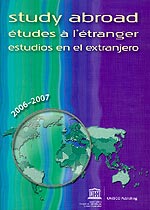
Study Abroad 2006-2007


Study Abroad 2006-2007 contains some 2,900 entries concerning post-secondary education and training in all academic and professional fields in countries throughout the world. Key features include information on:

- Study opportunities and financial assistance available to students wishing to study in a foreign country
- National systems of higher education
- Open and distance learning (ODL) opportunities
- Validation of foreign qualifications
- How to search for quality institutions of higher education including warnings about bogus institutions

UNESCO Reference Works series
22,00 €
Book, 688 pages, trilingual edition: French/English/Spanish, 33rd edition
Format: 27 x 19 cm
2005

UNESCO's Scientific Maps

As an integral part of its scientific activities, UNESCO's has a long-range map program. The compilation is carried out with prior agreement on a common system of nomenclature and legends, thus setting the bases for international co-operation among scientists and specialists. It also leads to further inter-calibration of research methods so as to provide comparable data and results, and to complement existing knowledge in particular areas.

The maps and atlases in the UNESCO series are produced with the participation of all the countries covered by them. Although these small-scale maps cannot replace large-scale maps produced on a national level, they nevertheless constitute a valuable source of information for broad planning and study of resources-development activities. They are also useful working tools for secondary and university courses.

* Climatic maps
* Geological maps
* Hydrogeological maps
* Quaternary maps
* Tectonic maps
* Mineral and metallogenic maps
* Metamorphic maps
* Oceanographic maps
* Population maps
* Soil maps
* Vegetation maps

Darwin Day

1840 portrait of Charles Darwin, age 31, by George Richmond.

Darwin's 200th Birthday will occur on February 12, 2009; it will also be the 150th Anniversary of the publication of his famous book On The Origin of Species. The day has been chosen for an International Celebration to show appreciation for Darwin and for his achievements.

Project “Darwin2,” commemorating Darwin’s famous voyage of the Beagle (1831-1836), is under way. The enterprise is one of the initiatives of Darwin Day promoted by the Natural History Museum and ADM in Milan. It is sponsored by WWF and ICOM (International Council of Museums -- UNESCO).

The Charles Darwin Foundation, founded in 1959, under the auspices of UNESCO and other international organizations, is dedicated to the conservation of the Galapagos ecosystems. The Foundation operates the Charles Darwin Research Station in the Galapagos Islands to conduct scientific research and environmental education for conservation. The Station has a team of over one hundred scientists, educators, volunteers, research students and support staff from all over the world.

Tuesday, January 31, 2006

UNESCO's New York Office

UNESCO maintains an office in New York City.

Americans for UNESCO Board Meeting

A meeting of the Board of Directors of Americans for UNESCO took place yesterday.

Andre Varchaver was elected to replace Dick Arndt as Chair. Arndt, after four years of arduous service, will move over to become Co-Chair of the Advisory Council.

The Treasurer reported that the recent fund raising campaign had proven reasonably successful, with donations received from the public as well as members of the Board and the Advisory Council. It was agreed that the organization would seek to account for in kind donations, which include large amounts of time donated to the organization's activity.

Progress on the renewal of the Americans for UNESCO website was reported. The UNESCO news blogs have received nearly 5,000 visits since December, 2004, and some 8,000 page views.

Fulbright Fellowship at UNESCO

The United Nations Foundation, a private organization, supports professional internships under the U.S. Fulbright program at UNESCO headquarters. I understand that there are currently nine Fellows in residence under the program, and that it is expected to appoint six more for the comming year.

The program is to allow selected grantees to contribute to the advancement of the work of the United Nations and UNESCO, learn from UNESCO staff, and gain valuable professional experience to cap off their Fulbright program abroad. While all degree levels are considered, recent graduates and master's degree applicants have been encouraged to apply.

INTERNSHIP AREAS: Include communications and the Media/Communications, Cultural & World Heritage, HIV/AIDS Education, Basic Education, Quality of Life Education, Sustainable Development and Global Tsunami Warning Systems. INTERNSHIP STIPEND: A travel and settling-in allowance and a monthly stipend to cover housing, meals, and incidental expenses will be provided.

The program is implemented by the International Institute for Education. This website provides information on the 2005 - 06 program.

Monday, January 30, 2006

Measuring Linguistic Diversity on the Internet


Read the report in English or French on its UNESCO website.

UNESCO has been emphasizing the concept of “knowledge societies”, which stresses plurality and diversity instead of a global uniformity in order to bridge the digital divide and to form an inclusive information society. An important theme of this concept is that of multilingualism for cultural diversity and participation for all the languages in cyberspace.

Findings from the 2005 UNESCO Science Report


Asia 'leads Europe' in science spending
By Wagdy Sawahel, SciDev.Net, 23 January 2006.
China has played a major role in helping Asia overtake Europe in research and development spending, according to a report released last month (December 2005) by the UN Educational, Scientific and Cultural Organisation (UNESCO).

It says that from 1997 to 2002, Asian funding from public and private sources rose by four per cent, enabling Asia to account for 32 per cent of global research spending.

In those five years, China's share of global spending more than doubled, from four to nine per cent.

Meanwhile, the Latin America and the Caribbean region's share of the global total fell from 3.1 per cent to 2.6 per cent.

"Three countries — Brazil, Mexico and Argentina — account for 85 per cent of the region's [research spending], leaving the remainder with average expenditures of no more than 0.1 per cent of GDP — with the small but notable exception of Cuba, at 0.6 per cent," says the report.

Arab countries in the Middle East and North Africa contributed just 0.1 per cent of the global total.
The story is echoed in "China challenging US and Europe in scientific research" (China Educational and Research Network, 2006-01-23).

Sunday, January 29, 2006

"The Net for Journalists: A practical guide to the Internet for journalists in developing countries"


Go to the UNESCO announcement of the publication (with a link to download).

UNESCO collaborated with the Thomson Foundation and Commonwealth Broadcasting Association to produce a handbook for journalists of developing countries on the use of Internet for journalistic purposes.

This training handbook, which is written by a journalist and trainer Mr Martin Huckerby, is a resource (with a printed manual and a CD) designed for both print and broadcast journalists and journalism students in developing countries around the globe. The accompanying CD contains some software, other extra resources and lesson plans for trainers.

Friday, January 27, 2006

"African UNESCO' gets go-ahead"

Read the full atricle by Wagdy Sawahel in SciDev.Net. (27 January 2006)

"The African Union (AU) has backed plans to create a scientific and cultural branch modelled on the UN Educational, Scientific and Cultural Organization (UNESCO).

"The AU council gave the proposal, from Sudan, the green light at its summit last week (21 January) in the Sudanese capital Khartoum.

"Among its aims, the proposed African Educational, Scientific and Cultural Organization (AFESCO) intends to boost the continent's scientific capacity, promote international cooperation and protect African cultures."

Thursday, January 26, 2006

Thanks to Seabreeze Travel!

The folks at Seabreeze Travel have donated three desktop computers to Americans for UNESCO, filling a real need as we work to get the organization back online. Many thanks!

Wednesday, January 25, 2006

A window of opportunity for USAID

Read the full editorial by David Dickson in SciDev.Net. (24 January 2006.)

A decision to reorganize the US Agency for International Development (USAID) - and to appoint the former head of a major pharmaceutical company as its new administrator - could boost the role of science and technology in the agency's efforts.

SciDev'Net's editor expresses cautious optimism that the newly announced reorganization of U.S. foreign assistance and the appointment of Randall Tobias as both Administrator of USAID and as tzar for development assistance (with rank equivalent to that of the Deputy Secretary of State) will lead to needed improvements in U.S. foreign assistance. He hopes that the improvements will include a strengthening of science and technology within U.S. foreign assistance, as do I.

I am especially hopeful since Tobias not only has been the CEO of major corporations, and thus can be expected to have great management skills and influence in this administration, but those corporations were in telecommunications and pharmaceuticals -- both with strong bases in science and technology and great relevance to the needs of developing nations. Moreover, Tobias left the corporate world to take on a major responsibility running the U.S. HIV/AIDS initiative, and through his foundation has financed important educational initiatives -- his heart seems to be in the right place!

In a related matter, I hear from Pat Koshel that the long-awaited National Academies of Science report on S&T in foreign assistance has just been approved for publication. She is hoping to the publication will be out soon!

Since the U.S. government has compartmentalized foreign assistance and relations with U.N. organizations, neither the reorganization nor the NAS report may be expected to have any direct impact on U.S. relations with UNESCO. However, if Dickson's hopes are fulfilled, and there is an improved climate for science and technology in the foreign assistance program of the United States, it seems very likely that there will be a corresponding increase in U.S. interest in UNESCO's science programs and an increased cooperation between efforts funded by U.S. foreign assistance and those funded by UNESCO.

Tuesday, January 24, 2006

Just Published: Connect- UNESCO International Science, Technology and Environmental Education newsletter


Read the new edition online.


The most recent edition of ‘Connect’ focuses on the issue of scientism, a belief that scientific knowledge is the foundation of all wisdom. In this focus article, ‘scientism’ is a word that is used to criticise those who think that sciences are more important than the arts for understanding the world. The authors ask whether ‘scientism’ hurts science education, and, more generally, educational systems.

The newsletter contains additional articles about UNESCCO’s regional activities in Science , Technology and Environmental Education as well as a reviews of recent publications in the field.

Tuesday, January 17, 2006

UNESCO, big business join forces against AIDS

Read the full article in AFP via Yahoo!News.

UNESCO and The Global Business Coalition (GBC) on HIV/AIDS signed the agreement on Monday, January 15. The Global Business Alliance invludes 200 companies that have committed themselves to fighting AIDS. Many of the coalition's members, including DaimlerChrysler, GlaxoSmithKline, Total, L'Oreal, Volkswagen, Johnson and Johnson, and Unilever have already implemented anti-AIDS strategies, mostly in Africa. UNESCO Director-General Koichiro Matsuura stressed the need for cooperation between institutions and the private sector to fight the "scourge" of HIV/AIDS.

Thursday, January 12, 2006

Jane Goodall to receive UNESCO’s 60th anniversary medal


Read the full UNESCO press release.

The Director-General of UNESCO, Koïchiro Matsuura, will award UNESCO’s 60th Anniversary Medal to Jane Goodall, the British-born primatologist, on Tuesday 17 January, at the Organization’s Headquarters in Paris (11.15 a.m., Restaurant 7th floor). The medal is presented in recognition of Ms Goodall’s lifelong dedication to the preservation of Africa’s endangered apes. “Ms Goodall’s untiring work to preserve the great apes of Africa in their natural environment fits perfectly with UNESCO’s work in favour of the environment and of sustainable development,” Mr Matsuura said. “Ms Goodall was one of the first people to sound the alarm regarding the serious danger facing the great apes, that provide us with a direct link to humanity’s past.”

Ms Goodall has been a researcher and champion of chimpanzees and other primates since she first arrived in Africa in 1960 at the age of 26. Only 400,000 great apes survive today, compared to two million 50 years ago and experts predict their extinction within three to five decades, unless present trends are reversed.

Sustainable Management of Marginal Drylands (SUMAMAD( Project


Go to the project website.

SUMAMAD aims at enhancing the sustainable management and conservation of marginal drylands in northern Africa and Asia. Drylands are particularly vulnerable due to climatic and human pressures, yet they constitute some of the world's largest land reserves in terms of space and natural resources. Their increased productivity, which is needed to meet the demands of exponential population growth, needs however to be embedded in wise practices that both respect the conservation of the environment, and provide improved and alternative livelihoods for dryland populations. The project is to identify management approaches that promote economic sustainability and resource conservation, in particular of soils and water, and it to foster the rehabilitation of degraded drylands using community-based approaches. It is to work in selected study sites in the countries involved to compare results and share knowledge. Socio-economic surveys are to identify people's adaptation and traditional knowledge in coping with adverse dryland conditions. Training, capacity building and interaction with landowners, farmers and other stakeholders, with a focus on sustainable and indigenous dryland management practices, are to be key elements of the project.

The SUMAMAD project is funded by the Flemish Government of Belgium. It is implemented by UNESCO-MAB in close collaboration with UNU and ICARDA.

A project workshop kicks off the International Year of Deserts and Desertification later this month. Between 26 January and 1 February, the workshop will review an ongoing project for the sustainable management of marginal drylands (SUMAMAD) in northern Africa, Asia and the Middle East. Organized in Islamabad by the Pakistan Council of Research in Water Resources in collaboration with UNESCO, the United Nations University and the International Centre for Agricultural Research in Dry Areas, the workshop will provide practical training in data analysis and examine progress since the project began in 2004 in protecting both the biological diversity of deserts and the traditional knowledge of communities affected by desertification. The project is expected to run until 2008, with funding from the Flemish Government of Belgium.

Monday, January 09, 2006

Whither UNESCO? Science, Poverty, and Peace

There has been a change in the speaker lineup for this symposium on UNESCO to be held as part of the AAAS Annual Meeting in St. Louis. The correct information follows:

DATE: Friday, February 17, 2006
TIME: 8:30 AM - 10:00 AM
ORGANIZER: Irving Lerch, Americans for UNESCO

PARTICIPANTS:
Laurel Baldwin-Ragaven (Moderator), Trinity College

Marcio Barbosa* (Speaker), United Nations Educational, Scientific, and Cultural Organization (UNESCO), Paris
The View from UNESCO

Walter Erdelen* (Speaker), UNESCO
The Impact of the UNESCO Science Program

Marguerite Sullivan (Speaker), U.S. Department of State
The View from the U.S. Government

Bruce Alberts (Speaker), University of California, San Francisco
The Role and Viewpoint of the National Academies

Rita Colwell (Speaker), University of Maryland and Canon U.S. Life Sciences Inc.
The Role and Expectation of the Learned and Professional Societies

Laurel Baldwin-Ragaven is the Henry R. Luce Professor of Health and Human Rights in Trinity College, and current Chair of the AAAS Committee on Scientific Freedom and Responsibility.

* Please note that UNESCO Deputy Director General Barbosa and UNESCO Assistant Director General Erdelen are listed as unconfirmed speakers. This is due to the fact that hard commitments cannot be made long before the event. However, the organizers have been assured of their desire to attend and participate in this discussion.

An Indian Diaspora Knowledge Network

Read the article by George Iype at Rediff.com. (January 07, 2006)

India on Saturday announced that it will set up a Diaspora Knowledge Network to enable improved connectivity between People of Indian Origin and to allow the large number of overseas Indians to partake in India's growing 'knowledge economy'.

The Diaspora Knowledge Network was a slew of major initiatives that Prime Minister Manmohan Singh announced to ensure that millions of overseas Indian workers and professionals become symbols of global connectivity and globalised activity in order to capture the face of a new India.

Addressing the conclave of overseas Indians in Hyderabad during the 3rd Pravasi Bharatiya Divas, Dr Singh said the Diaspora Knowledge Network will provide a dynamic framework within which the users and providers of knowledge can discover each other and work together.
Abdul Waheed Khan, Assistant Director-General (Communication and Information), UNESCO, has commented (as quoted by Rediff.com):
The knowledge resources of overseas Indians and its significance in the context of India's march to becoming a developed economy and society are well known. The principles of knowledge societies are freedom of expression, universal access to information and knowledge and respect for culture. A key opportunity for India is to find ways and means to leverage the knowledge, expertise and skills of Indians abroad. Today's world is enabled by information and communication technologies; and it offers the opportunity to tap India's Diaspora knowledge resources through the Diaspora Knowledge Network.

UNESCO operates a project promoting Diaspora Knowledge Networks. The ambition of the project is "to build an infrastructure that can be used by members of scientific and technical diaspora for transforming the information that is available to them in their countries of adoption into useful knowledge for the development of their countries of origin. Placing the emphasis on transforming information into useful knowledge for collective action recognises the need to computer support the cognitive and social processes underlying this transformation."

Multilingualism on the Internet


Go to the website for the issue.

This is a special issue of the International Journal on Multicultural Societies published by UNESCO. (Vol. 6, No. 1, February 2004) It reports on research undertaken in the framework of UNESCO’s multidisciplinary project Initiative B@bel. The article included are:
"Globalization, Transnational Communication and the Internet" by David Block;
"An Analysis of the Language Repertoires of Students in Higher Education and their Language Choices on the Internet" (Ukraine, Poland, Macedonia, Italy, France, Tanzania, Oman and Indonesia) by Helen Kelly Holmes;
"From the Oral Tradition to the Information Era: the Case of Tanzania" by Safari Mafu;
"The Internet in Arabic-speaking Settings: a Case Study" by Richard Peel;
"Japanese Speakers and the Internet" by Helen Gerrard and Sachiko Nakamura.

There is a related Editorial by Matthias Koenig amd a "Thematic Introduction" by Sue Wright.

Sunday, January 08, 2006

Traditional Knowledge, Genetic Resources and Folklore

Working in co-operation with UNESCO and other international organizations, and in dialogue with NGOs, The World Intellectual Property Organization (WIPO) provides a forum for international policy debate concerning the interplay between intellectual property (IP) and traditional knowledge, genetic resources, and traditional cultural expressions. WIPO is developing draft legal mechanisms and a range of practical tools aimed at enhancing the intellectual property interests of the holders of such knowledge, resources and expressions.

Robinson Miller Upton: 1916-2005


Read the obituary in The Chicago Tribune.

Miller Upton, who served for 21 years as president of Beloit College, died December 19, 2005, at his home in Fontana, Wis. He was 88. Mr. Upton was president of many organizations, including the Council of Protestant Colleges and Universities, the Wisconsin Association of Independent Colleges and Universities, the Wisconsin Association on Higher Education and the American Finance Association. Mr. Upton also served on the board of directors for various companies, including what is now M&I Bank in Beloit, Snap-On Tools Corp., American General Series Portfolio Co., Affiliate Artists Inc., Sears Roebuck Foundation and Household International Inc.

Mr. Upton had a passion for working with international organizations on how to advance education. He was chairman of the U.S. National Commission for UNESCO from 1971 to 1974.

Emily Vargas-Baron provided the following comments on Miller Upton:

He and his wife June have been dear friends. I first met him when, as the director of the U. S. National Commission to UNESCO, he gave a marvelous speech at a General Conference. He received a standing ovation, and at first he did not realize how unusual this was...

Miller was a dynamic, gentle and highly effective leader. He fully supported Jack Fobes, and for years contributed in many ways to AAU. I am glad he lived to see the United States return to UNESCO.

Through the U.S. National Commission, he helped ensure the broad participation of civil society in UNESCO and its programmes. As President of Beloit College, he orchestrated the provision of an excellent liberal arts programme. Both activities were a reflection of his deep commitment to ideals of peace, democracy, the rule of law, and education for all. I am sure many of you will join me in missing Miller greatly.

For your information, Beloit College has established the Miller and June Upton Scholarship Fund.

Wednesday, January 04, 2006

The Precautionary Principle


Report of UNESCO's expert group on the Precautionary Principle, adopted by the World Commission on the Ethics of Scientific Knowledge and Technology (COMEST) at its fourth session (March 2005). Available in English and French.

Members of the expert group from the United States were:
VITTORIO HOSLE
Professor of German, Philosophy, Political Science
University of Notre Dame

ANN KINZIG
Assistant Professor
School of Life Sciences
Arizona State University

Why the United States Rejoined UNESCO

Read the full Fact Sheet on the website of the U.S. Embassy in Paris.

“As a symbol of our commitment to human dignity, the United States will return to UNESCO. This organization has been reformed and America will participate fully in its mission to advance human rights and tolerance and learning.”

George W. Bush
57th UN General Assembly, September 12, 2002

Why the United States is Rejoining UNESCO
• UNESCO’s mission and programming reflect and advance a wide range of U.S. interests. For example, UNESCO manages the “Education for All” program, which promotes universal basic education and literacy. This initiative advances U.S. educational goals worldwide and closely parallels the U.S. “No Child Left Behind” program.
• UNESCO advocates education that promotes tolerance and civic responsibility. This is a key to building democracy and combating terrorism.
• UNESCO helps countries protect their natural and cultural heritage. It promotes adoption of sound scientific standards. These efforts are important in maintaining a healthy balance between continuity and imperatives for change.
• UNESCO promotes press freedom and independent media, essential foundations of democracy.
• UNESCO brings countries together to address issues that have significant implications for the future, such as bioethics and cultural diversity. The United States intends to be a full and active participant in these deliberations.

“Since wars begin in the minds of men, it is in the minds of men that the defenses of peace must be constructed.”

American poet Archibald MacLeish
Preamble of the UNESCO Constitution

Tuesday, January 03, 2006

ICT Enhanced Public Service Broadcasting

UNESCO photo
Go to UNESCO's website for this initiative.

This UNESCO program, launched in 2004, is designed to enhance the ability of public service broadcasters (PSBs) in developing countries to create communication/media materials supportive of human rights, peace, tolerance, and the fight against discrimination. The programme involves inviting production proposals from television and film professionals for a series of grants, in addition to providing training, production and distribution opportunities that draw on information and communication technologies (ICTs).

According to UNESCO, "Public service broadcasting entails independence from state and commercial influences, while having the ability to examine important public issues by providing programmes that include public debate, cultural expressions and educational programming aside from light entertainment. It is also indispensible that public service broadcasting systems adapt to the rapidly-evolving information society, particularly in the integration of audiovisual, communication and information technologies."

Read the review of the program from the Communications Initiative.

Monday, January 02, 2006

Whither UNESCO? Science, Poverty, and Peace

Go to the meeting website.

DATE: Friday, February 17, 2006
TIME: 8:30 AM - 10:00 AM
LOCATION: St. Louis, Missouri
ORGANIZER: Irving Lerch, Americans for UNESCO

This meeting will be held as part of the American Association for the Advancement of Science (AAAS) Annual Meeting in St. Louis, Missouri

SYNOPSIS:
This is a critical time for UNESCO. The basic science and engineering program is being reorganized, increasingly complex issues in biomedicine are being scrutinized, and the member states are ordering their priorities placing greater emphasis on the devolution of programs away from the center and onto offices in geographically dispersed regions. U.S. State Department officials are trying to find ways to coordinate the participation of civil society with the work of the U.S. National Commission for UNESCO. The organization is being asked to place greater weight on science and engineering in the service of UNESCO's cross-cutting goals: poverty, conflict reduction, and social justice. The framework for these great works is being redeveloped to achieve greater efficiencies with a view to obtaining lasting and substantial results. UNESCO institutes, such as the Abdus Salam International Center for Theoretical Physics, have become important resources for the global science and engineering enterprise to recruit and develop scholars from developing countries and integrate them into the intellectual life of the global science and engineering community. The purpose of this symposium is to track these changes and to determine how best to organize U.S. participation to achieve global and national objectives.

Small Islands Voice


Go to the Small Islands Voice website.

Small Islands Voice is an inter-regional initiative focusing on small islands - both small island developing states, and islands with other affiliations - in the Caribbean, Indian Ocean and Pacific regions. The goal of this initiative is to make the general public in small islands more clearly heard, and to strengthen the public's influence in island development.

Small Islands Voice works with villages, specific interest groups, and sometimes entire islands, by building capacity so that islanders can more effectively plan and implement their own vision of sustainable development. Exchanging experiences inter-regionally through the program is intended to further strengthen a sense of community amongst islands.

It is an initiative within UNESCO's program on the Environment and development in coastal regions and in small islands.