Friday, September 08, 2006

Call for UNESCO/Keizo Obuchi Fellowship Applications for Young Researchers

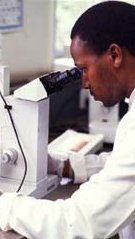
UNESCO invites young researchers in developing countries to apply for grants through the UNESCO/Keizo Obuchi Research Fellowship Program, financed for the seventh time by Japan through funds-in-trust dedicated to the development of human resources. The program – named after the late Japanese Prime Minister Keizo Obuchi who was known for his commitment to development issues – offers a total of 20 fellowships for a maximum value of US$10,000 each. They target post-graduate university researchers with a Masters degree, or equivalent, in one of four fields: the environment, inter-cultural dialogue, information and communication technology, and peaceful conflict resolution.

Director-General Koïchiro Matsuura has called on all of UNESCO’s National Commissions, Permanent Delegations to UNESCO, and the Organization’s field offices, to invite potential candidates to apply for the fellowships, through their National Commission. Applications must reach UNESCO Headquarters in Paris before January 12, 2007.

How to apply?
Download fellowship application form

©Photo: UNESCO; Keizo Obuchi

Wednesday, September 06, 2006

UNESCO's International Community Telecenter Resource Site

Mrs. Maniko reads her email at
a telecenter in Mali
Photo: Serge Daniel, copyright: UNESCO


UNESCO provides the International Community Telecenter Resource Site. The site is addressed to community telecenter developers, practitioners, and researchers. It contains an annotated and classified inventory of resources on local information and informatics initiatives such as community multimedia and multipurpose telecentres. There are four major sections in this site:
* Projects and Initiatives
* Research
* Resource Organizations and
* Telecentre Technology

Each section covers an aspect of the process of engendering and appropriating ICTs for community development around the world.

Thomas Bekkers has contributed a highlight on telecenters today to the Development Gateway Information and Communication Technology for Development Community portal. He writes:
"Every ICT4D actor knows reducing the digital divide is primarily a question of physical access to a computer necessarily connected to the Internet. We are not speaking here of infrastructure and bandwidth problems but only basic prime level connection. According to the Panos Institute: “More than two-thirds of the world’s population still don’t have access to computers, the internet and other sophisticated new communication technologies”. Solving this problem can be done by implementing community based access points, also known as telecenters, particularly well adapted to the context of southern developing countries. As a matter of fact, we all feel concerned by innovative ways to implement successful telecenters. Sustainability of such telecenters is an important problem to deal with. Sharing related knowledge and experiences could have a direct impact on reducing the digital divide. This highlight is focusing on existing resources that could help developing relevant models regarding telecenters."

Your editor has also been collecting materials related to the evaluation of telecenters on the Development Gateway's Monitoring and Evaluation of ICT Projects topic page. There are currently 43 resources on the topic.

Tuesday, September 05, 2006

New African Union Science Summit discussion group & news focus

Image from SciDev.Net

In January 2007, the African Union will hold its 8th annual summit, focusing on science, technology and innovation and organised with support from NEPAD.

Africa, because of its poverty and because of the need to radically strengthen the scientific capacity of its nations, demands and has received highest priority from UNESCO's science programs. Thus this AU summit holds special interest for those interested in UNESCO's natural, social and human science programs, as well as its science education programs.

This autumn, a number of meetings will take place to prepare and discuss proposals including a model law to regulate biotechnology across the continent, the role of the African diaspora and a new financing facility to support African research.

SciDev.Net has developed a new website on which it has grouped its coverage of these issues, key documents relating to the summit, links, and an invitation to join our related discussion group.

SciDev.Net's special AU Summit site will bring together coverage in the run up to the summit, which will look at the role of science, technology and innovation in the continent's development. The site will feature relevant news, key documents and links.

What is the right vehicle to promote science in Africa? Do scientists feel their needs are being addressed? Do African politicians understand the role that science and technology plays in development? What are Africa's research priorities?

Join SciDev.Net's discussion group to debate the topics that the summit will discuss and highlight any that have been missed.

To join the group visit:

http://www.scidev.net/ausummit07/discussion

Onesmo ole-MoiYoi, director of research and partnerships at the International Center of Insect Physiology and Ecology (ICIPE) in Nairobi, Kenya opens the discussion by highlighting why efforts to use science to drive Africa's development have failed. "Africa’s development problems have potential generic solutions," he writes.

SciDev.Net is the world’s leading electronic source of free news, views and analysis about science and technology in the developing world. Through support from international aid agencies, all SciDev.Net content and services are free of charge.

Monday, September 04, 2006

UNESCO on Ethics

This week, as part of the 60 week celebration of six decades of UNESCO's existence, the organization is spotlighting UNESCO's work on ethics, and particularly, bioethics. Of course, much of the program of the United Nations system focuses on ethics in international relations. Moreover, other U.N. agencies such as the World Health Organization and the Food and Agriculture Organization play an even more central role in the international system for bioethics. Still, UNESCO plays a key role, both due to the importance of bioethics in science, and the depth UNESCO's expertise in philosophy, history and social sciences brings to the topic.

As part of its portal on the Social and Human Sciences, UNESCO has a webpage on Ethics. Among the topics it highlights are:
# Bioethics

# Ethics of Science and Technology

# The Ethics Education Program

# The Global Ethics Observatory (a system of ethics databases) and

# Ethics around the World (a series of rotating conferences)

Status Report on the Evaluation of UNESCO's Science Programs

The Overall Review Committee for UNESCO Major Programs II (Natural Sciences) and III (Social and Human Sciences) has now met three times (13-15 March, 10-12 May and 12-13 July 2006). A brief status report has been prepared on their work for the 175th session of the Executive Board of UNESCO, which is to take place from 26 September to 12 October 2006.

The Second Phase of the Committee'’s activity is under way. It is to be a "full, evidence-based exploration and development of a new strategic framework for UNESCO'’s sciences work." This phase is to culminate in the delivery of the Committee's report to the 176th session of the Executive Board in April, 2007.

The Committee has met with the officers of and reviewed background documents on the staffing and budgets of the large intergovernmental and international science programs (ISPs), namely:
* Management of Social Transformations (MOST)
* Man and the Biosphere (MAB)
* International Hydrological Program (IHP)
* Intergovernmental Oceanographic Commission (IOC)
* International Geoscience Program (IGCP) and
* the International Basic Sciences Program (IBSP).
It has also sought documentation on the historical development of priorities in the Sciences Sectors, on the interactions with other parts of the United Nations system, and on United Nations country-level planning processes.

The Committee also held an information session was held with Permanent Delegates of the member nations to UNESCO and has met with a number of informants and representives of programs and scientific organizations.

The Committee members, during the First Phase of the review, noted that:
(i) UNESCO has a unique role to play in the sciences in today's world, given its international credibility, its special mandate for science within the United Nations system, its ability to act as a facilitator for developing countries to participate in research and development, including the support of networks, and to ensure the articulation of research results in global, regional and national endeavors. These strengths are central to its vital role as a capacity builder.

(ii) UNESCO also has a critical role in facilitating global, regional and country-level science policy development by improving the base of relevant scientific research knowledge and communication of that knowledge. This role is consistent with
UNESCO's multilateral standing, its cross-disciplinary capability, its financial capacity and its respected global reach to both governments and civil society.

(iii) However, the Organization is not exploiting these comparative advantages through dynamic, innovative and interdisciplinprograms, which would exemplify leadership in the sciences, reflect emerging global priorities, and avoid duplication with other United Nations bodies and non-governmental organizations.

(iv) The scieprograms lack a high and uniform level of transparency across their management and budget activities, including detailed project-level personnel allocations, and adherence to standard procedures in such areas as selection of projects, evaluation of results, including performance indicators and sunset clauses in the management of activities.

(v) Within the science programs, there are too many small and isolated projects, involving direct action or funding efforts, which show little or no demonstrable impact relative to the efforts of other United Nations agencies.

(v) The numerous ISPs, each with their respective decision-making processes and bodies, operate too autonomously, in separate 'silos'”, despite the considerable mutual overlap both within programs and with many outside bodies. Thus, they fail to exploit their potential for enhancing synergies through more strategic coordination with related activities across the United Nations system, as well as through administrative coordination.

(vi) Intersectoral interdisciplinary activity both within the two Science Sectors and across the Organization is inadequate. In large part, this reflects a staffing and budget structure, which together creates a culture which hinders efforts to promote such activities. Therefore, UNESCO is missing the opportunity to design and manage programs in a manner which reflects the inherent interdisciplinary nature of all of today's major global problems.

(vii) The science programs lack visibility in the international arena, and reflect both their current limited impact and UNESCO's ineffective coordination and cooperation with other international science organizations, such as the International Council for Sciences. Furthermore, UNESCO is failing to take advantage of its National Commissions, field offices, centers, institutes, ISP Committees and Chairs to promote its science programs. The absence of an effective communications strategy involving such proactive outreach, including to various forms of the media, is a great hindrance to UNESCO's efforts to promote its leadership in the sciences.

Reel Intercultural Dialog


Reel Intercultural Dialogue is a series of five short fiction films supported by UNESCO and made by students from India, Israel, Mexico, Romania and Burkina Faso. The project, launched in 2003, is a series of independent fiction films without dialogues. They deliver the young filmmakers' vision of humanity in peace and harmony and are dedicated to the international community. The films were created with the intention of increasing intercultural understanding and sensitising young people to tolerance, dialogue and peace. Such messages were delivered in very different and interesting ways depending on the diverse cultural backgrounds of the selected countries.

You can view the films through the Reel Intercultural Dialogue website.

ICTs for Intercultural Dialogue: Developing communication capacities of indigenous peoples (ICT4ID)


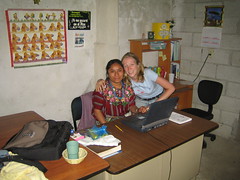
Lizzie at work
Originally uploaded by Tim in Mexico.
In a health center in Patzun, Guatemala, a woman in traditonal dress and a foreign worker use the computer.


This cross-cutting UNESCO program seeks to preserving indigenous peoples’ cultural resources by fostering access to ICT. Thus it seeks to narrow the digital divide by making the technology more relevant and useful to people who are characterized especially by their lack of adaptation of foreign ways and technologies. The project waa launched as a direct result of the International Forum on Local Cultural Expression and Communication held with UNESCO support in Santo Domingo, Dominican Republic on 3-6 November 2003.

"The Heart of the Cheetah: Biography, Identity and Social Change in North-western Namibia" is another effort related to this program. It is an ethnographic collaboration between filmmaker, anthropologist and translator, which aims to make visible the often unacknowledged life-story of the translator whose particular positioning as ‘cultural broker’ between ethnographers and indigenous communities is unmapped.

UNESCO's Program on International Migration and Multicultural Policies

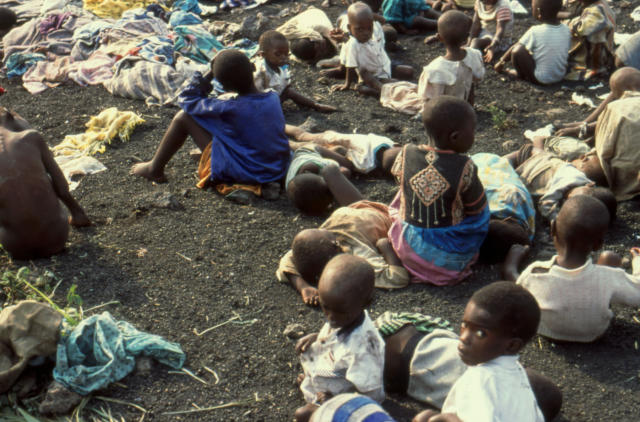
Children in a refugee camp in the Congo
Photo: F. Loock, Copyright: UNESCO

“It is time to take a more comprehensive look at the various dimensions of the migration issue, which now involves hundreds of millions of people and affects countries of origin, transit and destination. We need to understand better the causes of international flows of people and their complex interrelationship with development."
Kofi Annan in his report on strengthening the United Nations Organization of 2002.
The overall aim of UNESCO's program on International Migration is to promote the respect for the human rights of migrants, and to contribute to peaceful integration of migrants in society. The program provides a mailing list on migration, news on the topic, and the Migration Research Institutes Database with information on almost 300 research and training institutes in 77 countries as well as details on 86 periodicals dealing with migration.

UNESCO's International Journal on Multicultural Societies (IJMS) is a scholarly and professional journal, published by UNESCO. It provides a platform for international, interdisciplinary and policy-related social science research in the fields of migration, multiculturalism, and minority rights. Established by UNESCO's social sciences research and policy division in 1998, it aims at improving the linkages between academic communities in various regions and across different social science disciplines. One of its particular features is to promote the policy-relevance of social science research. Each issue is devoted to a coherent thematic debate on a key issue in the field of migration and multiculturalism. All articles published in the IJMS are refereed in external peer-review.

Friday, September 01, 2006

UN agencies and communication for development

Image from the UNESCO website.

Go to the UNESCO webpage providing more information on UN agencies and communication for development.

"The UN Inter-Agency Round Table on Communication for Development plays a significant role in bringing together UN agencies and international partners to discuss and debate the very broad, challenging, and crucial role and practice of communication for development."

Development often, perhaps usually, begins with changes in behavior, which follow from changes in knowledge and attitude. Thus communications which can enhance knowledge and change attitudes play a critically important role in social and economic development. Increasingly, the power of media are being harnessed to enhance development communications -- from radios, to pre-recorded cassettes, to television, to the Internet. Of course, the communication also draws on the traditional print media, as well as on even older forms such as theater or even puppet plays.

Many United Nations agencies help developing nations to utilize the power of the media for development communications to disseminate information:
* UNFPA about contraception
* WHO health education
* FAO agricultural extension messages
* UNEP environmental education.

UNESCO plays an important role in this UN network, both because of its lead role in the system in communications and information, and because of its expertise in education.

Tuesday, August 29, 2006

The U.S. wins gold and silver medals at the International Olympiad in Informatics

The results of the 18th International Olympiad in Informatics (IOI) 2006, which was held in Mexico August 13th-20th, 2006 have finally been released. The US Computing team wins one gold and three silver medals. Congratulations to Richard McCutchen (G), John Pardon (S), George Boxer (S) and Bohua Zhan (S)!

The IOI, as one of the eight international science olympiads proposed by UNESCO, is the most recognized worldwide computer science competition aimed at secondary students under 20 years of age. Contestants are expected to demonstrate their problem-solving skills by writing computer programs within two competition days.

The primary goal of the IOI is to stimulate interest in informatics (computing science) and information technology. Another important goal is to bring together exceptionally talented pupils from various countries and to have them share scientific and cultural experiences.

The IOI is organized annually in and by one of the participating countries. Each participating country typically sends a delegation of four pupils and two accompanying adults.
In May 1989, UNESCO initiated and sponsored the first International Olympiad in Informatics, which took place in Pravetz, Bulgaria. The 2003 IOI was held in Kenosha, Wisconsin. As for the next Olympiad, the 2007 IOI will be hosted in Zegreb, Croatia.

Interested in competing in the next USA Computing Olympiad? Click here

Related
*Our posting on "UNESCO's International Olympiads Series"
© Logo: IOI

Join the latest e-forum on "The Power to Communicate"!

Created in 2004 within the framework of a joint programming initiative between UNESCO and ISESCO* the jeunessearabe.info portal is designed to cater to the information needs of youth and youth associations in the Arab world. This portal is part of the INFOYOUTH programme, a worldwide information network on youth issues.

Last week, the portal published an online dossier on “The Power to Communicate”, aimed at highlighting the importance of communication among young people of the Arab World; allowing the youth to work together through the internet, share their views on matters that are related to UNESCO and ISESCO’s domains of competence, and discuss issues pertaining to the digital divide.

Young people and associations are invited to take part in this forum and to express themselves in Arabic and French!

Related
Youth and the Information Society

*ISESCO: Islamic Educational, Scientific and Cultural Organization

UNU/UNESCO International Conference on "Globalization: Challenges and Opportunities for Science and Technology"

This UNU/UNESCO International Conference was held 23 & 24 August 2006 in Yokohama, Japan. It was intended to provide "a forum for discussing how we can better harness scientific and technological progress to promote social and economic progress, and to foster knowledge creation/diffusion for the benefit of all." Day One consisted of a public symposium in which experts discussed how globalization is changing science and technology, and vice-versa, and the opportunities that these changes offer. On day Two a workshop allowed parallel working group discussions on the various aspects in which science and technology link with, and contribute to, peace and sustainable development.

Among the distinguished speakers and presenters at the conference were UNESCO Director General Koïchiro Matsuura and Assistant Director of the U.S. National Science Foundation James Collins.

A video portal has been provided for the meeting, and streaming videos will soon be available.

"UNESCO and IFLA to establish strategic alliance to implement Plan of Action of World Summit of the Information Society"

Read the full press release online.

"In a bid to foster the role of libraries as key players in building people-centred, inclusive and development-oriented knowledge societies, UNESCO and the International Federation of Library Associations and Institutions (IFLA) will establish a strategic alliance as part of their contribution to implement the decisions of the World Summit on the Information Society (WSIS)."

Monday, August 28, 2006

The UNESCO Water Portal

World Water Week was celebrated last week, and we belatedly feature UNESCO's Water Portal on this blog today. Water is an important theme for UNESCO, and the Organization has played a key role in bringing water related issues to the attention of the international community.

The UNESCO Water Portal is intended to enhance access to information related to freshwater available on the World Wide Web. The site provides links to the current UNESCO and UNESCO-led programmes on freshwater and will serve as an interactive point for sharing, browsing and searching websites of water-related organizations, government bodies and NGOs, including a range of categories such as water links, water events, learning modules and other on-line resources.

Water resource management is an area in which UNESCO's efforts to promote peace through the promotion of international dialogue is especially relevant and important. So too is it an area in which developing countries especially need capacity development.

The portal is currently highlighting the ‘Coping with Water Scarcity’ UN-Water seminar in Stockholm, Sweden held this month. It was sponsored by UN-Water, which is made up of 24 UN agencies, programs and funds that have a significant role in tackling global water concerns including UNESCO, and which also includes major non-UN partners of the water sector. This was the annual UN-Water seminar, held each week during World Water Week. This year’s event addresses water scarcity.

Floods in New Orleans after
hurricane Katrina, September 2005, USA
© UNESCO - NOPD Isidro Magana
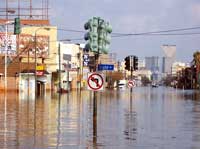

The portal is also currently featuring materials on the International Disaster Reduction Conference being held currently in Davos, Switzerland. The conference is jointly organized by is jointly organized by UNESCO, the Global Alliance for Disaster Reduction (GADR), the Global Disaster Information Network (GDIN), and the United Nations International Strategy for Disaster Reduction (UN/ISDR).

The Conference is very relevant for UNESCO's water portal because more than 2,200 major and minor water-related disasters occurred in the world from 1990 through 2001. *Of these, floods accounted for half of the total disasters, water-borne and vector disease outbreaks accounted for 28% and drought accounted for 11% of the total disasters. 35% of these disasters occurred in Asia, 29% in Africa, 20% in the Americas, 13% in Europe and 3% in Oceania.)

Saturday, August 26, 2006

UNESCO's follow-up to WSIS

The World Summit on the Information Society (WSIS) was one of the most important U.N. events in the last decade. It was organized by UNESCO and the International Telecommunications Union, and represented an important acknowledgement by the international community of the critical changes that are taking place with the Information Revolution. It set an international agenda of actions to help assure that progress toward the global information society is rapid and equitable.

UNESCO works with all stakeholders towards the implementation of the outcomes of WSIS, which involved major conferences in Geneva in 2003 and and Tunis in 2005, as well as many preparatory activities. UNESCO's role in the implementation process is three-fold:
* UNESCO implements concrete activities included in the Geneva Plan of Action within the framework of its regularprograme and budget.

* UNESCO helps facilitating the coherent implementation of the Action Lines in its areas of competence.

* UNESCO, together with ITU and UNDP, is engaged in shaping the overall multi-stakeholder coordination of the Facilitators of all Action Lines.
The next in a series of meetings at UNESCO's office in Paris relating to WSIS will be in October:
* 16 October 2006, "Access to information and knowledge"

* 17 October 2006, "Ethical dimension of the Information Society"

* 18 October 2006, "E-learning"

* 19 October 2006, "Media"

There will is also to be a meeting on 22 October 2006, at the Huarun Hotel, Beijing, China on "E-science"

All participants have to register online in order to obtain their badges to allow access to the meeting rooms.

Click here to go to the website devoted to UNESCO's activities implementing the plan of action developed at WSIS.

Wednesday, August 23, 2006

UNESCO Promotes Freedom of Press and Expression

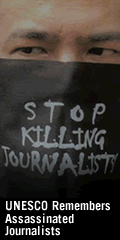
Hardly a day goes by without Mr. Koїchiro Matsuura, Director General of UNESCO, condemning the killings of journalists worldwide.>> More

It is crucial to restate that UNESCO is actively engaged in the promotion of freedom of expression and freedom of the press, and fosters media independence and pluralism by providing advisory services on media legislation and by making governments, parliamentarians and other decision-makers aware of the need to guarantee free expression.

Other major UNESCO activities in this field include the proclamation of a World Press Freedom Day to be celebrated on May 3rd; the establishment of an advisory group on press freedom which includes media professionals from all parts of the world; and the of the UNESCO/Guillermo Cano World Press Freedom Prize.

UNESCO supports independent media in zones of conflict to enable them to play an active role in conflict prevention and resolution and the transition towards a culture of peace. For several years now, UNESCO has been supporting independent media to enable them to gather and disseminate non-partisan information. In this respect, the assistance provided to independent media in South East Europe, Angola, the Great Lakes Region in Africa, the Middle East, East Timor, and Afghanistan has contributed to peace building and reconciliation processes.

Read More
* UNESCO Remembers Assassinated Journalists
and Media Workers

© Photo: UNESCO

Research publication and CD-ROM on editorial independence and the media in Asia now available

Asia has witnessed a profound transformation of its media landscape since the mid-1980s when deregulation of state television monopolies resulted in a dramatic growth in commercial television outlets. In this commercial environment, it is imperative to find ways in which the media can remain accountable and transparent and continue to promote and protect the public interest. This is why public service television should be strengthened to ensure that freedom of thought and expression, pluralism and accountability are protected.

Within the framework of the International Program for the Development of Communication (IPDC) project entitled, "Promoting Editorial Independence and media pluralism", country specific research was carried out in eight South and Southeast Asia states, namely, Bangladesh, India, Indonesia, Malaysia, Pakistan, Philippines, Sri Lanka and Thailand. The main objective was to assess the editorial independence of public service broadcasting (PSB) television in these countries and to sensitize media and advocacy groups on media freedom. >> Download the Research Publication

A CD-ROM package of all 8 country reports is now available, and is expected to be a valuable resource for PSB institutions, television trainers, civil society groups dealing with media freedom and cultural diversity issues, and tertiary institutions as a “classroom” and advocacy resource. This is soon to be available on the Asian Media Information and Communication Centre (AMIC) website.

AMIC has been contracted by UNESCO to undertake four important research projects, covering public service broadcasting, alternative media, the media’s role (or lack of it) in the tsunami reconstruction process, and journalism education.

Tuesday, August 22, 2006

A New Regional Center for Biotechnology under the aegis of UNESCO

UNESCO and the Government of India signed an agreement in New Delhi, India, 14 July 2006 for the establishment of a Regional Centre for Biotechnology Training and Education. The New Delhi Centre will combine teaching and research with a strong focus on capacity building.

‘The Centre will offer postgraduate and post-doctoral programmes in biotechnology, nano-biotechnology, and environmental biotechnology” as well as “classes on intellectual property rights, technology transfer, bio-entrepreneurship and management, bioethics and bio-safety” said Maciej Nalecz, Director of UNESCO’s Division of Basic and Engineering Sciences.

The Centre, which expects to be functional in January 2007, will be operating under the aegis of UNESCO. Its governing body will include representatives from both the UNESCO secretariat and Member States. ‘We will secure top scientists from different countries to be a part of the advisory body’, commented Maciej Nalecz, ‘and, through them, will seek their respective governments’ participation to further develop the Centre.’

Initially, the Indian government will be funding the Centre with the expectation that other countries in the region supplement this effort once the Centre is functioning. Also, it will be housed at the National Institute of Immunology in New Delhi pending construction of permanent facilities.

© Photo: UNESCO

Towards a Successful Tsunami Warning System

Below are some statements made during the 3rd meeting of the Intergovernmental Coordination Group for the Indian Ocean Tsunami Warning and Mitigation System organized by UNESCO’s Intergovernmental Oceanographic Commission, and held July 31st -August 2nd, 2006 in Bali, Indonesia.

“This meeting showed us that Indian Ocean nations have made considerable progress on developing national tsunami warning systems, but the most vulnerable States still face a major challenge in protecting their coastal populations,” said Patricio Bernal, Executive Secretary of UNESCO’s Intergovernmental Oceanographic Commission. Mr Bernal reminded that people must be ‘tsunami-savvy’, i.e. they must know what to do when a major earthquake strikes, and local authorities must have solid planning in place to get people away from the area as quickly as possible.” He acknowledged the explosion of activity in the countries of the region over the past 18 months to build their national response systems. “Thailand, for example, is now confident it can get tsunami information rapidly to people on the beach, and several others are getting close to this.” However, several nations with coastlines close to fault lines, such as Indonesia, Pakistan, Oman and Iran, remain vulnerable.

The regional system now includes 24 national Tsunami Information Centres, capable of receiving and distributing Tsunami Advisories around the clock. These centres receive tsunami bulletins from data and analysis centres in Tokyo and Hawaii.
The Coordination Group’s next meeting will be held in Kenya early in 2007.

© Photo: UNESCO/ Torben Brandt

UNESCO Supports Wildlife Conservation Policies in Darfur

The Radom Biosphere Reserve in Darfur, Sudan has a great variety of climate and ecosystems; each with distinct group of faunal and floral compositions, and a good representation of the African wild species. These ecosystems, -which are considered to be of great economic, scientific, recreational, biological and cultural values-, need to be protected and sustainably managed.

A number of questionnaires were developed to obtain a general idea on the socioeconomic status of the displaced people, and seek solutions to compromise their living conditions in a way that does not conflict with the conservation policy. It appears that modern weapons have replaced the old traditional primitive tools and have modified the hunting techniques of many people willing to maximize their yields of sun-fried meat. The desperate need for protein by the ever growing human populations coupled with easiness of possessing automatics triggered this grave but tragic situation whereby several species are believed to have completely migrated and abandoned the area.

On the wake of signing Naivasha peace agreement between the government of the Sudan and the southern rebels, resource depletion was in part eased when southerners started to return to their home villages. Similar scenery is anticipated for Darfur. It should be emphasized that both security and food are the ultimate needs of the people, therefore, only permanent peace can stop this misery and bring back conditions stable. This would of course necessitate public awareness program that addresses and reflects both the benefits of peace and the negative impacts of war. Nevertheless, the situation will remain catastrophic unless the warring parties agree upon efficient and sincere disarmament program, and the international community assumes a positive role towards a lasting compromise to the political conflict. The planned program should specify certain areas as weapon free zones that will serve as asylums for wild fauna under full protection by the government of the state. This would be the first step towards enabling the entire environment to recover and restore viability.

Concerned with the reduction of biodiversity loss, the improvement of livelihoods, the enhancement of social, economic, and cultural conditions for environmental sustainability, and with the pursuit of the Millennium Development Goal 7 on environmental sustainability, UNESCO has, since its early days, initiated a vast array of research programs and activities focusing on humans' impacts on biodiversity, as well as how biodiversity affects human activities. UNESCO underscores the importance of biosphere reserves and calls for the protection of the biosphere even in times of war and other human tragedies.

Read More
*Click here for full report
* Biosphere reserves
*People, Biodiversity and Ecology
*Biodiversity
*Ecosystems
* UNESCO's Man and the Biosphere Program (MAB)