Showing posts with label antidoping. Show all posts

Sunday, June 10, 2012

The War On Doping - Trailer


In the run up to the opening of the 30th Olympic Games of modern times, in London, the United Kingdom, from July 27 to August 12, UNESCO will host, on June 7, 2012, a first-ever pre-release screening of the documentary film "The War on Doping." The film presents the first decades in the campaign against doping in sport.

This is a trailer of the one hour documentary about the fight on doping in sports. It shows some of the faces involved and touches some of the issues that has been going on for more than 40 years. In this film, and for the first time, the world's most respected authority in the subject, the renown doping hunter, Professor Arne Ljungqvist, will guide us through all of them. The big scandals. The big names. The inside story. A mirror of society.

More information: http://www.unesco.org/new/en/social-and-human-sciences/themes/anti-doping/sv15/news/one_month_before_the_launch_of_the_london_olympics_unesco_hosts_the_pre_release_screening_of_the_film_the_war_on_doping/

Friday, August 15, 2008

" The fight against doping; More than tactical success"

The International Herald Tribune suggests that the 2005 UNESCO Convention Against Doping in Sport may pay off with fewer abuses in these Olympic Games.
Before the 2005 convention, only members of sports organizations were held accountable or penalized for their actions. Now, all athlete support personnel, including coaches, trainers, managers, team support staff, agents, administrators, officials and medical or paramedical practitioners are open to scrutiny, as are those who manufacture or supply drugs to athletes.

Today, the convention encourages all countries to evenly apply antidoping laws and regulations and ensure the implementation of the World Anti-Doping code by all sports organizations. But while countries have rapidly ratified the convention, they need to move much faster to implement it.

Wednesday, August 06, 2008

United States ratifies International Convention against Doping in Sport

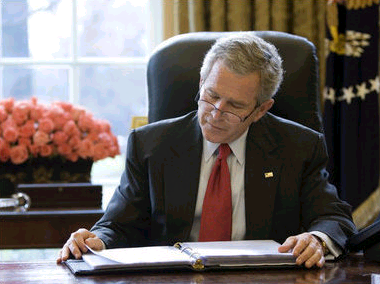
On 4 August, President George Bush signed the instrument of ratification of UNESCO’s International Convention against Doping in Sport, following its approval on 22 July by the US Senate. More than 90 countries have now ratified the Convention.

Tuesday, August 05, 2008

Rattus Holmes and Felis Watson


As of Monday, visitors to the UNESCO Social and Human Sciences Program website* are able to find the weekly installment of an comic-strip adventure featuring Rattus Holmes and Felis Watson, detective heroes against doping in sport.

Entitled “The Case of the Spoilsports”, the comic strip dramatizes UNESCO’s anti-doping role and explores the importance of the International Convention against Doping in Sport, adopted by UNESCO’s member states in 2005.

In five chapters published weekly, the story the comic strip will trace how twin athletes react differently to the pressures of competitive sport.

Wednesday, July 23, 2008

'Olympic panel applauds Senate OK of doping policy"

Source: Chicago Sun Times, July 23, 2008.

Chicago's Olympic bid group Tuesday hailed a U.S. Senate ratification of the UNESCO International Convention against Doping in Sport.
"We are pleased the U.S. Senate recognizes the importance of UNESCO's anti-doping treaty and shares in this common goal to support the integrity and spirit of the Olympic Games," Chicago 2016 chairman Pat Ryan said in a statement. "As a bid we are committed to clean competition.''

Monday, July 21, 2008

WADA-UNESCO Cooperation on Anti-Doping

The World Anti-Doping Agency (WADA) was created under the auspices of the International Olympic Committee to promote and coordinate the fight against doping in sport internationally. However, prior to 2005 many governments could not be legally bound by a non-governmental document such as the World Anti-Doping Code, the document harmonizing regulations regarding anti-doping in all sports and all countries of the world. Governments accordingly drafted the International Convention under the auspices of UNESCO, enabling them to align their domestic legislation with the Code and thereby harmonizing the sport and public legislation in the fight against doping in sport.

Some 192 countries have signed the Copenhagen Declaration on Anti-Doping in Sport, the political document through which governments show their intention to implement the World Anti-Doping Code through ratification of the UNESCO Convention. More than 570 sports organizations have already adopted the Code.

Wednesday, July 16, 2008

International Convention against Doping in Sport

With the Tour de France in operation, and the Olympic Games about to start, there should be a considerable interest in the International Convention Against Doping in Sport. The convention, drafted under the auspices of the UNESCO with significant U.S. Government involvement and support, is intended to harmonize and coordinate the activities of governments in combating doping in sport. The convention addresses a variety of areas that are essential in promoting anti-doping controls, such as scientific and medical research, prevention and education activities, and regulations involving doping substances and methods. It already has been ratified by more than 80 countries and entered into force for the signatories on February 1, 2007.

According to the State Department, the Convention was forwarded to the U.S. Congress for ratification in February. In late June the Senate Foreign Relations Committee unanimously advanced the treaty for a final vote on the floor of the Senate. According to cott Burns, deputy director of the Office of National Drug Control Policy, the U.S. is already in compliance with the convention and no new laws, policies or financial obligations would be required for its ratification.

According to the Associate Press:
Ratification is considered a boost for any country hoping to host the Olympics. The United States is the only country among the seven bidding for the 2016 Games that hasn't put the treaty into law. The host city will be chosen in October 2009.